Wenn du dich auf ein Case-Interview vorbereitest, insbesondere unter Zeitdruck, kann die Zusammenarbeit mit einem erfahrenen Coach deine Erfolgschancen erheblich steigern.
💡 Pro Tipp: Auf PrepLounge hast du Zugang zu über 800 (ehemaligen) Berater:innen von führenden Unternehmen wie McKinsey, BCG und Bain, die dir helfen, deine Interviewtechnik zu perfektionieren.
Was sind die Hauptvorteile des Übens mit einem Coach?
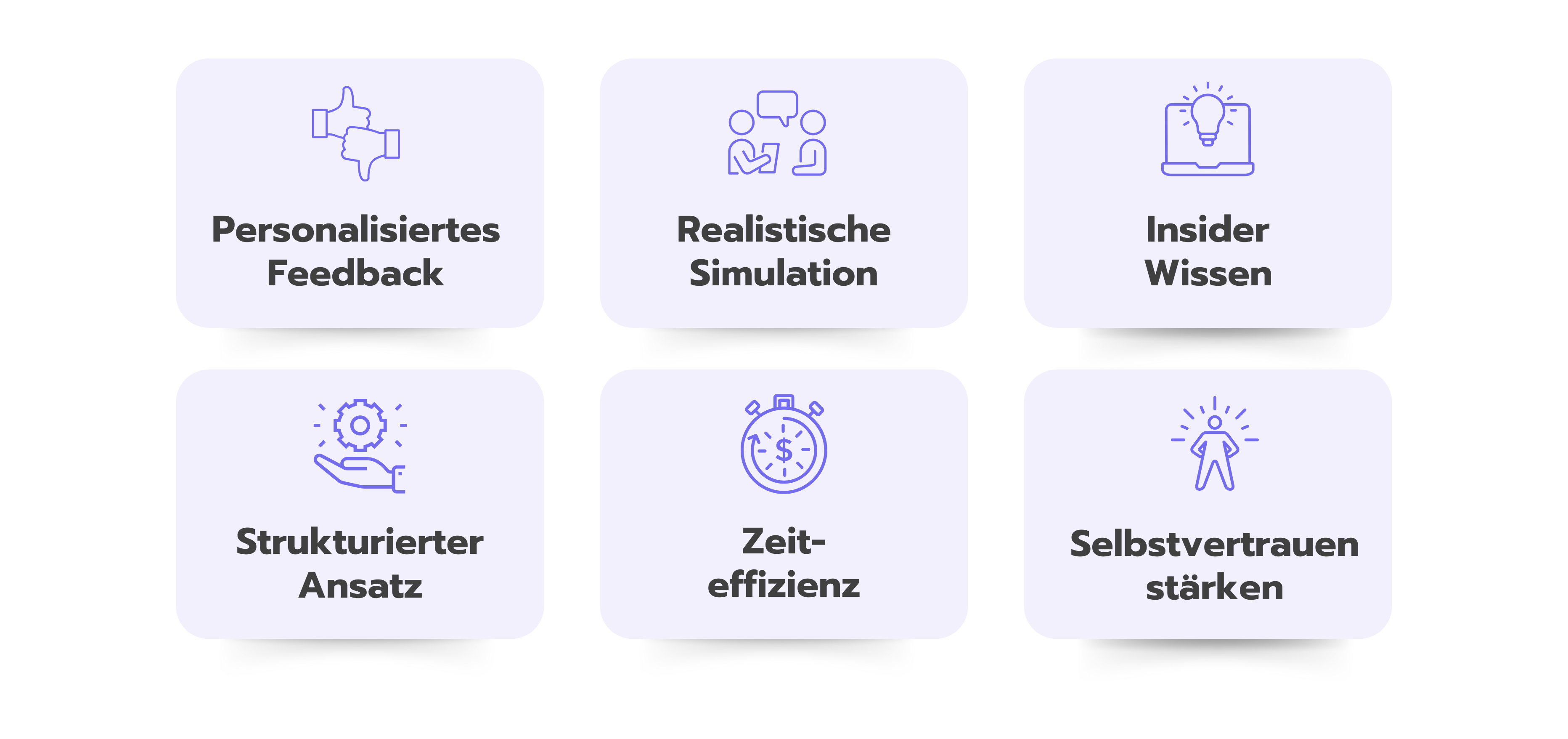
Personalisiertes Feedback
Einer der Hauptvorteile der Zusammenarbeit mit einem Coach ist das Erhalten von maßgeschneidertem Feedback. Im Gegensatz zu allgemeinen Vorbereitungsmethoden kann ein Coach deine spezifischen Schwächen erkennen und dir gezielte Ratschläge geben, um dich zu verbessern. Dieser persönliche Ansatz stellt sicher, dass deine Vorbereitung effizient und zielgerichtet ist und deine individuellen Bedürfnisse berücksichtigt.
Realistische Simulation
Das Üben mit einem Coach ermöglicht es dir, eine realistische Interviewsituation zu erleben. Coaches, die zahlreiche Case Interviews durchgeführt haben, können den Druck und die Dynamik eines echten Interviews simulieren, wodurch du dich wohler und sicherer fühlst. Diese Erfahrung ist unbezahlbar, da sie dich darauf vorbereitet, den Stress und die Spontanität echter Interviews zu bewältigen.
Insiderwissen
Alle Coaches auf PrepLounge kommen selbst aus renommierten Beratungsunternehmen. Ihr Insiderwissen darüber, wonach Top-Unternehmen suchen, kann dir einen erheblichen Vorteil verschaffen. Sie können dir Einblicke in den Interviewprozess, häufige Fallstricke und die spezifischen Eigenschaften, die Unternehmen schätzen, geben, sodass du gut vorbereitet bist, diese Erwartungen zu erfüllen.
Strukturierter Ansatz
Ein Coach kann dir helfen, einen strukturierten Ansatz zur Lösung von Case-Problemen zu entwickeln. Diese strukturierte Denkweise ist in Case Interviews entscheidend, wo klare, logische und gut organisierte Antworten hoch geschätzt werden. Coaches können dir Frameworks und Methoden beibringen, die deinen Problemlösungsprozess vereinfachen und deine Antworten kohärenter und überzeugender machen.
Zeiteffizienz
Für Kandidat:innen mit begrenzter Vorbereitungszeit ist Coaching eine äußerst effiziente Methode, um sich vorzubereiten. Coaches können schnell Bereiche identifizieren, die verbessert werden müssen, und dir helfen, deine Anstrengungen auf die am meisten benötigten Bereiche zu konzentrieren. Diese gezielte Vorbereitung kann dir Zeit sparen und dir helfen, schneller voranzukommen, als du es alleine tun würdest.
Selbstvertrauen steigern
Selbstvertrauen spielt eine entscheidende Rolle bei der Interviewleistung. Regelmäßiges Training mit einem Coach kann dein Selbstvertrauen stärken, indem es dich mit dem Interviewformat vertraut macht und dir hilft, deine Antworten zu verfeinern. Zu wissen, dass du dich gründlich mit fachkundiger Anleitung vorbereitet hast, kann die Angst erheblich reduzieren und deine Gesamtleistung verbessern.
Wie dich PrepLounge mit vielfältigen Coaching-Optionen optimal unterstützt
🚀 Flexibilität und genau das, was zu dir passt
PrepLounge bietet verschiedene Coaching-Optionen, die zu deinen Bedürfnissen und Vorlieben passen. Du kannst aus Einzelsessions, CV Reviews oder umfassenden Coaching-Paketen wählen, die mehrere Sitzungen umfassen oder sich auf bestimmte Themen konzentrieren. Darüber hinaus gibt es Programme, die eine Premium-Mitgliedschaft mit Coaching-Credits und weiteren Coachingelementen wie Workshops oder Gruppencoachings kombinieren und eine kostengünstige Möglichkeit bieten, erstklassige Coaching-Dienste in Anspruch zu nehmen.
📅 Workshops und Online-Events
PrepLounge veranstaltet auch regelmäßig Workshops und Online-Events, die von erfahrenen Coaches geleitet werden. Diese Sitzungen decken eine Vielzahl von Themen ab und bieten Möglichkeiten für interaktives Lernen und direktes Feedback. Die Teilnahme an diesen Events kann deine Vorbereitung weiter verbessern und dich über die neuesten Trends und Techniken in Case Interviews auf dem Laufenden halten.
Wie du den perfekten Coach findest, der zu deinen Bedürfnissen passt
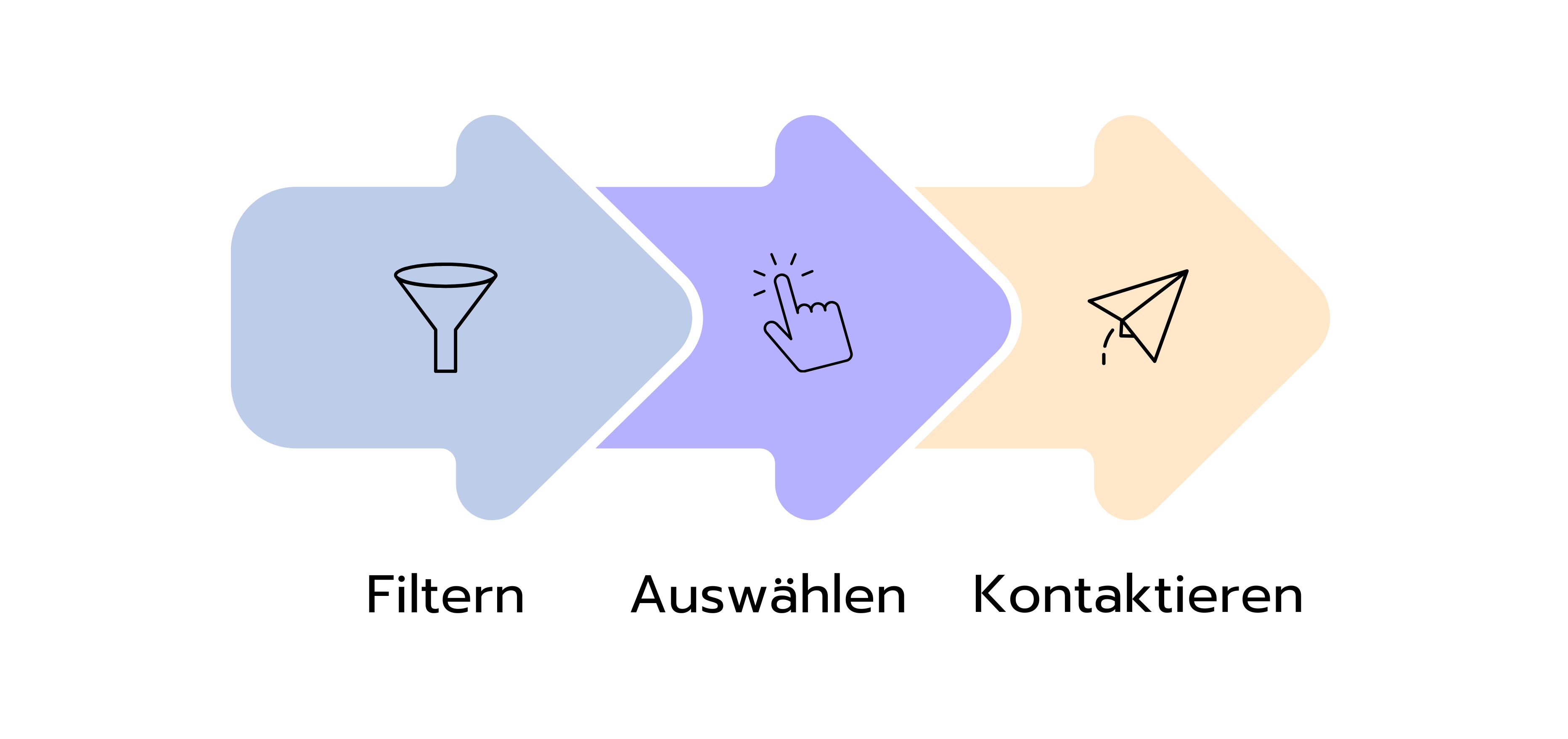
Um den perfekten Coach für deine Case-Interview Vorbereitung zu finden, kannst du in drei Schritten vorgehen:
Filtern: Filtere die Coaches in der Coach-Übersicht nach deinen wichtigsten Kriterien, wie Preis pro Coaching-Sitzung oder beruflichem Hintergrund.
Auswahl eingrenzen: Wähle bis zu 10 Coaches aus, deren Profile, Bewertungen, Q&A-Beiträge und PrepLounge-Awards du näher erkunden möchtest.
Kontaktieren: Kontaktiere 2-3 Coaches, um potenzielle Fragen oder Bedenken zu klären. Frage ruhig, ob sie ein kostenloses Einführungsgespräch anbieten.
Was macht einen guten Coach aus?
Gute Coaches zeichnen sich durch folgende Merkmale aus:
Individuelle Anpassung: Sie passen das Coaching an deine spezifischen Bedürfnisse an.
Gute Beziehung: Sie sorgen dafür, dass du dich wohlfühlst und gut mit ihnen zusammenarbeiten kannst.
Transparenz: Sie bieten dir volle Transparenz über den Coaching-Prozess auf PrepLounge.
Abschließende Überlegungen zur Zusammenarbeit mit einem Coach:
Das Lernen mit einem Coach ist eine strategische Investition in deine Case-Interview-Vorbereitung. Das individuelle Feedback, die realistische Simulation, das Insiderwissen und der Vertrauensschub, den Coaches bieten, können einen erheblichen Unterschied in deiner Leistung ausmachen. Mit der fachkundigen Anleitung, die auf PrepLounge verfügbar ist, kannst du sicherstellen, dass du gründlich vorbereitet und bereit bist, in deinen Case-Interviews zu glänzen.
Durch die Nutzung der Expertise erfahrener Coaches, die Auswahl des perfekten Coaches und die Inanspruchnahme der vielfältigen Coaching-Optionen und Events auf PrepLounge kannst du deine Vorbereitungseffizienz maximieren, dein Selbstvertrauen stärken und deine Chancen erhöhen, eine Position bei einemTop-Beratungsunternehmen zu sichern.
Finde interessante Einblicke von Coaches im Consulting Q&A
Has anyone heard back from Bain, EY, or PWC after pymetrics assessments?
2 Std
100+
5
Beste Antwort von
Margot
Hi there,
Applying on the 26th of August and not hearing back yet tells you very little, and the replies you get in this thread will tell you even less. Other applicants are the worst available sample, because the people who have already heard back are far more likely to post than the people sitting in exactly the silence you are.
A few things I would do instead of counting days:
- Check what each of the three firms actually sent you. Bain's own careers page currently describes its digital assessment as Sova or TestGorilla rather than pymetrics, and the PwC and EY formats differ by country and by service line. The name on the assessment matters, because it tells you whether you sat a step that produces a fast automated cut or one that queues for a human.
- Use Bain's published guidance as your clock. Bain states that applicants can expect to hear within 60 days, which puts an application from 26 August well inside the firm's own stated window. I would not follow up before that.
- Send one short status email to the recruiter named on your confirmation, and only once a firm has passed its own published timeline. Ask where the file sits, not how you performed.
- Assume all three are still live and prepare on that basis. The cost of being wrong in that direction is a few weeks of case practice.
If PwC or EY comes back next week with a first round, the version of you that has been refreshing this thread and the version that has been running cases are two different candidates.
Hi there,
I would prepare as if your case could come from any industry. Expert candidates are sometimes given a case inside their own domain, but that is not something you can plan around, and preparing on finance alone is the version of this that goes wrong. The track narrows what you are hired to do. It does not narrow what you are asked in the interview.
On the bar, a few distinctions I would make:
- The case bar is not lower. Expert candidates are not scored more gently on structure, math or communication, and assuming otherwise is the most common preparation error on this track.
- What is genuinely added is the expertise scrutiny. Expect technical questions or a conversation about your own work outside the case, and expect it to go deeper than a generalist would face on any subject.
- The test underneath both is whether you are credible in front of a client quickly. A generalist is hired on potential. An expert is hired on what they already know, which is why the depth questions carry weight they would not carry elsewhere.
- Practise finance cases last. It is the one area where you will not be caught out, so it is the worst use of your remaining preparation time.
The thing I would check before building a plan around any of this is which firm and which practice you are applying to, because how much the case leans on your domain varies between them. Ask the recruiter directly. It is a reasonable question and the answer changes what you should practise.
How Can Attending Conferences in India Improve Career Opportunities?
2 Std
< 100
5
Beste Antwort von
Carlos
Hi there,
Yes, conferences can definitely help, but the value usually comes from how you use them, not simply from attending.
I would approach them like this:
- Choose conferences based on who will be there, not just the event name. Check the speakers, sponsors, companies and attendee profile beforehand. If your target firms or relevant industry people are there, the event becomes much more valuable.
- Start networking before the conference. Identify a small number of people you genuinely want to meet and reach out in advance. Then the event becomes an opportunity to continue an existing conversation rather than starting completely cold.
- Aim for a few meaningful conversations, not dozens of contacts. It is much better to have 3 people who actually remember you than to collect 30 LinkedIn connections.
- Use those conversations to understand what firms are hiring for, which skills are becoming more relevant, and what teams are growing. That information can later help you target applications much more effectively.
And the follow-up is critical. A short message after the event referring to something specific you discussed is what turns a conference interaction into an actual relationship.
I would therefore not think of conferences as something that adds much value to your CV by itself. Their real value is that they can give you access, market insight and relationships that later translate into opportunities or referrals.
Best,
Carlos
How long does it take to get SOVA assessment after submitting application (Bain London)?
2 Std
< 100
4
Beste Antwort von
Franco
Hi there,
There is no fixed interval, and anywhere from a few days to a couple of weeks after submitting is normal. I would treat the ten-day mark as the point where a follow-up to the recruiting team becomes appropriate, kept to three lines: thank them, confirm you are still interested, ask for an expected timeline.
If you want something more specific to your situation, feel free to write to me, happy to help.
Best,
Franco
Hi there,
I would absolutely not name five to seven people in the letter, because it is redundant and adds nothing: the referral you already hold is what carries the signal internally, and a list of contacts reads as an attempt to prove effort rather than motivation.
I would stop at one name, two at the most, and who the person is decides whether it is worth including at all. A Managing Director or Partner, and even more so a Senior Managing Director or Senior Partner, is always worth naming. Someone in the middle of the ladder, a Project Leader or a Principal, is worth naming only if they sit in the office you are applying to. Below that the name adds no weight, so use the insight from the conversation without attaching a name to it.
If you want something more specific to your situation, feel free to write to me, happy to help.
Best,
Franco
How big is the case study Interview skill gap from T3 to T2 firms?
3 Std
< 100
5
Beste Antwort von
Tarek
I would not treat T3-to-T2 as a fixed jump in difficulty; the more useful question is which skills the target interview will test and how consistently you can demonstrate them.
The gap is usually less about suddenly needing a secret set of harder frameworks and more about the level of precision expected:
1. Structure: Can you define the decision and build a tailored issue tree, rather than start from a memorised template?
2. Quantitative work: Are your calculations fast, transparent and checked, with the business meaning explained afterwards?
3. Judgement: Can you prioritise the next analysis, interpret an imperfect result and change direction when the interviewer gives you new information?
4. Communication: Can you lead the conversation, state a clear answer and support it with the few points that matter most?
I would use your Simon-Kucher experience as a baseline, then do several Roland Berger-style cases under timed conditions and ask your partners to score those four dimensions separately. That will tell you whether you have a genuine skill gap or simply need to adapt to a different case format.
Also check the firm's current recruiting material and any guidance from your recruiter for the specific office and role. Interview difficulty varies by interviewer, round and candidate level, so “T2” alone is not a reliable preparation plan. If you can consistently clarify the problem, prioritise, calculate cleanly and synthesise, you are preparing for the common core.
Recently did McK SOLVE but got a newer version of SFL. Would this affect my score if it's still in "trial" phase?
3 Std
< 100
5
Beste Antwort von
Franco
Hi,
Nobody outside the recruiting team can tell you how a game that is still being piloted is weighted. The part I would hold on to is that everyone who sat Solve in that window received the same version, so if the instructions were unclear, they were unclear for the whole pool you are compared against.
A new component is always introduced alongside the established ones and validated before it carries its full weight, so it may well be that you are in the pilot phase and that your results are used to fine-tune the assessment for future candidates. It is impossible to know, even for someone inside McKinsey who does not work in recruiting.
I wish you good luck though,
Best,
Franco
Hey there :) Bain is definitely active in the Middle East, including experienced hire recruiting, although hiring needs can vary quite a bit by office and level. Arabic is a strong advantage for many ME roles, particularly for government and local client work, but I would not treat it as a universal requirement unless the specific role says so.
Ops is also a meaningful capability in the region. Bain works across strategy, operations, transformation and performance improvement, so an Ops background can be very relevant, particularly given the amount of large scale transformation work in the GCC. I’d position yourself around the specific operational problems you have solved rather than simply saying you want “Ops.”
Best, Alessa :)
HI There, Bhuvan this side. i'm a masters student in international finance with no prior experience. Is it possible to get into consulting, if yes what are the most important things to look after so that i will be more easy for me to achieve this. THANK YOU
3 Std
< 100
4
Beste Antwort von
Franco
Hi Bhuvan,
Yes, it is possible. Not having professional experience does not rule you out, though it does put you slightly behind candidates with the same profile who also did an internship or two.
To compensate for that, I would give real space in your CV to extracurricular experiences that show impact, problem solving and leadership.
I would also work on getting a referral before you apply. It is not mandatory, but on a profile like yours it makes a real difference.
On timing, work backwards from the application deadlines of your program's recruiting cycle rather than forwards from how prepared you feel.
If you want something more specific to your situation, feel free to write to me, happy to help.
Best,
Franco
Fragen zur Marktgröße werden häufig in Case-Interviews im Consulting gestellt, weil sie eine Mischung aus Logik, Mathematik und gesundem Menschenverstand erfordern. Sie können als eigenständige Frage oder als Teil eines größeren Cases gestellt werden. Bewerber:innen, die sich mit Fragen zur Marktgröße auskennen, können hier richtig punkten.
Der Markteintrittist eines der wichtigsten Themen in der Beratungsbranche und stellt Berater:innen und Unternehmen vor große Herausforderungen und Chancen. Diese Cases erfordern eine gründliche Analyse und strategische Planung, um neue Märkte erfolgreich zu erschließen.
Brainteaser sind Aufgaben, die sich auf ein einziges Problem konzentrieren, anstatt komplexe Business-Cases abzubilden. Sie erfordern kreatives Denken, Logik oder mathematische Fähigkeiten und können in Form von Rätseln, Textaufgaben oder visuellen Puzzles auftreten. Diese Aufgaben sind darauf ausgelegt, deine Problemlösungsfähigkeiten, dein analytisches Denken und deine Fähigkeit, unter Druck ruhig zu bleiben, zu testen.
Typische Probleme beziehen sich auf alltägliche Themen und können sogar unrealistische Annahmen beinhalten. Alle notwendigen Informationen sind in der Frage enthalten, sodass keine weiteren Annahmen notwendig sind. Dieser Artikel erklärt im Detail, warum Brainteaser in der Vorbereitung auf Case-Interviews nützlich sind und wie man sie löst.