Wenn du dich auf ein Case-Interview vorbereitest, insbesondere unter Zeitdruck, kann die Zusammenarbeit mit einem erfahrenen Coach deine Erfolgschancen erheblich steigern.
💡 Pro Tipp: Auf PrepLounge hast du Zugang zu über 800 (ehemaligen) Berater:innen von führenden Unternehmen wie McKinsey, BCG und Bain, die dir helfen, deine Interviewtechnik zu perfektionieren.
Was sind die Hauptvorteile des Übens mit einem Coach?
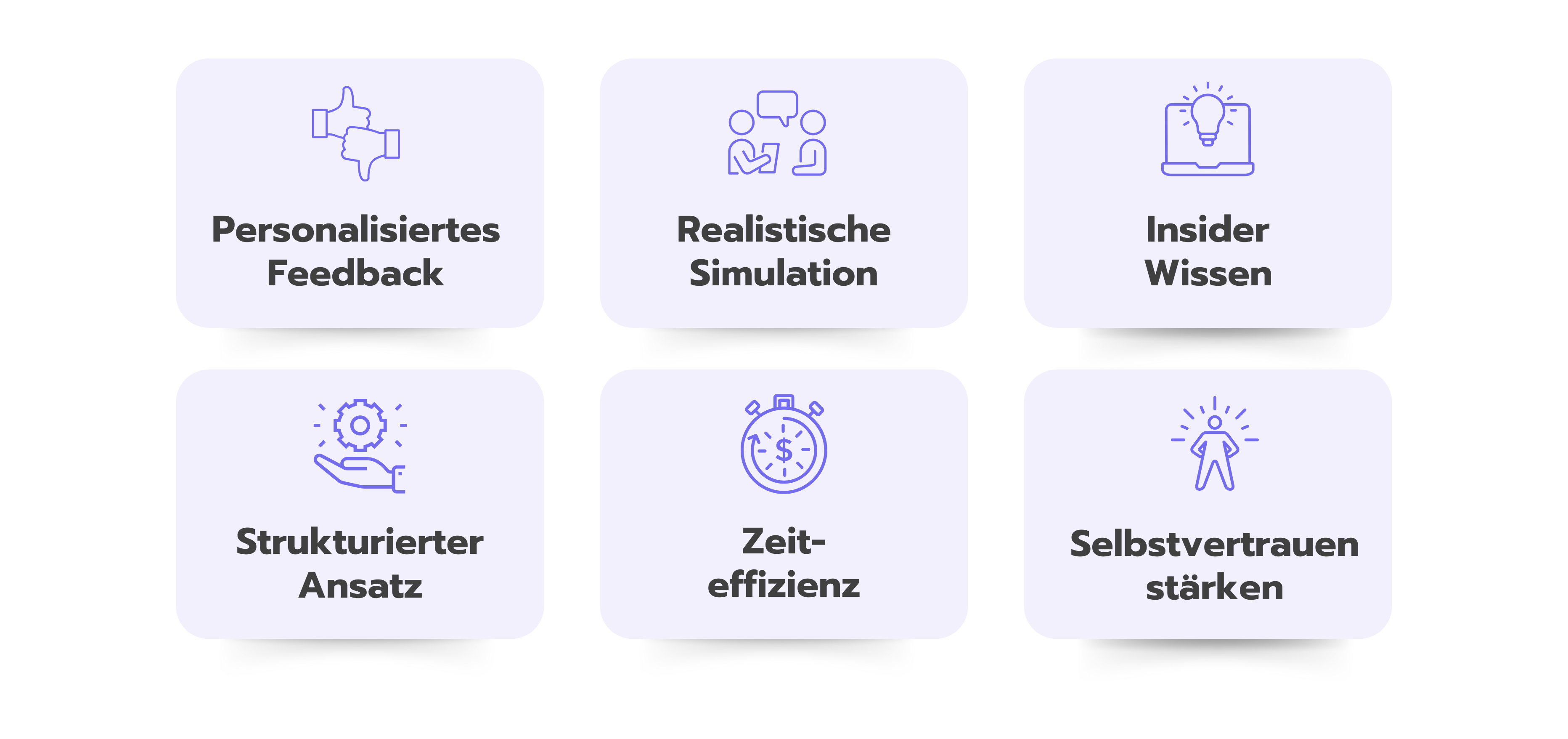
Personalisiertes Feedback
Einer der Hauptvorteile der Zusammenarbeit mit einem Coach ist das Erhalten von maßgeschneidertem Feedback. Im Gegensatz zu allgemeinen Vorbereitungsmethoden kann ein Coach deine spezifischen Schwächen erkennen und dir gezielte Ratschläge geben, um dich zu verbessern. Dieser persönliche Ansatz stellt sicher, dass deine Vorbereitung effizient und zielgerichtet ist und deine individuellen Bedürfnisse berücksichtigt.
Realistische Simulation
Das Üben mit einem Coach ermöglicht es dir, eine realistische Interviewsituation zu erleben. Coaches, die zahlreiche Case Interviews durchgeführt haben, können den Druck und die Dynamik eines echten Interviews simulieren, wodurch du dich wohler und sicherer fühlst. Diese Erfahrung ist unbezahlbar, da sie dich darauf vorbereitet, den Stress und die Spontanität echter Interviews zu bewältigen.
Insiderwissen
Alle Coaches auf PrepLounge kommen selbst aus renommierten Beratungsunternehmen. Ihr Insiderwissen darüber, wonach Top-Unternehmen suchen, kann dir einen erheblichen Vorteil verschaffen. Sie können dir Einblicke in den Interviewprozess, häufige Fallstricke und die spezifischen Eigenschaften, die Unternehmen schätzen, geben, sodass du gut vorbereitet bist, diese Erwartungen zu erfüllen.
Strukturierter Ansatz
Ein Coach kann dir helfen, einen strukturierten Ansatz zur Lösung von Case-Problemen zu entwickeln. Diese strukturierte Denkweise ist in Case Interviews entscheidend, wo klare, logische und gut organisierte Antworten hoch geschätzt werden. Coaches können dir Frameworks und Methoden beibringen, die deinen Problemlösungsprozess vereinfachen und deine Antworten kohärenter und überzeugender machen.
Zeiteffizienz
Für Kandidat:innen mit begrenzter Vorbereitungszeit ist Coaching eine äußerst effiziente Methode, um sich vorzubereiten. Coaches können schnell Bereiche identifizieren, die verbessert werden müssen, und dir helfen, deine Anstrengungen auf die am meisten benötigten Bereiche zu konzentrieren. Diese gezielte Vorbereitung kann dir Zeit sparen und dir helfen, schneller voranzukommen, als du es alleine tun würdest.
Selbstvertrauen steigern
Selbstvertrauen spielt eine entscheidende Rolle bei der Interviewleistung. Regelmäßiges Training mit einem Coach kann dein Selbstvertrauen stärken, indem es dich mit dem Interviewformat vertraut macht und dir hilft, deine Antworten zu verfeinern. Zu wissen, dass du dich gründlich mit fachkundiger Anleitung vorbereitet hast, kann die Angst erheblich reduzieren und deine Gesamtleistung verbessern.
Wie dich PrepLounge mit vielfältigen Coaching-Optionen optimal unterstützt
🚀 Flexibilität und genau das, was zu dir passt
PrepLounge bietet verschiedene Coaching-Optionen, die zu deinen Bedürfnissen und Vorlieben passen. Du kannst aus Einzelsessions, CV Reviews oder umfassenden Coaching-Paketen wählen, die mehrere Sitzungen umfassen oder sich auf bestimmte Themen konzentrieren. Darüber hinaus gibt es Programme, die eine Premium-Mitgliedschaft mit Coaching-Credits und weiteren Coachingelementen wie Workshops oder Gruppencoachings kombinieren und eine kostengünstige Möglichkeit bieten, erstklassige Coaching-Dienste in Anspruch zu nehmen.
📅 Workshops und Online-Events
PrepLounge veranstaltet auch regelmäßig Workshops und Online-Events, die von erfahrenen Coaches geleitet werden. Diese Sitzungen decken eine Vielzahl von Themen ab und bieten Möglichkeiten für interaktives Lernen und direktes Feedback. Die Teilnahme an diesen Events kann deine Vorbereitung weiter verbessern und dich über die neuesten Trends und Techniken in Case Interviews auf dem Laufenden halten.
Wie du den perfekten Coach findest, der zu deinen Bedürfnissen passt
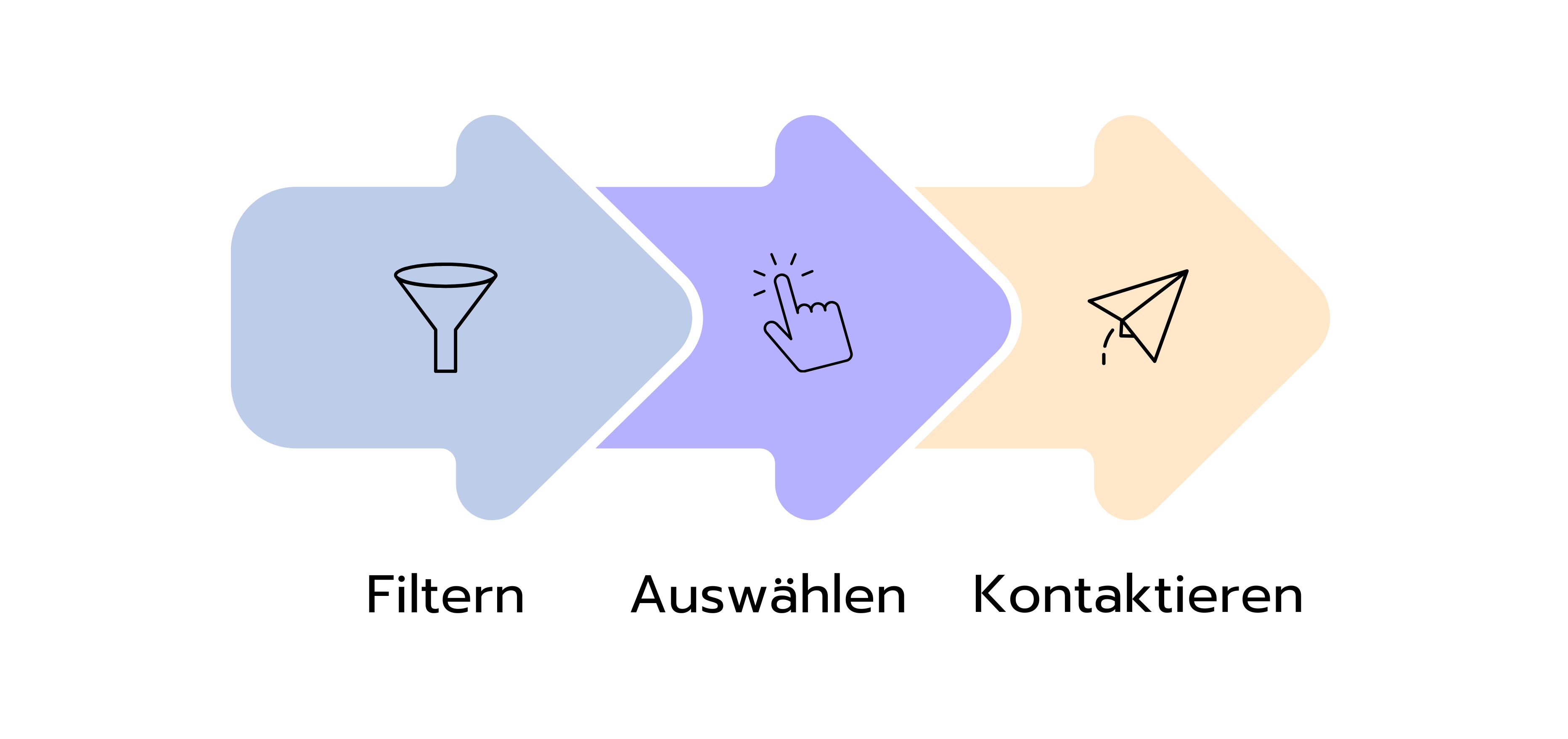
Um den perfekten Coach für deine Case-Interview Vorbereitung zu finden, kannst du in drei Schritten vorgehen:
Filtern: Filtere die Coaches in der Coach-Übersicht nach deinen wichtigsten Kriterien, wie Preis pro Coaching-Sitzung oder beruflichem Hintergrund.
Auswahl eingrenzen: Wähle bis zu 10 Coaches aus, deren Profile, Bewertungen, Q&A-Beiträge und PrepLounge-Awards du näher erkunden möchtest.
Kontaktieren: Kontaktiere 2-3 Coaches, um potenzielle Fragen oder Bedenken zu klären. Frage ruhig, ob sie ein kostenloses Einführungsgespräch anbieten.
Was macht einen guten Coach aus?
Gute Coaches zeichnen sich durch folgende Merkmale aus:
Individuelle Anpassung: Sie passen das Coaching an deine spezifischen Bedürfnisse an.
Gute Beziehung: Sie sorgen dafür, dass du dich wohlfühlst und gut mit ihnen zusammenarbeiten kannst.
Transparenz: Sie bieten dir volle Transparenz über den Coaching-Prozess auf PrepLounge.
Abschließende Überlegungen zur Zusammenarbeit mit einem Coach:
Das Lernen mit einem Coach ist eine strategische Investition in deine Case-Interview-Vorbereitung. Das individuelle Feedback, die realistische Simulation, das Insiderwissen und der Vertrauensschub, den Coaches bieten, können einen erheblichen Unterschied in deiner Leistung ausmachen. Mit der fachkundigen Anleitung, die auf PrepLounge verfügbar ist, kannst du sicherstellen, dass du gründlich vorbereitet und bereit bist, in deinen Case-Interviews zu glänzen.
Durch die Nutzung der Expertise erfahrener Coaches, die Auswahl des perfekten Coaches und die Inanspruchnahme der vielfältigen Coaching-Optionen und Events auf PrepLounge kannst du deine Vorbereitungseffizienz maximieren, dein Selbstvertrauen stärken und deine Chancen erhöhen, eine Position bei einemTop-Beratungsunternehmen zu sichern.
Finde interessante Einblicke von Coaches im Consulting Q&A
How to prepare for a career switch from consulting to corporate?
vor 14 Min
100+
6
Beste Antwort von
Vanessa
Hello,
First of all, congratulations on the new role! Changing industries - especially moving from consulting to the fast-paced and operationally dense F&B (Food & Beverage) sector - can feel daunting, but your consulting toolkit is actually your greatest asset here.
Having worked closely with executives and leaders who make high-stakes transitions, here is a structured approach to making the most of your last week before day one, along with how to run your upcoming coffee chats.
Phase 1: How to Spend Your Last Week Effectively
- Look up recent industry reports or competitor earnings calls. You don't need to be an expert by Monday, but understanding the terminology (like gross margin vs. contribution margin, SKU rationalization, or distributor dynamics) will flatten your learning curve instantly.
- Transitioning from consulting means you are moving from a high-support environment (where calendars and decks are heavily managed) to a corporate operational role where you own your time. So set up your digital workspace and think about a structure: e.g. block out focus time for your onboarding tasks during your first week so you aren’t immediately swallowed by back-to-back meetings.
- You are walking into a new operating rhythm. Use the remaining days for physical training, sleep, and a clean break.
Phase 2: Consulting to Corporate - General Mindset Shift
- Shift from Recommendation to Execution: In consulting, your job was to analyze, advise, and present. In corporate life (especially in F&B), you own the P&L and the operational fallout. Be humble, listen twice as much as you speak, and focus on understanding how things actually get done on the ground before proposing sweeping changes.
- Build Alliances, Not Just Slides: Corporate cultures rely heavily on informal networks and cross-functional politics.
Phase 3: Prioritizing Questions for Your Boss & Teammates (Coffee Chats)
When meeting your new manager and teammates casually before your start date, avoid sounding like an auditor. Focus on alignment, empathy, and early wins. Use for example these questions:
- To Your Boss:
- "What does a truly successful first 30/60/90 days look like to you, and what is the single biggest pain point I can take off your plate first?" (Shows ownership and executive presence).
- "Where do new hires from a consulting background typically stumble in this team, and how can I avoid that trap?" (Shows self-awareness and coachability).
- "How does decision-making and cross-functional alignment actually work around here? Who are the key stakeholders I need to build trust with early on?"
- To Your Teammates:
- "What is the one process or workflow that frustrates everyone on the team the most on a daily basis?"(Identifies immediate low-hanging fruit for you to help fix).
- "How does the team prefer to communicate - are people more asynchronous, or is quick alignment via quick syncs preferred?"
- "What do you wish leadership understood better about day-to-day operations right now?" (Builds instant peer trust).
Trust your structured problem-solving skills, embrace the operational reality, and enjoy the new journey!
For a 30 minute final round Deloitte partner interview, is it okay to reuse answers or will they typically ask questions that are unrelated to ones you were asked in previous rounds?
vor 17 Min
< 100
7
Beste Antwort von
Tarek
Reuse the evidence, not a memorised script, and adapt it to the prompt.
In a short final-round conversation, a question may overlap with an earlier round or approach the same theme from a different angle. You do not need a completely new experience for every version of the question. You do need to make the answer fit the question you are actually asked.
Prepare a short card for each of your strongest examples: the situation, the decision or action you personally took, the result, and the lesson. Then add a second proof point for the same theme. This gives you material to reuse without sounding rehearsed.
For example, if you are asked about leadership after previously discussing the same project, focus on how you aligned people or made a difficult decision. If the question is about resilience, use the same project only if the real evidence is how you handled a setback. Do not force the old answer into a new prompt.
For a 30-minute conversation, prioritise a clear answer over a long catalogue of stories: state the point first, give the relevant evidence, and pause so the interviewer can probe. Prepare two or three thoughtful questions as well. That is more useful than trying to predict an exact question list.
PwC Strategy& Virtual Assessment Center, What should I expect?
vor 18 Min
< 100
7
Beste Antwort von
Tarek
With three days left, do not try to add another large batch of cases; use the time to sharpen how you solve and communicate.
First, treat the invitation and any candidate instructions as the source of truth for the format. If they do not make the components clear, send recruiting one focused question. Do not build your preparation around forum guesses about what is included.
Then use the remaining time in three short blocks:
1. Do one or two timed cases with a partner. Practise stating the objective, giving a clear structure, doing the maths carefully, and ending each section with what the finding means.
2. Rehearse concise examples for motivation, teamwork, leadership, and a setback. Keep the context brief and make your own actions, judgement, and result easy to follow.
3. Practise working aloud with others: listen, build on a useful point, disagree constructively when needed, and close with a clear summary. Those habits help in a group discussion, a presentation, or a case without needing to predict the exact exercise.
Thirty practice cases is already meaningful exposure. In the final days, aim for calm, structured delivery rather than more volume. Sleep properly, test your video/audio setup, and leave enough time on the day to read instructions carefully.
I'm sorry to hear it didn't go that well.
Though, sometimes candidates are harder on themselves than the interviewer might be. Maybe you get lucky and they give you another chance and take you to the next round. Otherwise, it might make sense for you to focus on other opportunities at this point, and to work on the casing skills you discovered could be improved.
Re how long it takes for them to update the status - that honestly varies, and I wouldn't read too much into the current silence. Hope you hear back from them soon.
Best of luck with the process going forward!
Cristian
Hi there,
I wouldn't read into it. It might just take a while before they get back to you.
Send them a polite email asking to clarify whether the test needs to be corrected by the 20th or whether that's a typo. Honestly, it seems like a very short timeline for the application to be on the 15th and the test to be already due on the 20th.
Best,
Cristian
Bain SEA written case — format and how to prepare (experienced hire, Consultant)
vor 8 Std
< 100
3
Beste Antwort von
Cristian
Hi there!
Happy to provide a perspective on this since I've prepped multiple candidates for written cases.
First of all, do clarify with the recruiter whether you'll have a written case or not. Most firms don't use this format, so there's no need to invest time in preparing for it if you won't have to actually experience it.
The skills that you need to use are the same as for the live case. The big difference is that since you're being given time to think and digest the data, you are also provided with a much higher volume of data and the expectations are higher in terms of content, structure and presentation. Indeed, it would be useful to work with a coach on a simulation so you at least get a sense of what to expect and what to work on.
If you need any help, don't hesitate to drop me a line.
Best,
Cristian
Hi! I would not try to reverse-engineer the exact format from the 35-minute duration alone.
I would treat it more as a signal that the interview may be quite compressed, so being concise, structured and adaptable will matter a lot.
A few things I would focus on:
- Fit: have very sharp 60–90 second answers for Why consulting?, Why BCG? and your key experience stories.
- Case: practise shorter 15–20 minute cases or market-sizing drills where you move quickly from objective → structure → analysis → implication → next step.
- Synthesis: be able to close with a clear 30–60 second recommendation: answer first, then 2 supporting points, one key risk and the next step.
- Adapt to the interviewer: if they interrupt, accelerate or move you forward, follow their lead. In a short interview, being able to change pace without losing structure is important.
- Don’t overprepare for one specific format: even in 35 minutes, there could still be a combination of fit, case, framing questions or market sizing.
I know the Spanish consulting market quite well, including how firms tend to structure their processes and what candidates are usually expected to demonstrate at different stages. If you want, feel free to reach out directly and I’d be happy to give you a more specific view on how I would prepare for BCG Madrid based on your background and current level.
Newton Associates Graduate Consultant 2026/27: video interview and online tests, any tips?
vor 8 Std
< 100
2
Beste Antwort von
Carlos
Hi! I’d prepare for this stage by treating the three components separately, because each one is testing something slightly different.
1. Cognitive assessment
This part is mainly about speed, accuracy and structured reasoning under time pressure. I would practise numerical reasoning, percentages, ratios, basic algebra, and deductive / inductive logic in timed conditions. The challenge is usually less about difficult maths and more about processing information quickly, staying calm and knowing when to move on.
Since these assessments can increase in difficulty as you progress, I would also practise with some harder questions so you get used to not being thrown off when the level suddenly jumps.
2. Behavioural assessment
Here I would avoid trying to guess the “right consulting answer”. These tests are generally looking for consistency in areas such as teamwork, resilience, empathy and how you respond to different situations.
My advice would be:
- answer naturally rather than trying to optimise every response
- stay internally consistent across questions
- avoid creating an artificial “perfect consultant” profile
This part is usually less about preparation in the traditional sense and more about making sure you understand your own working style and answer consistently.
3. One-way video interview
This is the part I would prepare most deliberately.
I’d have 4–5 strong stories ready that can be adapted to different competency questions, for example:
- leading or influencing a team
- dealing with a difficult situation or setback
- working under pressure
- solving a problem
- receiving feedback and changing your approach
For each story, know the key elements clearly: context → your specific role → what you did → result → learning.
I would also prepare Why Newton? properly. Avoid a generic “I like problem-solving and consulting” answer. Newton is quite distinctive in being very operations and implementation-focused, so I would connect your motivation to that type of work and explain why that appeals to you specifically.
If the video interview includes any more analytical or technical-style question, I would approach it like a short case: structure first, explain your reasoning clearly, and finish with the implication of your answer. Even when the maths is simple, how clearly you communicate your thinking usually matters a lot.
Overall, I would focus on speed in the cognitive test, consistency in the behavioural assessment, and structured communication in the video interview.
If you want, feel free to reach out directly and I can help you structure the video interview answers or identify which of your experiences would be strongest for the likely competency questions.
Best,
Carlos
How can I perform more consistently under pressure in case interviews?
vor 1 Tag
200+
9
Beste Antwort von
Carlos
Hi,
From what you describe, I would focus less on becoming faster and more on building confidence and control under pressure. The main issue seems to be that perceived pressure makes you rush, and rushing then creates avoidable mistakes.
I would work on four things:
1. Get comfortable taking a deliberate pause
A short silence usually feels much longer to you than to the interviewer. Before a chart, calculation or brainstorming question, take a moment and say something like: “Let me take a few seconds to structure my approach.”
The objective is to stop associating silence with “I’m performing badly”.
2. Use the same reset routine every time
When pressure increases, rely on a fixed sequence:
Pause → clarify the question → structure the approach → communicate
- For maths, state the equation before calculating.
- For charts, first identify what the chart shows, axes and units, then extract the insight.
- For brainstorming, define the buckets before generating ideas.
This gives you something stable to fall back on when the interviewer is challenging.
3. Build control through familiarity
Confidence comes from knowing how to react when things get uncomfortable. If you already know what to do when you misread a chart, get stuck on a calculation, receive pushback, cannot immediately find another idea or realise you made a mistake, the situation becomes much easier to manage.
The goal of practice is not just to solve more cases, but to build a playbook for the situations that can throw you off. Once those reactions become familiar, you feel much more in control, and pressure becomes easier to handle.
4. Practise the pressure itself
You should also simulate the exact situation that triggers you. Ask a coach or practice partner to be deliberately more challenging: poker face, interruptions, pushback, asking “why?” repeatedly or giving limited encouragement.
The goal is not to have a perfect case. The goal is to prove to yourself that you can still follow your process when the interviewer makes you uncomfortable.
One final point: don’t try to compensate for a non-business background by speaking faster. If something is unfamiliar, slow down, make a reasonable assumption, state it clearly and move forward.
The mindset I would keep is: Confidence comes from control. And control comes from knowing how to react, even when the case does not go exactly as planned.
If you want, feel free to reach out. I can also help you identify exactly which situations are currently breaking your confidence and work on those moments specifically.
Best,
Carlos
Fragen zur Marktgröße werden häufig in Case-Interviews im Consulting gestellt, weil sie eine Mischung aus Logik, Mathematik und gesundem Menschenverstand erfordern. Sie können als eigenständige Frage oder als Teil eines größeren Cases gestellt werden. Bewerber:innen, die sich mit Fragen zur Marktgröße auskennen, können hier richtig punkten.
Der Markteintrittist eines der wichtigsten Themen in der Beratungsbranche und stellt Berater:innen und Unternehmen vor große Herausforderungen und Chancen. Diese Cases erfordern eine gründliche Analyse und strategische Planung, um neue Märkte erfolgreich zu erschließen.
Brainteaser sind Aufgaben, die sich auf ein einziges Problem konzentrieren, anstatt komplexe Business-Cases abzubilden. Sie erfordern kreatives Denken, Logik oder mathematische Fähigkeiten und können in Form von Rätseln, Textaufgaben oder visuellen Puzzles auftreten. Diese Aufgaben sind darauf ausgelegt, deine Problemlösungsfähigkeiten, dein analytisches Denken und deine Fähigkeit, unter Druck ruhig zu bleiben, zu testen.
Typische Probleme beziehen sich auf alltägliche Themen und können sogar unrealistische Annahmen beinhalten. Alle notwendigen Informationen sind in der Frage enthalten, sodass keine weiteren Annahmen notwendig sind. Dieser Artikel erklärt im Detail, warum Brainteaser in der Vorbereitung auf Case-Interviews nützlich sind und wie man sie löst.