When preparing for a case interview, especially under time constraints, working with an experienced coach can significantly enhance your chances of success.
💡 Pro Tip: PrepLounge offers access to over 800 (former) management consultants from top firms like McKinsey, BCG, and Bain, who are ready to help you perfect your interview technique.
What Are the Key Advantages of Practicing With a Coach?
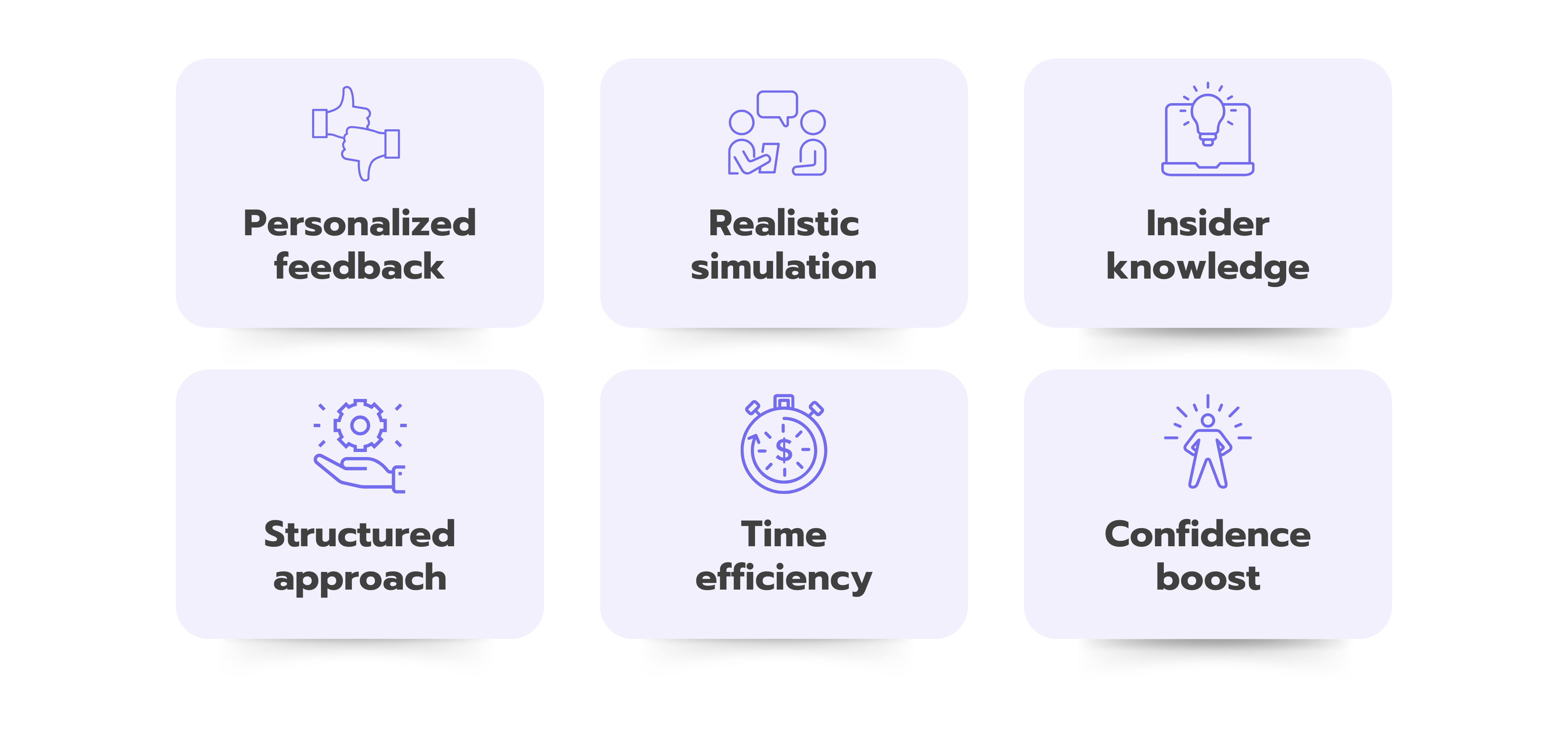
Personalized Feedback
One of the primary benefits of working with a case coach is receiving tailored feedback. Unlike general preparation methods, a coach can pinpoint your specific weaknesses and provide actionable advice to improve. This personalized approach ensures that your preparation is efficient and targeted, addressing your unique needs and challenges.
Realistic Simulation
Practicing with a coach allows you to experience a realistic interview setting. Coaches who have conducted numerous case interviews can replicate the pressure and dynamics of a real interview, helping you become more comfortable and confident. This experience is invaluable, as it prepares you to handle the stress and spontaneity of actual interviews.
Insider Knowledge
Experienced coaches often come from prestigious consulting backgrounds themselves. Their insider knowledge about what top firms are looking for can give you a significant edge. They can share insights about the interview process, common pitfalls, and the specific attributes that firms value, ensuring that you are well-prepared to meet these expectations.
Structured Approach
A coach can help you develop a structured approach to solving case problems. This structured thinking is crucial in case interviews, where clear, logical, and well-organized answers are highly valued. Coaches can teach you frameworks and methodologies that streamline your problem-solving process, making your responses more coherent and compelling.
Time Efficiency
For candidates with limited preparation time, coaching is a highly efficient way to get ready. Coaches can quickly identify areas that need improvement, helping you focus your efforts where they are most needed. This targeted preparation can save you time and help you progress faster than you would on your own.
Confidence Boost
Confidence plays a crucial role in interview performance. Regular practice with a coach can boost your confidence by familiarizing you with the interview format and helping you refine your answers. Knowing that you have prepared thoroughly with expert guidance can significantly reduce anxiety and improve your overall performance.
How PrepLounge Optimally Supports You With a Wide Range of Coaching Options
🚀 Flexibility and Convenience
PrepLounge offers a variety of coaching options to fit your needs and preferences. You can choose from individual sessions, CV reviews, or comprehensive coaching packages that include multiple sessions or focus on specific topics. Additionally, there are programs available that combine a premium membership with coaching credits, providing a cost-effective way to access top-notch coaching services.
📅 Workshops and Online Events
PrepLounge also regularly hosts workshops and online events led by experienced coaches. These sessions cover a range of topics and provide opportunities for interactive learning and direct feedback. Participating in these events can further enhance your preparation and keep you updated on the latest trends and techniques in case interviews.
How to Find the Perfect Coach to Suit Your Needs
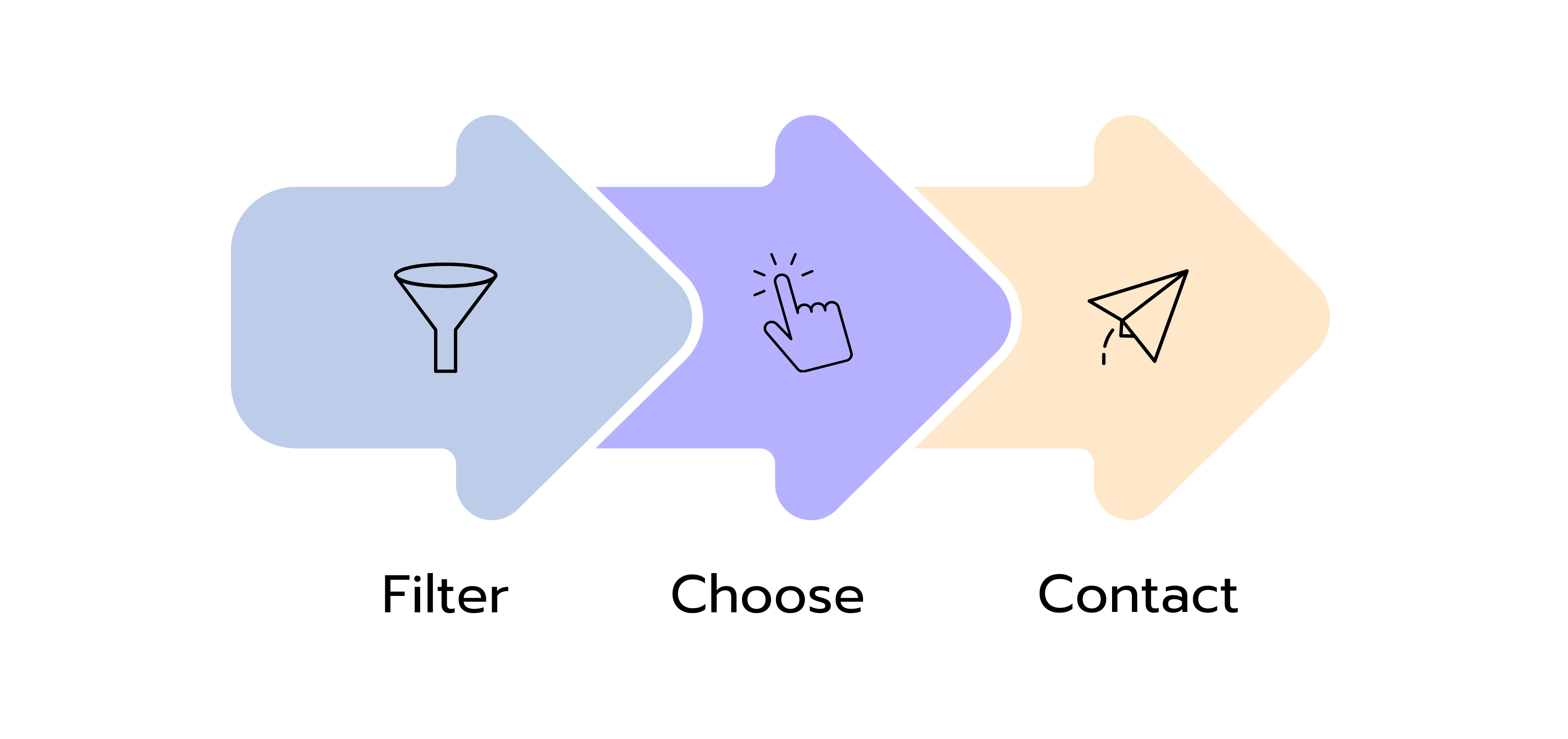
To find the perfect coach for your case interview preparation, you can proceed in three steps within the coach overview:
Filtering: Begin by filtering the coaches based on your most important criteria, such as price per coaching session, or employer.
Selection: Choose up to 10 coaches whose profiles, ratings, Q&A contributions, and PrepLounge awards you wish to explore further.
Contacting: Reach out to 2-3 coaches to address any potential questions or concerns about their coaching approach. Feel free to ask if they offer a free intro call.
What Makes a Good Coach?
Good coaches are characterized by the following features:
Customization: they tailor the coaching to your specific needs.
Good rapport: They make you feel comfortable and work well with them.
Transparency: They offer you full transparency about the coaching process on PrepLounge.
Final Thoughts on Working With a Coach
Practicing with a coach is a strategic investment in your case interview preparation. The personalized feedback, realistic simulation, insider knowledge, and confidence boost that coaches provide can make a significant difference in your performance. With the expert guidance available on PrepLounge, you can ensure that you are thoroughly prepared and ready to excel in your case interviews.
By leveraging the expertise of experienced case coaches and taking advantage of the diverse coaching options and events available on PrepLounge, you can maximize your preparation efficiency, build your confidence, and increase your chances of securing a position at a top consulting firm.
Has anyone heard back from Bain, EY, or PWC after pymetrics assessments?
3 hrs
100+
5
Best answer by
Margot
Hi there,
Applying on the 26th of August and not hearing back yet tells you very little, and the replies you get in this thread will tell you even less. Other applicants are the worst available sample, because the people who have already heard back are far more likely to post than the people sitting in exactly the silence you are.
A few things I would do instead of counting days:
- Check what each of the three firms actually sent you. Bain's own careers page currently describes its digital assessment as Sova or TestGorilla rather than pymetrics, and the PwC and EY formats differ by country and by service line. The name on the assessment matters, because it tells you whether you sat a step that produces a fast automated cut or one that queues for a human.
- Use Bain's published guidance as your clock. Bain states that applicants can expect to hear within 60 days, which puts an application from 26 August well inside the firm's own stated window. I would not follow up before that.
- Send one short status email to the recruiter named on your confirmation, and only once a firm has passed its own published timeline. Ask where the file sits, not how you performed.
- Assume all three are still live and prepare on that basis. The cost of being wrong in that direction is a few weeks of case practice.
If PwC or EY comes back next week with a first round, the version of you that has been refreshing this thread and the version that has been running cases are two different candidates.
Hi there,
I would prepare as if your case could come from any industry. Expert candidates are sometimes given a case inside their own domain, but that is not something you can plan around, and preparing on finance alone is the version of this that goes wrong. The track narrows what you are hired to do. It does not narrow what you are asked in the interview.
On the bar, a few distinctions I would make:
- The case bar is not lower. Expert candidates are not scored more gently on structure, math or communication, and assuming otherwise is the most common preparation error on this track.
- What is genuinely added is the expertise scrutiny. Expect technical questions or a conversation about your own work outside the case, and expect it to go deeper than a generalist would face on any subject.
- The test underneath both is whether you are credible in front of a client quickly. A generalist is hired on potential. An expert is hired on what they already know, which is why the depth questions carry weight they would not carry elsewhere.
- Practise finance cases last. It is the one area where you will not be caught out, so it is the worst use of your remaining preparation time.
The thing I would check before building a plan around any of this is which firm and which practice you are applying to, because how much the case leans on your domain varies between them. Ask the recruiter directly. It is a reasonable question and the answer changes what you should practise.
How Can Attending Conferences in India Improve Career Opportunities?
3 hrs
< 100
5
Best answer by
Carlos
Hi there,
Yes, conferences can definitely help, but the value usually comes from how you use them, not simply from attending.
I would approach them like this:
- Choose conferences based on who will be there, not just the event name. Check the speakers, sponsors, companies and attendee profile beforehand. If your target firms or relevant industry people are there, the event becomes much more valuable.
- Start networking before the conference. Identify a small number of people you genuinely want to meet and reach out in advance. Then the event becomes an opportunity to continue an existing conversation rather than starting completely cold.
- Aim for a few meaningful conversations, not dozens of contacts. It is much better to have 3 people who actually remember you than to collect 30 LinkedIn connections.
- Use those conversations to understand what firms are hiring for, which skills are becoming more relevant, and what teams are growing. That information can later help you target applications much more effectively.
And the follow-up is critical. A short message after the event referring to something specific you discussed is what turns a conference interaction into an actual relationship.
I would therefore not think of conferences as something that adds much value to your CV by itself. Their real value is that they can give you access, market insight and relationships that later translate into opportunities or referrals.
Best,
Carlos
How long does it take to get SOVA assessment after submitting application (Bain London)?
3 hrs
< 100
4
Best answer by
Franco
Hi there,
There is no fixed interval, and anywhere from a few days to a couple of weeks after submitting is normal. I would treat the ten-day mark as the point where a follow-up to the recruiting team becomes appropriate, kept to three lines: thank them, confirm you are still interested, ask for an expected timeline.
If you want something more specific to your situation, feel free to write to me, happy to help.
Best,
Franco
Hi there,
I would absolutely not name five to seven people in the letter, because it is redundant and adds nothing: the referral you already hold is what carries the signal internally, and a list of contacts reads as an attempt to prove effort rather than motivation.
I would stop at one name, two at the most, and who the person is decides whether it is worth including at all. A Managing Director or Partner, and even more so a Senior Managing Director or Senior Partner, is always worth naming. Someone in the middle of the ladder, a Project Leader or a Principal, is worth naming only if they sit in the office you are applying to. Below that the name adds no weight, so use the insight from the conversation without attaching a name to it.
If you want something more specific to your situation, feel free to write to me, happy to help.
Best,
Franco
How big is the case study Interview skill gap from T3 to T2 firms?
3 hrs
< 100
5
Best answer by
Tarek
I would not treat T3-to-T2 as a fixed jump in difficulty; the more useful question is which skills the target interview will test and how consistently you can demonstrate them.
The gap is usually less about suddenly needing a secret set of harder frameworks and more about the level of precision expected:
1. Structure: Can you define the decision and build a tailored issue tree, rather than start from a memorised template?
2. Quantitative work: Are your calculations fast, transparent and checked, with the business meaning explained afterwards?
3. Judgement: Can you prioritise the next analysis, interpret an imperfect result and change direction when the interviewer gives you new information?
4. Communication: Can you lead the conversation, state a clear answer and support it with the few points that matter most?
I would use your Simon-Kucher experience as a baseline, then do several Roland Berger-style cases under timed conditions and ask your partners to score those four dimensions separately. That will tell you whether you have a genuine skill gap or simply need to adapt to a different case format.
Also check the firm's current recruiting material and any guidance from your recruiter for the specific office and role. Interview difficulty varies by interviewer, round and candidate level, so “T2” alone is not a reliable preparation plan. If you can consistently clarify the problem, prioritise, calculate cleanly and synthesise, you are preparing for the common core.
Recently did McK SOLVE but got a newer version of SFL. Would this affect my score if it's still in "trial" phase?
3 hrs
< 100
5
Best answer by
Franco
Hi,
Nobody outside the recruiting team can tell you how a game that is still being piloted is weighted. The part I would hold on to is that everyone who sat Solve in that window received the same version, so if the instructions were unclear, they were unclear for the whole pool you are compared against.
A new component is always introduced alongside the established ones and validated before it carries its full weight, so it may well be that you are in the pilot phase and that your results are used to fine-tune the assessment for future candidates. It is impossible to know, even for someone inside McKinsey who does not work in recruiting.
I wish you good luck though,
Best,
Franco
Hey there :) Bain is definitely active in the Middle East, including experienced hire recruiting, although hiring needs can vary quite a bit by office and level. Arabic is a strong advantage for many ME roles, particularly for government and local client work, but I would not treat it as a universal requirement unless the specific role says so.
Ops is also a meaningful capability in the region. Bain works across strategy, operations, transformation and performance improvement, so an Ops background can be very relevant, particularly given the amount of large scale transformation work in the GCC. I’d position yourself around the specific operational problems you have solved rather than simply saying you want “Ops.”
Best, Alessa :)
HI There, Bhuvan this side. i'm a masters student in international finance with no prior experience. Is it possible to get into consulting, if yes what are the most important things to look after so that i will be more easy for me to achieve this. THANK YOU
3 hrs
< 100
4
Best answer by
Franco
Hi Bhuvan,
Yes, it is possible. Not having professional experience does not rule you out, though it does put you slightly behind candidates with the same profile who also did an internship or two.
To compensate for that, I would give real space in your CV to extracurricular experiences that show impact, problem solving and leadership.
I would also work on getting a referral before you apply. It is not mandatory, but on a profile like yours it makes a real difference.
On timing, work backwards from the application deadlines of your program's recruiting cycle rather than forwards from how prepared you feel.
If you want something more specific to your situation, feel free to write to me, happy to help.
Best,
Franco
Questions about market size are frequently asked in case interviews in consulting because they require a blend of logic, mathematics, and common sense. They can be asked as standalone questions or as part of a larger case. Applicants who are familiar with market sizing questions can really perform here.
Market entry cases are one of the key issues in the consulting industry and present consultants and firms with unique challenges and opportunities. These cases require deep analysis and strategic planning to successfully enter new markets.
Brainteasers are a type of problem that focuses on a single issue rather than complex business cases. They require out-of-the-box thinking, logic or math skills and can take the form of riddles, word problems or visual puzzles. These tasks are designed to test your problem-solving skills, analytical thinking and ability to remain calm under pressure.
Typical problems cover everyday life's topics and might even include unrealistic assumptions. All necessary information is usually included in the question so that further assumptions are not necessary. This article explains in more detail why brainteasers are useful in case interview preparation and how to solve them.