







Topic Overview
Topic Overview
Back to overview

Emotional Intelligence

Emotional intelligence means being aware of, understanding, and managing your own emotions – while also accurately interpreting the emotions of others and responding appropriately. It helps you handle stressful situations, strengthen relationships, and communicate more effectively. Especially in consulting, where you work closely with clients and teams, it can be a real advantage. πŸ’‘πŸŒŸ

The Five Key Components of Emotional Intelligence

The Five Key Components of Emotional Intelligence

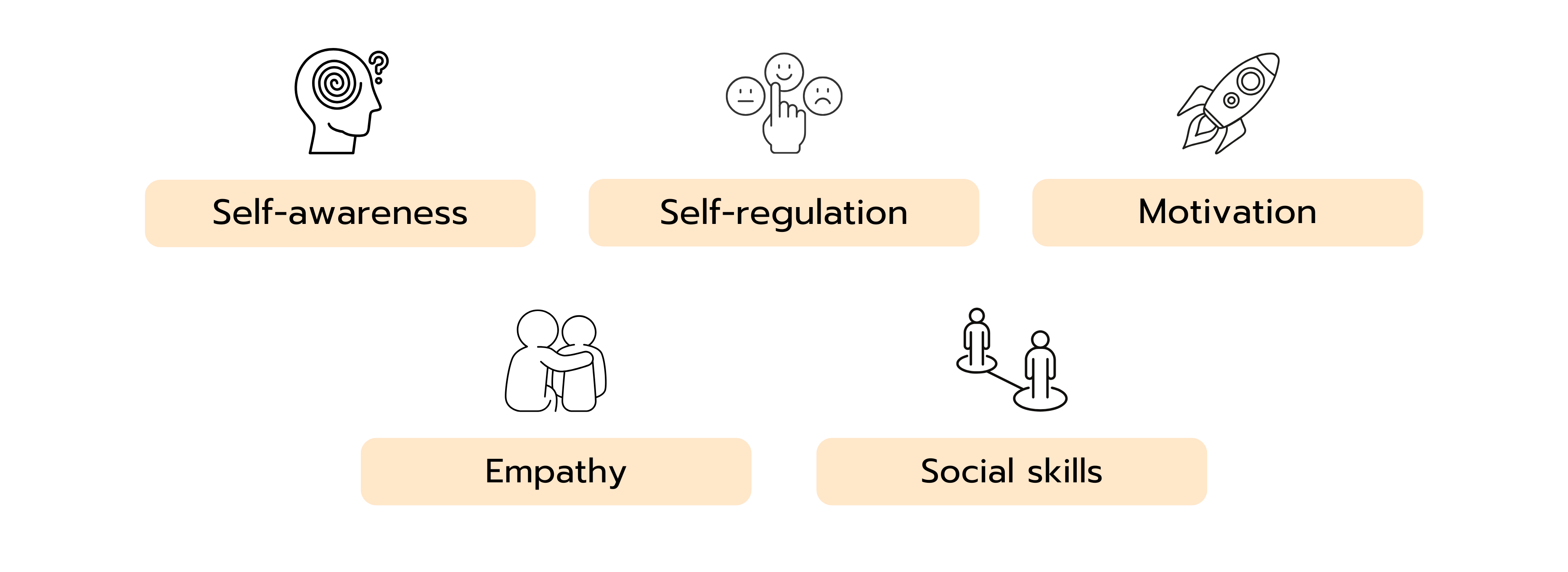
βœ” Self-awareness – The ability to reflect on your own emotions and assess them realistically.
βœ” Self-regulation – The conscious management of emotions to remain professional in any situation.
βœ” Motivation – The inner drive that helps consultants overcome challenges.
βœ” Empathy – Understanding the emotions of others, essential for working effectively with clients and teams.
βœ” Social skills – Strong communication, conflict resolution, and teamwork as key success factors.

Β 

Why is Emotional Intelligence Important in the Application Process And the Consulting Industry?

  • Client relationships: In consulting, managing client relationships and expectations is crucial. Emotional intelligence helps you better understand their needs, communicate more effectively, and build long-term relationships.
  • Teamwork: Consulting teams often collaborate on complex projects. High emotional intelligence makes collaboration easier, reduces conflicts, and fosters productive team dynamics.
  • Leadership skills: Especially in leadership roles, emotional intelligence is essential. Leaders need to motivate, resolve conflicts, and create a positive work environment – all of which are much easier with a high level of emotional intelligence.
  • Crisis management: Consultants often face unexpected challenges and high stress. Emotionally intelligent individuals remain calmer in such situations, make clearer decisions, and can respond appropriately.
  • Client satisfaction: When you truly understand clients, you can offer more tailored solutions – leading to happier clients who are more likely to recommend your consulting services.

Β 

Conclusion

Emotional intelligence is crucial both in the application process and in daily work. It helps build interpersonal relationships, communicate effectively, manage conflicts, and create a positive work environment – all of which lead to better consulting results and greater success. πŸš€

Β 

Let's Move On With the Next Articles:

Information Technology Infrastructure Library (ITIL)
Common Terms of Business
The Information Technology Infrastructure Library (ITIL) is a globally recognized set of best practices designed to support the delivery of high-quality information technology (IT) services. Developed during the 1980s by the United Kingdom's Central Computer and Telecommunications Agency (CCTA), ITIL was born out of the recognition that organizations increasingly relied on IT, yet there was a lack of established practices to maximize IT's effectiveness.The CCTA, tasked with developing methods for more efficient and cost-effective use of IT resources, initially launched ITIL as a series of books, each one covering a specific practice within IT service management. Over time, the library expanded and was updated to keep pace with the fast-evolving world of IT, eventually becoming a comprehensive framework that outlines a set of detailed, interlinked processes for managing all aspects of IT infrastructure, development, and operations.The first version of ITIL, known as ITIL V1, was published in the late 1980s and early 1990s. It was followed by ITIL V2 in 2000, which brought a more process-oriented approach. In 2007, ITIL V3 introduced the service lifecycle concept. The most recent version, ITIL 4, released in 2019, expanded to include practices that align with modern digital businesses, including Agile, DevOps, and Lean.Today, ITIL is owned by AXELOS. It continues to provide a robust and adaptable framework for managing IT services, enabling organizations to navigate the complexities of the digital age worldwide. Its enduring success attests to its effectiveness in enhancing IT service management across various industries worldwide.Synonyms: While ITIL is the most recognized term for this framework, it is also occasionally referred to as "IT Service Management" or "ITSM."
To the article
DevOps
Common Terms of Business
DevOps is an innovative software development strategy conceived around 2008. This paradigm arose from the need for more effective collaboration between project managers, developers, and operations staff to align with business objectives more efficiently. The term itself is a portmanteau of 'development' and 'operations.'The primary aim of DevOps is to enhance the speed, efficiency, and quality of software delivery. It achieves this by integrating traditionally siloed departments β€” development and operations β€” fostering a collaborative work environment instead of working in isolation. This synergistic approach propels faster and more efficient product release cycles, thereby reducing the time-to-market.One of the distinct features of DevOps is that it promotes shorter, controllable iterations of software development and delivery. This is possible through a shift in the organizational mindset, enhancement of practices and procedures, and an extensive emphasis on automation and technology. The continuous feedback loop in the DevOps model allows for the early detection and rectification of errors, ensuring a high standard of quality in the final product.In the modern technical environment, the presence of a dedicated DevOps team is becoming increasingly crucial. With rapid advancements in technology and dynamic market demands, businesses are under immense pressure to deliver high-quality products quickly. A dedicated DevOps team can ensure streamlined communication and collaboration, quick problem-solving, and efficient product delivery, aligning with the market pace and customer expectations.Synonyms: DevSecOps (when security practices are integrated), BizDevOps (when business stakeholders are heavily involved)
To the article
Five Dysfunctions of a Team
Common Terms of Business
The model of the "Five Dysfunctions of a Team" comes from the business novel of the same name by Patrick Lencioni. The author, an experienced consultant in team development, tells the story of a tech company that was once successful – until the team began to fall apart. Lencioni shows how certain patterns can hinder a team – leading to a real crisis.Especially in study projects, group work, or later in your career (especially in consulting), it’s important to recognize these dysfunctions – and actively address them. Teamwork is more than task division. It thrives on trust, clarity, and real collaboration.Here are the five main dysfunctions – and how to avoid them.Β 
To the article