When preparing for case interviews, ROI and ROAS are two concepts you'll encounter repeatedly. Both are key metrics that enable you to evaluate a company's success and measure the efficiency of investments.
🔎 In this article, you’ll learn how to correctly apply ROI and ROAS in your case analyses and how to structure your answers clearly.
What is ROI, And Why is it Important For Case Interviews?
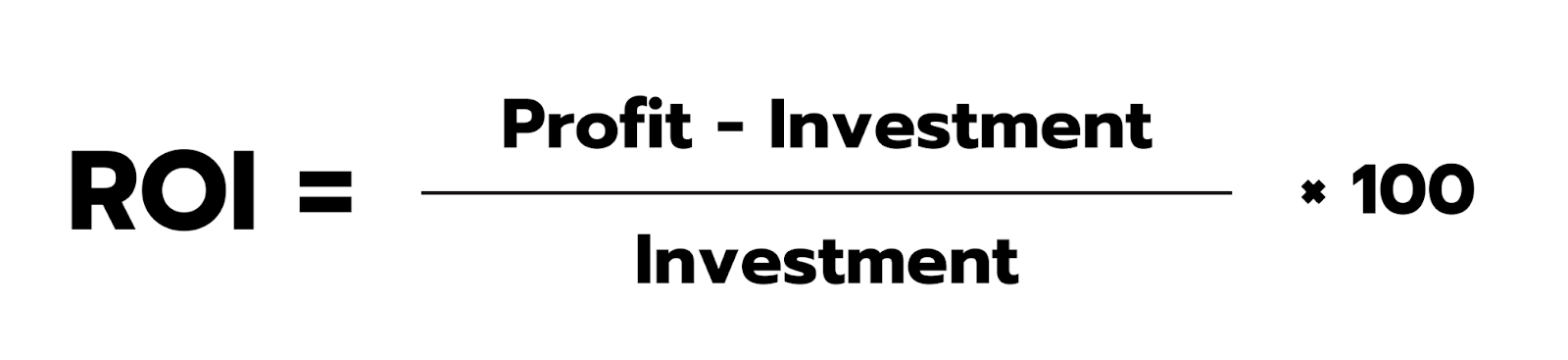
Return on Investment (ROI) measures how much profit a company generates relative to its investments. This metric helps you assess whether an investment was worthwhile. In a case interview, ROI is particularly useful for evaluating the efficiency of a proposed strategy or project.
💡 Pro tip: A positive ROI means the company is earning more than it has invested, indicating a profit. A negative ROI points to losses.
How to calculate ROI:
Example: If a company invests €100,000 and earns €120,000, the ROI is 20%. This means the company has achieved a 20% profit on its investment.
Practice With Our Cases on ROI – Like New Product or Market Entry
You have inherited the “Old Winery” from your grandfather, a winery that has been family-owned for five generations and can be dated back to the 16th century.
Half of the eleven hectares are used to grow white grapes, the other half to grow red grapes. They are grown in a conventional way, i.e. they are not organically farmed and certified. The vine stocks are in a good condition regarding age and care. Overall, the only ¼ of the harvest is made into wine by the winery itself; the rest is sold.
Your grandfather never wanted to change the image of the winery and left the managerial and administrative task to a young and energetic wine-maker. Due to the not so well-known brand, the demand for the “Old Winery” wine is currently rather low.
You do not intent to run the winery operatively, given your limited knowledge of winemaking, but find the idea of owning a winery exciting.
Onlinestar, an online retailer of furniture and garden products (core business), has grown significantly in recent years as a result of an expansion of its product portfolio. The company mainly imports goods from Chinese manufacturers but also operates its own production of cat lavatories (special business) in Eastern Europe.
The company sells its goods via Amazon and eBay, and recently via an online shop on its website. Despite this development, the financial ratios have deteriorated in recent years. In particular, the gross profit margin decreased significantly. Combined with a significant increase in shipping costs, this led to a negative result for the first time in the recently ended fiscal year and a resulting strained financial situation. Against the background of expected stagnating sales for the current financial year, short-term action is required.
The board of Onlinestar asks you for an analysis of the reasons for the negative result as well as a derived recommendation for action. As a consultant, you should bring in your knowledge in online trading and develop solutions. In addition, the management board would like to receive a sales and gross profit plan from you for the current financial year.
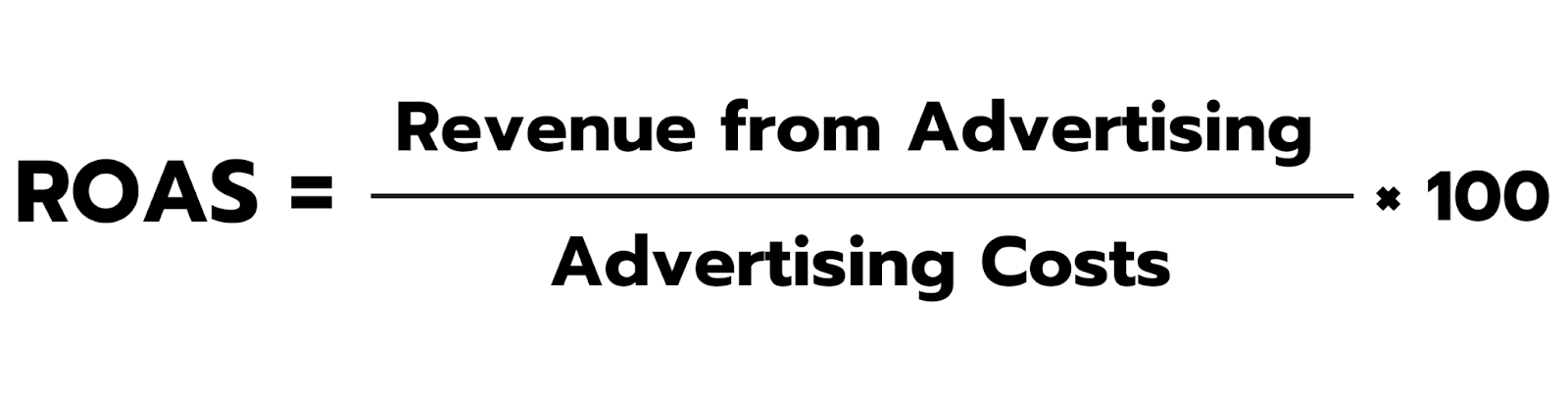
Return on Advertising Spend (ROAS) is a specific metric that plays a key role, especially in marketing cases. It shows how efficiently advertising expenses are converted into revenue. Simply put, ROAS helps you evaluate the success of marketing campaigns.
How to calculate ROAS:
Example: If a company spends €10,000 on advertising and generates €50,000 in revenue, the ROAS is 5, which means the company received five euros back for every euro invested.
💡 Pro tip: A ROAS of 5 or higher is generally considered a good value. However, in case interviews, you should always inquire whether this figure is sufficient to cover costs and achieve long-term goals.
CLIENT OBJECTIVE
Our client, Ledgerline, a US provider of accounting software for small businesses, wants to know whether and how it should move its customers from one-time licenses to a monthly subscription.
BACKGROUND INFORMATION
Ledgerline's desktop software handles invoicing, bookkeeping and tax preparation for small businesses such as shops, tradespeople and agencies. Customers buy a license once and use it for several years, until a new version or a tax rule change prompts them to upgrade. Many also pay for an annual support plan. Ledgerline sells through its website and through independent accountants, who recommend it to their clients and earn a referral fee. Cloud-based competitors are growing fast with monthly plans, automatic bank connections and mobile apps. Ledgerline's customers are loyal, but its customer base is aging and new customers increasingly choose cloud tools. Investors value recurring revenue, but the board worries about upsetting long-standing customers.
CLIENT OBJECTIVE
Our client, Lumen Cinemas, an Italian cinema chain, has seen its profit decline and wants McKinsey's help to understand why and how to restore it.
BACKGROUND INFORMATION
Lumen runs multiplex cinemas in mid-sized Italian cities. It earns money from ticket sales, from food and drinks such as popcorn and soft drinks, and from advertising shown before the films. A share of every ticket goes to the film distributors. Most of Lumen's other costs, such as rent, staff, energy and maintenance, don't change much with the number of visitors. Since the pandemic, films reach streaming services sooner, and audiences come back mainly for big releases. Lumen's sites are older than those of a premium chain that has been expanding with large halls and reclining seats. The CEO wants a clear view of what is driving the decline before deciding what to do.
CLIENT OBJECTIVE
Our client, Nordhavn, a Norwegian seafood company, wants to know whether it should acquire Patagonia Salmon, a family-owned salmon farmer in southern Chile.
BACKGROUND INFORMATION
Nordhavn farms Atlantic salmon in Norway's fjords and sells it fresh and frozen across Europe and Asia. Farming sites in Norway are limited by regulation and expensive to obtain, so Nordhavn's growth at home has stalled. Chile is the world's second-largest salmon producer, with lower costs in some areas, but the industry has a history of biological crises: algal blooms, sea lice and a virus outbreak that once destroyed a large part of the country's production. Patagonia Salmon owns hatcheries, sea farming sites and a processing plant in the Los Lagos and Aysén regions. It sells fresh fillets by air to the US and Brazil and frozen products to Asia. The founding family wants to sell, and Nordhavn has been invited to bid.
Your client is NovaBank, a fast-growing European digital bank offering current accounts, debit cards and credit cards.
Over the past year the value of fraudulent card transactions has increased significantly. NovaBank relies on a rule-based fraud system, for example blocking transactions above certain amounts or coming from unusual locations. The system has two problems: it misses many sophisticated frauds, and it blocks a large number of legitimate customer payments.
NovaBank is considering replacing or complementing its rules with a machine-learning model, and has asked BCG X to assess whether machine learning can materially improve fraud detection, how the solution should be designed, what value it could generate, and how to roll it out without damaging the customer experience.
Your client is AltaVia Elevators, a Vienna-based elevator manufacturer and the number 4 player in Europe. The company has two businesses:
New equipment: AltaVia sells about 20,000 new elevator units per year to construction projects, generating about EUR 1.6 billion in revenue.
Service: AltaVia maintains about 400,000 units under paid service contracts, generating about EUR 960 million in revenue. Every installed elevator legally requires certified maintenance, and new units include two years of free maintenance by AltaVia. When that period ends, the building owner decides whether to sign a paid AltaVia service contract or switch to a third party. Paid service customers can also leave AltaVia later.
New equipment sales have just reached a record high and the order book is full. Yet group operating profit has declined for the third year in a row. Over the same period, LiftServ, a PE-backed independent service group, has been buying small maintenance firms across Europe and prices standard maintenance about 30% below AltaVia.
The CEO wants to know: why is profit falling despite record sales, and what should AltaVia do about it?
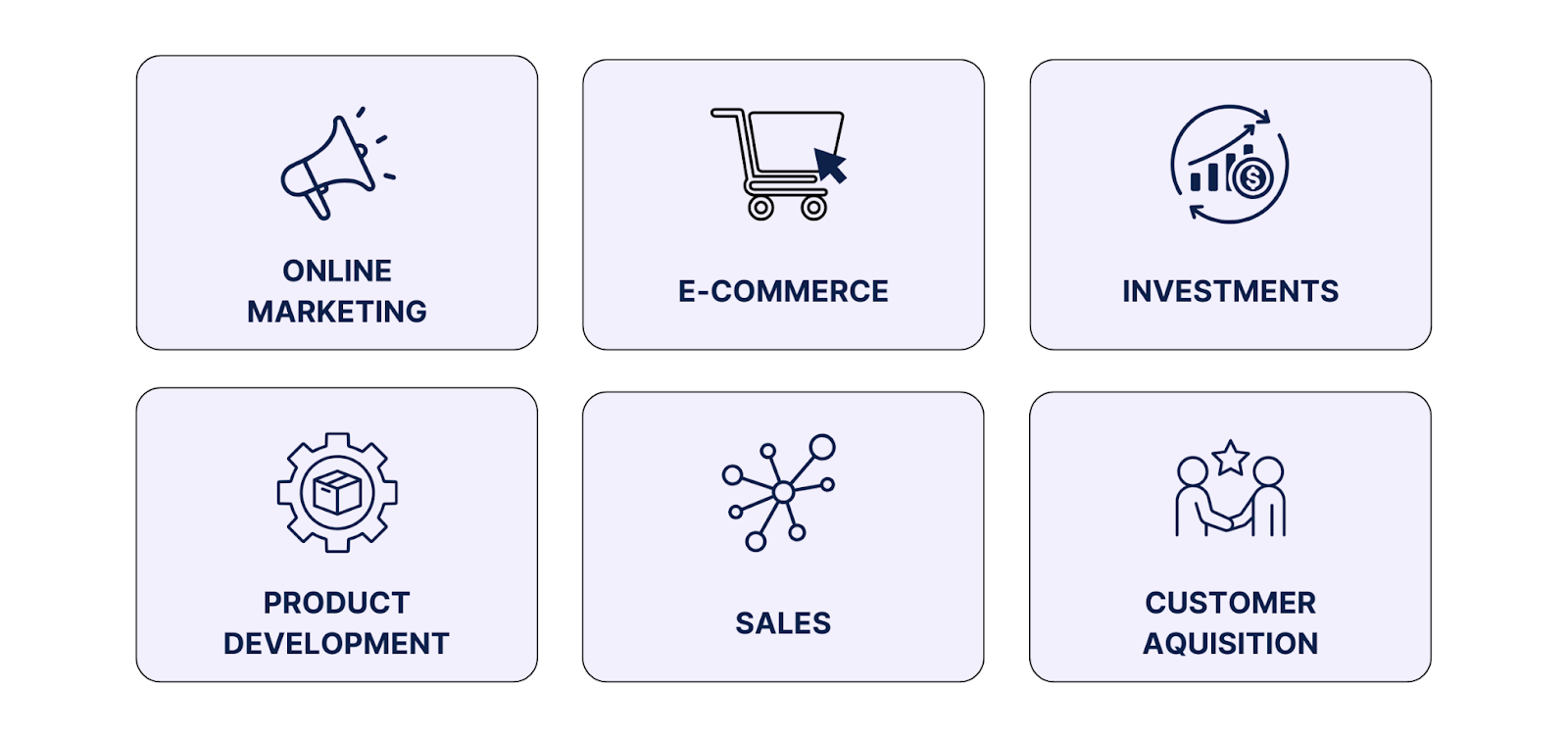
ROI and ROAS are used in many areas, especially in the analysis of investments and marketing measures. Here are some important application areas:
Online marketing: Companies use ROAS and ROI to measure the success of digital advertising campaigns like Google Ads and Facebook Ads.
E-Commerce: ROI and ROAS are employed to assess the effectiveness of online sales strategies like pay-per-click advertising or social media marketing.
Investments: Investors and companies use ROI to calculate the profitability of investments in stocks, real estate, and projects.
Product development: ROI is used to evaluate the success of new product launches and the associated investments.
Sales: Companies analyze ROI to monitor and adjust their sales strategies.
Customer acquisition: ROAS and ROI play an important role in measuring the effectiveness of customer acquisition and retention strategies.
Why Are ROI and ROAS Important in Case Interviews?
In most case interviews, you are expected to assess financial or operational decisions. Specific metrics like ROI or ROAS are often used to determine how efficient a measure is. Both metrics indicate how well a company utilizes its resources – whether in advertising or investments.
This means you need to be able to not only calculate ROI and ROAS, but also contextualize them correctly. You must understand when a number is good or bad and which additional factors to consider, such as market trends, customer goals, or competitive conditions.
💡 Pro tip: When interpreting ROI and ROAS, it’s essential to understand the specific case. In consulting, there is no "one-size-fits-all" solution. You should always tailor the framework to the respective client and situation.
Deepen Your Knowledge of Financial Metrics Now
Mental Math Tool
Train your mental math skills and compete with the community!
ROI and ROAS are key metrics in many case interviews. They help you evaluate the efficiency of investments and advertising measures.
ROI indicates how well an investment has performed. A positive ROI signals profit, while a negative ROI indicates loss.
ROAS measures the effectiveness of advertising spending. A high ROAS shows that advertising efforts were successful.
Context is everything: Tailor your analysis to the specific needs and goals of the company to provide meaningful recommendations.
Practice makes perfect: Prepare for cases with financial or marketing-related tasks to get comfortable using these metrics.
Let's Move On With the Next Articles:
Break-Even Analysis
Case Math
The break-even analysis helps you find the point at which a company’s total revenue equals its total costs. This analysis allows you to determine the number of product units that need to be sold to reach profitability, given the product’s price and costs.
🔎 In this article, we’ll show you how to tackle the break-even analysis in a case interview. Enjoy reading!
The Cost-Benefit Analysis is not only a powerful decision-making tool in business, economics, and public policy, but it also plays a significant role in case interviews, especially in consulting and strategic management scenarios. The Analysis helps candidates and interviewers alike to evaluate different strategies by comparing the financial and non-financial costs against the anticipated benefits.
🔍 The article deals with the application of cost-benefit analysis for decision-making, the consideration of quantitative and qualitative factors and the evaluation of the relative attractiveness of options. We also provide a specific application example.
When preparing for case interviews, you'll quickly find that "fixed costs" and "variable costs" always come up. These concepts are important not only for financial analysis but also for strategic decision-making in companies. Let’s explore what these costs are and how you can skillfully use them in your cases. ✨