Topic Overview
Topic Overview
Back to overview

Five Dysfunctions of a Team

The model of the "Five Dysfunctions of a Team" comes from the business novel of the same name by Patrick Lencioni. The author, an experienced consultant in team development, tells the story of a tech company that was once successful – until the team began to fall apart. Lencioni shows how certain patterns can hinder a team – leading to a real crisis.

Especially in study projects, group work, or later in your career (especially in consulting), it’s important to recognize these dysfunctions – and actively address them. Teamwork is more than task division. It thrives on trust, clarity, and real collaboration.

Here are the five main dysfunctions – and how to avoid them.


The Five Dysfunctions of a Team

The Five Dysfunctions of a Team
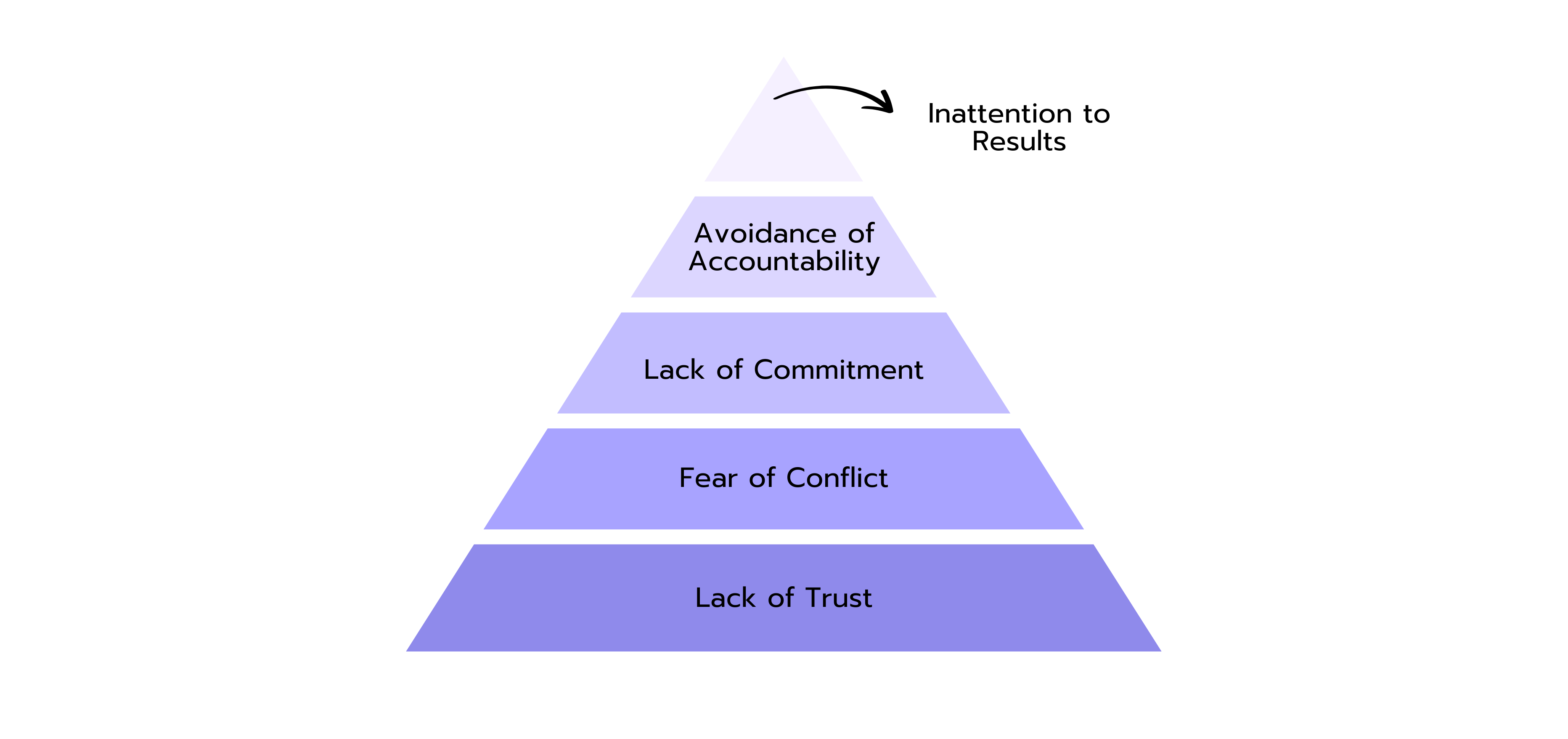
  1. Lack of Trust: Without trust, little happens in a team. If you hide weaknesses or uncertainties instead of addressing them openly, no real collaboration occurs. Teams that allow vulnerability perform better, learn faster, and use everyone’s strengths. Trust is the foundation – and without it, all problems follow.
  2. Fear of Conflict: It might sound strange, but good teams argue constructively. Avoiding conflict often leaves things unsaid, causing tension and frustration. Open and respectful discussions lead to the best ideas.
  3. Lack of Commitment: When decisions aren’t made clearly or collectively, commitment suffers. Why should you commit to a goal you didn’t agree on? Open discussions and clear commitments ensure everyone is truly on board.
  4. Avoidance of Accountability: Accountability works only when clearly assigned. When no one knows who’s responsible for what, the “someone else will do it” problem arises. Set clear responsibilities and hold each other accountable.
  5. Inattention to Results: What matters most is what you achieve together. If personal egos or career goals take over, focus is lost. This is crucial in consulting teams, where results are measurable. Keeping the bigger picture in mind makes all the difference.


Actively Addressing the Dysfunctions

  • Build Trust: Openness, honesty, and vulnerability lay the foundation for trust.
  • Promote Constructive Conflict: Respect different viewpoints and encourage open communication to turn tensions into productive debates.
  • Make Clear Decisions and Commit to Them: Transparent decisions and commitment ensure accountability.
  • Take Responsibility and Demand Accountability: Ensure everyone takes responsibility and holds each other accountable.
  • Prioritize Team Goals: Put the team’s goals first and make sure personal interests don’t hinder collaboration.


What Does This Mean for You as a (Future) Consultant?

In consulting, success rarely happens alone. Projects are complex, require teamwork, and are often under time pressure. Without trust, suppressed conflicts, or unclear accountability, projects can fail.

Lencioni’s model helps you spot these patterns early – and take action. Openness, accountability, respect, and shared goals are not just “nice to haves” but true success factors. Especially in consulting, where you work with many stakeholders.


Let's Move On With the Next Articles:

Kolb's Learning Circle
Common Terms of Business
In the 1970s, educator and psychologist David A. Kolb developed a model of experiential learning called the learning circle. This cycle describes the process of how people develop new skills and knowledge through their experiences.
To the article
Interpersonal Communication
Common Terms of Business
Interpersonal communication refers to the exchange of information, thoughts, feelings, and ideas between individuals. It includes both verbal and non-verbal communication and plays a crucial role in interpersonal relationships. This form of communication is fundamental for connection, understanding, and cooperation between people.The following example will show the importance of interpersonal communication: When two friends talk about how their day was, they share not only facts but also emotions and perspectives that can deepen their relationship. Importance in Interpersonal Relationships and RolesInterpersonal communication is essential to build, maintain, and improve relationships. In romantic relationships, it fosters trust and intimacy; in friendships, it enables mutual understanding; and in professional relationships, it improves teamwork and efficiency. In various roles such as parenting, partnership, friendship, and work environments, it enables conflict resolution, information sharing, and the expression of empathy.Specifically, successful interpersonal communication in a professional context can lead team members to work together more effectively by sharing clear expectations and providing constructive feedback. Factors for Successful CommunicationSuccessful interpersonal communication requires active listening to understand the speaker's message. In addition, understanding nonverbal signals such as body language and tone of voice is significant. Choosing the right words and considering the receiver's emotions are also critical. Openness, honesty, and empathy promote a good communication climate. Challenges and DifficultiesDifficulties in interpersonal communication can arise from misunderstandings, cultural differences, unclear messages, or lack of empathy. Communication barriers such as distractions, prejudice and lack of openness can hinder understanding. Checklist for Successful CommunicationListen actively: Show interest and focus on your communication partner.Clear messages: Use clear and precise language to minimize misunderstandings.Show empathy: Put yourself in the other person's shoes to promote understanding.Pay attention to non-verbal signals: Pay attention to body language, facial expressions, and tone of voice.Openness and honesty: Share relevant information and feelings openly.Ask questions: Clarify ambiguities to promote understanding.Give constructive criticism: Give feedback respectfully and constructively.Be patient: give the other person time to express himself. Interpersonal Communication in Management ConsultingIn management consulting, successful interpersonal communication is critical to success. Consultants need to gather clear information from clients in order to understand their needs. At the same time, they must communicate solutions and recommendations clearly and persuasively to gain the trust of clients. Teamwork and the ability to communicate effectively with all parties involved are essential to successfully complete projects and build long-term relationships.

To the article
Six Sigma
Common Terms of Business
In today's competitive business world, it's not just about delivering products and services. Companies are increasingly focusing on optimizing their processes, avoiding inefficiencies, and taking quality to the next level. This is where Six Sigma plays a crucial role. 💡This data-driven methodology has proven to be highly effective in identifying and fixing errors, as well as improving the overall performance of business processes. It also promotes a culture of data-driven decision-making.
To the article