Topic Overview
Topic Overview
Back to overview

Pareto Principle

Pareto's 80-20 principle is a general rule of thumb that describes an unequal distribution between causes and effects. The principle states that 80% of overall results are driven by 20% of inputs. For example: 80% of work requires 20% effort, 80% of a project requires 20% of the time, and 80% of revenue comes from 20% of clients. When analyzing case problems, the Pareto rule can be utilized to diagnose big issues that might be caused by a much smaller problem. On the other hand, problems that seemingly look huge might result in only a small issue.

Use the Pareto Principle to Logically Focus on Critical High-Impact Areas

The Pareto Principle highlights a common approach for consultants: solving a problem where you can produce the highest positive impact with the lowest amount of effort because consultants usually have very limited time to work on a problem. During a McKinsey, BCG, or Bain interview, you need to find a solution in less than an hour. Therefore, focusing on important aspects of the case is crucial.


Apply the Pareto Principle in Case Interviews

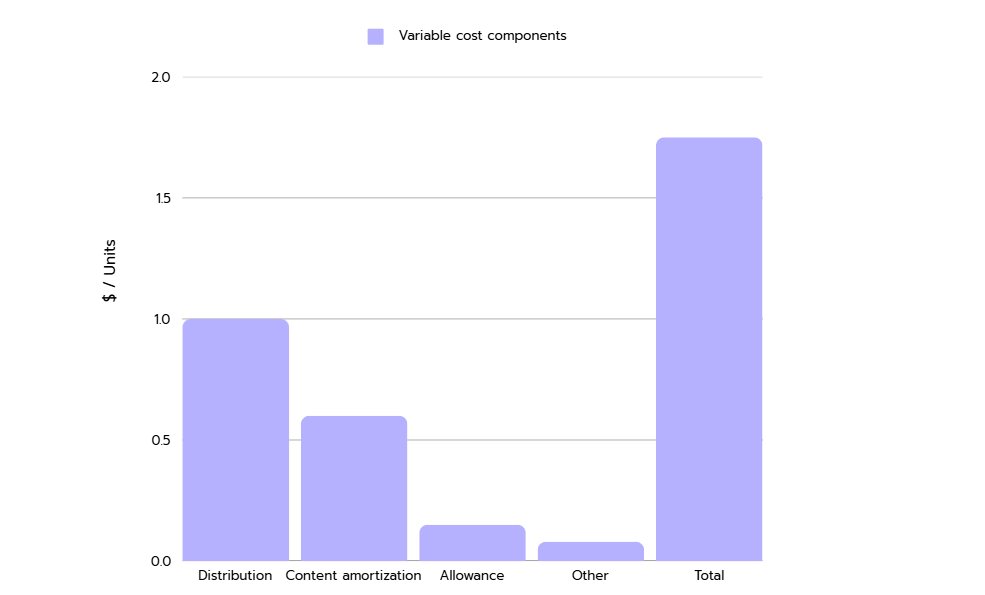
The Pareto Principle should be intuitive when evaluating options to determine the root causes of problems and their solutions. For instance, look at the chart below, the costs per sold product from an analysis of an online store:

Bar chart showing variable cost components per unit, including distribution, content amortization, allowance, other, and total costs.


If you want to reduce the total costs by 10%, you need to save 17.5 cents. By a thorough breakdown of costs, you can focus on the ones with the highest impact: distribution and amortization costs.

Reducing only distribution and amortization costs by 10% will yield savings of 16 cents.

Impact Analysis:

  • Changing 50% of costs positions (distribution and amortization) leads to 91% (16/17.5) of planned cost reduction.
  • In other words, only 50% of the possible effort is required (assuming reduction of costs by 10% requires the same effort for every cost position).

 Want to see the full case behind the example? View and solve it here:

Case by
PrepLounge
Madflix.com
4.4
54.2k times solved
Difficulty: Intermediate
Candidate-led
Market analysis
Profitability analysis
Our client is madflix.com, a website similar to Netflix. The biggest difference is however that Madflix targets mainly m(...)
Our client is madflix.com, a website similar to Netflix. The biggest difference is however that Madflix targets mainly men and provides a majority of(...)

Let's Move On With the Next Articles:

Product Life Cycle
Useful Business Analysis Tools
The product life cycle is a way to map the common stages a product undergoes throughout its lifespan. The product life cycle is typically divided into 5 different stages, each having specific strategic decisions affecting profits and revenues.
To the article
Benchmarking
Useful Business Analysis Tools
Benchmarking, as a strategic process, involves organizations analyzing their performance, products, services, or processes in comparison to those of industry leaders. This process, serving as a mirror, allows organizations to recognize their position in the competitive landscape. It plays a vital role in defining performance standards and identifying areas of improvement, thereby offering avenues to emulate best practices and enhance overall performance.The execution of benchmarking, requires the utilization of certain tools that allow for systematic data collection, analysis, and interpretation. The methodical approach empowers organizations to close performance gaps, implement industry-leading practices, and strive for superior performance, positioning themselves favorably in their industry.Synonyms: Performance Comparison, Competitive Analysis, Peer Comparison

To the article
Core Competencies
Useful Business Analysis Tools
A core competency is a skill or a capability of a company that delivers the highest value for the customer compared to its other activities. The concept is related to value chain, as core competencies are a sub-category of the primary activities, depicting the most crucial processes. In addition, a process is considered a core competency if the activity delivers higher value compared to processes of the same category from its competitors.A core competency usually features the following three characteristics:Challenging to be replicated by competitors because it is a result of an extensive learning period.Delivers unique value to the customers.Can be applied to the majority of products and markets of the company. Use the Strategic Advantages of Core Competencies to Set Up a StrategyCore competencies are an opposite approach to Porter’s five forces, which focus on the external environment as a key factor, which drives decisions. The core competency concept uses companies’ internal capabilities as drivers for strategic choices.Knowing the core competencies of a company in a case interview will help you to understand:Where to focus in terms of introducing and developing new products, one dimension of the Ansoff Matrix.What processes to outsource.How to build a competitive edge in terms of cost or quality.How to create new markets or enter emerging high growth markets Apple’s Approach (Example)Apple's core competencies:Design: Life-style designTechnology: Product differentiation through innovationMarketing:Viral marketingSuperior brand with matching price and placementSecrecy about new productsApple's focus on areas where it can deliver the best value has resulted in a set of very loyal customers, and it is unlikely to convince Apple customers to switch to a competitor's product.Hence, it is crucial for a company to have a core competency and leverage this strength to be successful.
To the article