Divided recaps are one of the popular ways private equity firms take money out of their portfolio companies after a few years of value creation. Instead of waiting for a big exit, like a sale or IPO, the owners make the company borrow money just to pay them a big, fast dividend.
The process and due diligence required also makes dividend recaps one of the most common types of private equity deals investment bankers advise clients on. Read on to understand how this financial strategy works, its pros and cons, real-life considerations, and how it compares to other exit strategies.
What Is a Dividend Recap?
A dividend recapitalization, often called a dividend recap, refers to a situation where a company takes on new debt to pay a large, special cash dividend payment to its shareholders. The debt can be in the form of loans, bonds, or both.
In most cases, divided recaps are done by private equity (PE) firms that own a controlling stake in a particular company. Their motivation is to quickly recoup a portion of their initial investment, or even all of it, before they’re able to collect gains from a sale of the company. So, it is a form of partial exit.
The move might seem greedy on the surface. However, the logic behind the dividend recap strategy serves the ultimate investors behind PE firms, the limited partners (LPs). These include pension funds, university endowments, sovereign wealth funds, and insurance companies. For such investors, receiving cash back early is critical for financial stability and liability matching. Pension funds, for instance, need regular cash flows to meet their promised retirement payments to beneficiaries.
How Does a Dividend Recapitalization Work?
In terms of how dividend recapitalizations work, the process can be simplified in two main steps. The company, at the request of its shareholders, issues new term loans or high-yield bonds. Then they use the cash to pay a special, one-time cash dividend to shareholders.
But there’s usually a lot of work behind those steps. The PE firm and its financial advisers must first assess the potential portfolio company to ensure it’s a good candidate for a dividend recap, evaluate the maximum amount of new debt the company can prudently take on, and perform solvency checks. A solvency check double-checks if a company will be able to pay its debt immediately after the transaction. This is crucial to protect the transaction from being challenged later as a "fraudulent conveyance" by creditors.
After the transaction, the company’s balance sheet shows an increase in liabilities and a decrease in equity.
Pros and Cons of a Dividend Recap
So far, you can probably tell a dividend recap carries more benefits for the owners and substantial risks for the company.

Pros of a Dividend Recap
Here are the benefits of dividend recapitalizations:
- Early Return on Investment (ROI): The PE firm takes cash off the table quickly, often within 3-5 years of acquisition, without having to sell the company.
- Boosted Internal Rate of Return (IRR): Returning cash early in the holding period significantly boosts the Internal Rate of Return (IRR) for the PE firm due to the time value of money.
- De-Risking the Investment: Recovering a good portion of their original cash investment means the PE firm lowers its exposure to the company.
- Maintained Control: The owners get cash out while retaining 100% of their equity stake and control over the company. This means they can still benefit from any future value creation before the final sale or exit.
For the portfolio company, the main benefit might be financial discipline. The increased debt service burden forces management to operate more efficiently, manage working capital tightly, and cut unnecessary costs to ensure they meet their interest payment obligations.
Cons of a Dividend Recap
The downsides of dividend recaps include:
- Higher Leverage: This makes the company much more sensitive to economic downturns, operational missteps, or rising interest rates.
- Cash Flow Strain: New debt means higher interest payments, reducing free cash flow available for reinvestment/Capex.
- Reduced Credit Quality: Rating agencies may downgrade the company due to the aggressive capital structure.
- Fraudulent Conveyance: If the company becomes insolvent (unable to pay its debts) shortly after the dividend recap, creditors may file a lawsuit claiming the transaction was a fraudulent conveyance. If successful, the PE firm may be forced to return the dividend money.
Dividend Recap in Practice
Practically speaking, dividend recaps usually happen in the middle of the holding period. That’s around year 3-5 of a Leveraged Buyout (LBO). This gives the company time to either pay down the initial LBO debt, grow its EBITDA, or stabilize cash flows to create debt capacity.
The credit markets also determine whether it’s an ideal time for dividend recaps or not. They are most common when lenders are willing to lend at low interest rates with loose covenants.
A dividend recapitalization also tends to be a plan B. PE firms sometimes result in dividend recaps if the sell offers are too low. This allows them to pay their investors a return now while waiting another 1–2+ years for a better selling price.
Dividend Recap Real-World Example
A good real-world example of this is Clarios International Inc. which executed a $4.5 billion dividend recapitalization in early 2025. Brookfield Business Partners L.P. acquired Clarios from Johnson Controls in 2019 and maintains controlling ownership.
The company filed for an initial public offering in 2021 but it indefinitely postponed and eventually withdrew the IPO plans in early January 2025, citing market conditions and volatility. Instead of going public, Clarios launched debt sales including a $2.5 billion USD term loan B, an €800 million euro term loan B, and a $1.2 billion high-yield bond.
Dividend Recap vs. Other Exit Strategies
Besides dividend recapitalization, there are other exit strategies private equity firms use. These include:
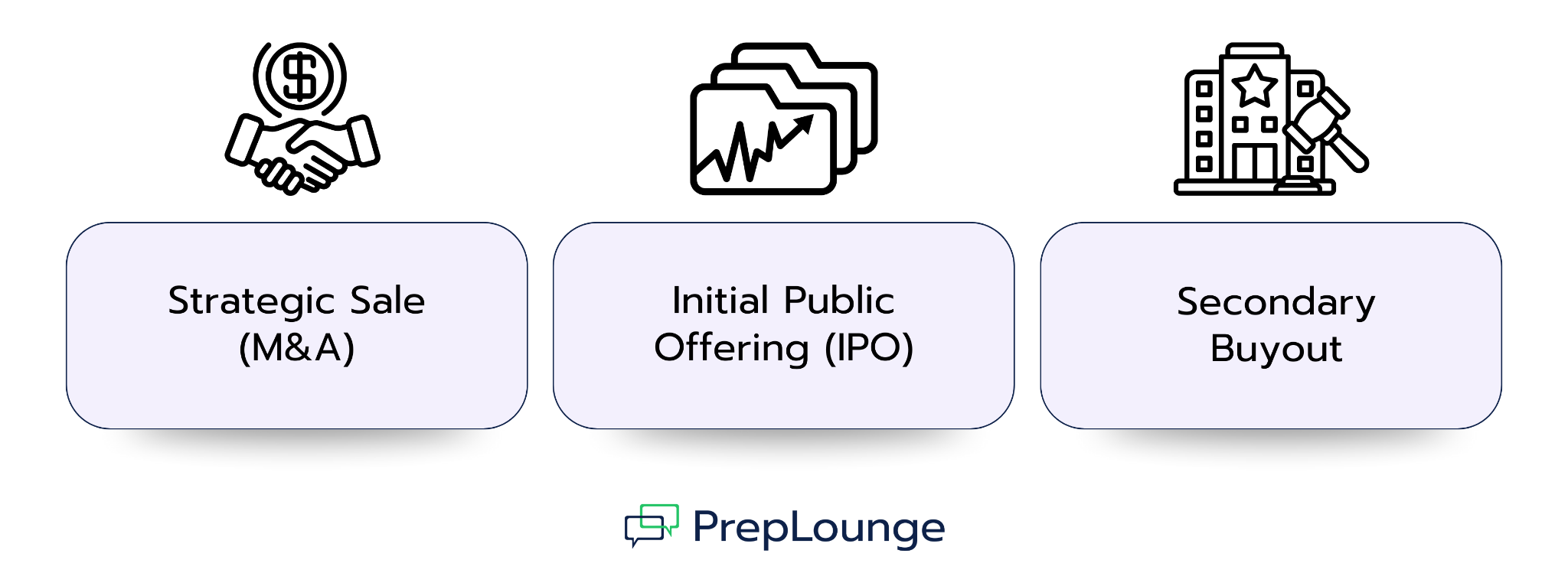
Strategic Sale (M&A)
A full sale or trade sale involves selling 100% of the company to a strategic buyer or another financial sponsor. It provides complete liquidity in contrast to a dividend recap which provides partial liquidity while retaining ownership and future value creation opportunities.
Initial Public Offering (IPO)
An initial public offering (IPO) takes the company public, creating a liquid market for shares and allowing the sponsor to sell down their stake gradually. IPOs usually have premium valuations, but they require preparation, regulatory compliance, ongoing reporting obligations, and market conditions that support public offerings. Dividend recaps are faster, less complex, and maintain private ownership status.
Secondary Buyout
Secondary buyouts involve selling the company to another private equity firm. This provides full liquidity and may achieve attractive valuations when the buyer sees additional value creation opportunities. However, like trade sales, it is a complete exit. Dividend recaps allow sponsors to realize some returns while betting on continued appreciation.
Common Interview Questions About Dividend Recaps
Here are some examples of questions you may come across during investment banking, private equity, or corporate banking interviews about dividend recaps.
1. How would you assess whether a company is a good candidate for a dividend recap?
To assess whether a company is a good candidate for a dividend recap, I would look for:
- Strong, predictable cash flows
- Moderate existing leverage
- Minimal or no heavy capital expenditure requirements
2. Why would a PE firm choose a dividend recap over a sale?
A PE firm might choose a dividend recap if the company is performing well but exit markets are unfavorable, when the sponsor believes more upside remains, or when the fund needs to distribute cash to LPs but wants to retain strong performers.
3. How does a dividend recap show up in the financial statements?
A dividend recap has no impact on the Income Statement. The Cash Flow Statement shows an inflow from debt and an outflow for dividends while on the Balance Sheet, debt increases and equity decreases equivalently.