How the Tax Shield Works
The tax shield follows a straightforward logic: whenever a company records deductible expenses, its taxable income decreases, and therefore it pays less in taxes. This mechanism can be expressed with a simple formula:

- Deductible Expenses: Costs that reduce taxable income, such as interest payments or depreciation.
- Tax Rate: The percentage of taxable income the company must pay to the government. Depending on the jurisdiction, this could be 25%, 30%, or more.
- Tax Shield: The actual tax saving created by the deduction. It represents extra cash flow the company keeps, which can be used to pay down debt, reinvest, or distribute to shareholders.
Example for the Tax Shield:
A company pays $100 in interest expenses and faces a 25% corporate tax rate.
$100 x 25% = $25
The company saves $25 in taxes, effectively lowering the cost of debt.
Another example is depreciation. If a company records $1,000 of depreciation with a 30% tax rate, the tax shield amounts to $300. Even though depreciation is a non-cash expense, it still creates a real benefit by lowering taxable income and reducing taxes.
Tax Shield in Company Valuation
The tax shield is a central concept in company valuation and plays an important role in finance interviews. It shows how tax savings from debt financing or depreciation can influence a company’s value, and why debt financing often appears particularly attractive in valuation models.
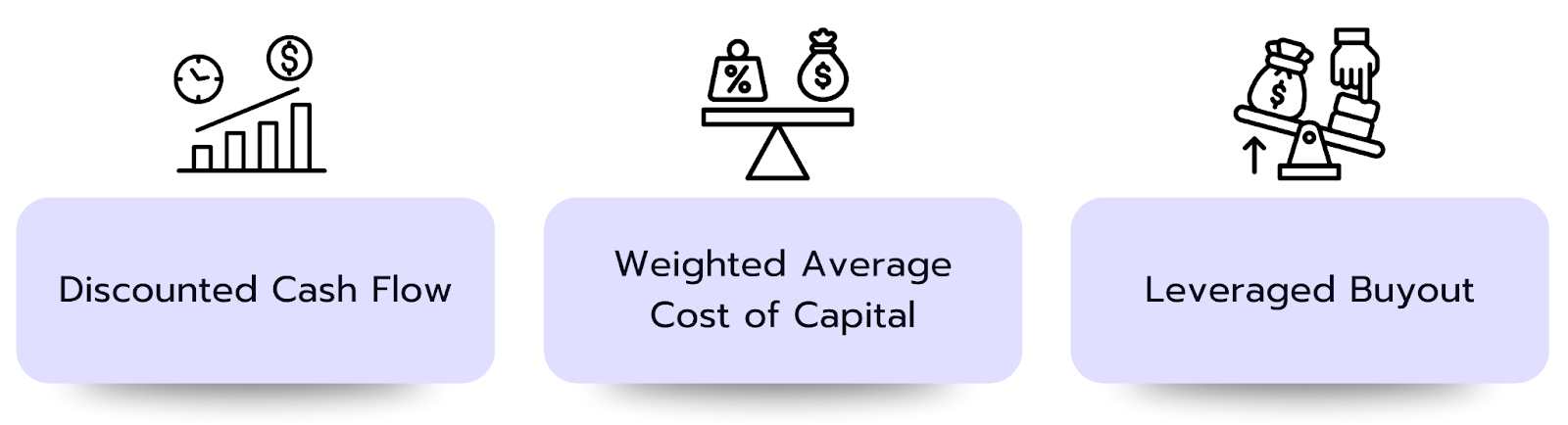
Tax Shield in the DCF (Discounted Cash Flow) Model
In the DCF model, the tax shield affects the free cash flow after taxes. Through interest expenses or depreciation, the tax burden is reduced, leaving more cash flow to be discounted. This increases the calculated company value in the DCF, since the higher after-tax cash flows are discounted.
Tax Shield in the WACC (Weighted Average Cost of Capital)
In the WACC, the tax shield reduces the effective cost of debt, since interest expenses are tax-deductible. As a result, companies pay less for their debt than the nominal interest rate would suggest. This means that after-tax debt costs appear cheaper than equity costs, directly influencing the valuation.
Tax Shield in LBO (Leveraged Buyout) Models
In LBO models, the high share of debt financing generates particularly strong tax savings. The additional after-tax cash flow can be used to repay debt more quickly and increase returns for investors. This makes the tax shield one of the key drivers of the attractiveness of leverage in LBOs.
Limits of the Tax Shield
The tax shield provides clear benefits, since it reduces the tax burden and increases after-tax cash flow. However, its effect is not unlimited. As leverage increases, so does financial risk:
- Higher cost of equity: With more debt, companies are obliged to service regular interest and principal payments before any distributions can be made to shareholders. This priority becomes especially relevant in the event of insolvency, where creditors are paid first and equity holders are last in line - often receiving nothing. To compensate for this additional risk, investors demand a higher return, which drives up the cost of equity.
- Higher cost of debt: Creditors also adjust their behavior as leverage rises. The more indebted a company is, the higher the perceived default risk. To protect themselves, banks and bondholders charge a higher nominal interest rate on additional debt.
The goal is to balance the tax benefits of debt against the rising equity and debt costs. Only if the tax savings outweigh the additional risks and costs does taking on more debt actually create value.
Common Interview Questions about the Tax Shield
Here you’ll find common finance interview questions about the tax shield, complete with concise answers to strengthen your finance interview prep.
1. What is a tax shield?
A tax shield is the reduction in taxes that results from deductible expenses such as interest payments or depreciation. By lowering taxable income, it reduces the company’s overall tax burden and increases after-tax cash flows. This makes more cash available for reinvestment, debt repayment, or distribution to shareholders. In finance interviews, it is often tested in the context of valuation, capital structure, and leveraged buyouts (LBOs), because it explains why debt financing can be attractive.
2. How do interest payments and depreciation create a tax shield?
Both interest and depreciation reduce taxable income, but in different ways. Interest payments lower a company’s profit before tax, directly reducing the amount of taxes owed. Depreciation, on the other hand, is a non-cash expense - it reduces taxable income without an actual cash outflow. Even though no money leaves the company when depreciation is recorded, the resulting tax savings are real. In practice, this means companies pay less in taxes and keep more operating cash flow.
3. What are the limits of the tax shield?
The tax shield makes debt financing attractive, but relying on too much leverage increases financial risk. Higher leverage raises the chance of default and can negatively affect a company’s credit rating. As risk rises, shareholders demand a higher return, which increases the cost of equity. Companies therefore need to balance the tax advantages of debt with the risks of excessive leverage. In interviews, it’s important to show that you understand both the benefits (higher cash flow, lower taxes) and the downsides (greater risk, higher cost of equity).
👉 Want to practice more questions about key finance terms? You’ll find a full set in our case library.