Japan is home to some of the strongest investment banking firms, including Mizuho, MUFG, Nomura, Daiwa, and SMBC Nikko, alongside major global banks like Goldman Sachs, JP Morgan, and Citi.
Tokyo is a leading global financial hub, driven by deep capital markets, the Tokyo Stock Exchange, headquarters of Japan’s megabanks, and its strategic position in the Asia-Pacific region.
Investment banking careers in Japan are becoming increasingly attractive in 2026, supported by rising deal flow, strong hiring demand, competitive compensation, and growing opportunities across specialized industry groups.
If you’re thinking about a career in investment banking in Japan, you can’t go wrong with the top firms. Tokyo, the capital of the 5th largest economy in the world by GDP, hosts the largest domestic Investment Banking (IB) firms like Mizuho, MUFG, and SMBC Nikko alongside major Wall Street giants such as JP Morgan, Citi, and Goldman Sachs.
In this guide, we will cover the most prestigiousinvestment banking firms in Japan and later show you how to choose the firm that fits your career path. We’ll also explore why Tokyo is a major global financial center, determine how attractive IB firms are as employers in Japan, and highlight current hiring trends.
What Are the Top Investment Banking Firms in Japan?
The best investment banking firms to work for in Japan include Mizuho Securities, Mitsubishi UFJ Financial Group, Nomura, Daiwa Securities, and SMBC Nikko Securities. These are all domestic firms with a strong track record in the country, Asia Pacific, and other parts of the world. The typical Wall Street giants like Citi, Goldman Sachs, Morgan Stanley, JP Morgan, and Bank of America sometimes feature in Japan league tables as well. But we will focus on the domestic ones here.
Mizuho Securities
Mizuho Securities is one of the top investment banks in Japan with its history going back to 1873. But the firm doesn’t just want to be on the best banks list. Instead, Mizuho’s goal is becoming the top dealmaker in Asia in the next five to ten years. The firm ranks well in Japan IB league tables in equity underwriting, Mergers & Acquisitions (M&A) advisory, and bond underwriting. Mizuho also has a strong international presence including in Asia Pacific, Europe, Americas, Middle East, and Africa.
Mitsubishi UFJ Financial Group (MUFG)
Mitsubishi UFJ Financial Group (MUFG) is one of the three largest banks in Japan alongside Mizuho Financial Group and Sumitomo Mitsui Financial Group (SMFG). The securities division of MUFG offers services under five primary business lines including capital markets, credit, rates, equities, and structured products.
They rank among the top five in Japan league tables for Equity Capital Markets, Japanese M&A advisory, and bond underwriting. MUFG also has a good global presence with over 150,000 employees in 40 countries.
Nomura
Headquartered in Tokyo and founded in 1925, Nomura Securities is another top investment banking firm in Japan. The firm often takes the top position for Equity Capital Markets deal fees and bond underwriting. Their M&A advisory services also rank well both in Japan and other regions. Besides M&A and capital raising, Nomura’s investment banking division offers fixed income, equity, and other investment solutions.
Their clients are in the wealth management, industrials, healthcare, natural resources and power, Technology, Media & Telecommunications (TMT), finance, and real estate sectors.
Daiwa Securities Group
Daiwa also has a long history in Japan’s securities industry. It was formed in 1943 through the merger of Fujimoto Securities Co. Ltd. and Nippon Trust Bank. However, the company's origins date back to 1902 when Sibei Fujimoto started the Fujimoto Bill Broker business, which later evolved into Fujimoto Securities.
Their services include trading and brokerage, securities underwriting, and IPOs. However, the firm ranks particularly well in domestic M&A advisory rankings and bond underwriting. Daiwa also has offices in America, Europe, Oceania, and Asia.
SMBC Nikko Securities
SMBC Nikko Securities Inc. is the investment banking arm of Sumitomo Mitsui Financial Group. The firm provides securities broking and trading services, M&A advisory, equities and debt capital markets services. It’s recognized as the third largest securities brokerage firm in Japan and its ambition is to deepen cross-border investment banking capabilities.
The company’s origins date back to 1918, but its current form and name came after significant mergers, acquisitions, and rebranding, especially since becoming part of SMBC in 2009 and adopting the SMBC Nikko name in 2011.
You now know the top firms in Japan and you’ll probably choose the Tokyo offices. But why? Here is what makes Tokyo one of the world's most attractive financial centers.
Market Depth and Liquidity: It’s home to the Tokyo Stock Exchange, Asia’s largest, and one of the world’s top five by market capitalization.
HQ for Top Firms: Headquarters for Japan’s megabanks (MUFG, SMBC, Mizuho), major insurers (Nippon Life, Dai‑ichi), and top securities houses.
Concentration of Financial Services: Tokyo brings together other financial services firms including large domestic asset owners and a growing alternative-investor base like Private Equity (PE), Venture Capital (VC), hedge funds.
Strategic Time-Zone advantage: Tokyo anchors the Asia trading day, bridging the U.S. close and Europe’s open to support true 24‑hour coverage for global markets.
Great Environment: The city has favorable regulations and tax policies that encourage business.
How Attractive Are Investment Banks in Japan as Employers in 2026?
Before you settle on building a career in Japan, especially if you’re considering moving there, it’s wise to examine how attractive it is. Investment banks in Japan are highly attractive employers in 2026 mainly due to increase in deal flow and competitive compensation.
In 2024, theJapan M&A market deals totaled 4,700 deals with a combined deal value of $131.3 billion. That was an 8% increase in total deal value compared to 2023. Then in the first half of 2025, the combined deal value of $139.7 billion, surpassing the total annual value for 2024. This growth trend is expected to continue which will create more finance career opportunities.
As for the compensation, top global and Japanese investment banks in Japan are offering increased salaries and perks to attract and retain talent amid intense competition. The lowest paid investment banking analyst in Tokyo earns about $55,000, while the highest paid one gets about $102,000 annually. That’s quite low compared to New York where the total pay range for analysts is $160,000 -$210,000 or London UK where the pay is $165,000 – $254,000. It’s also lower compared to Singapore’s $100,000 – $164,000 per year. However, Tokyo is much more affordable for housing and general cost of living than New York, London, and Singapore.
What Are the Key Recruiting Trends for 2026?
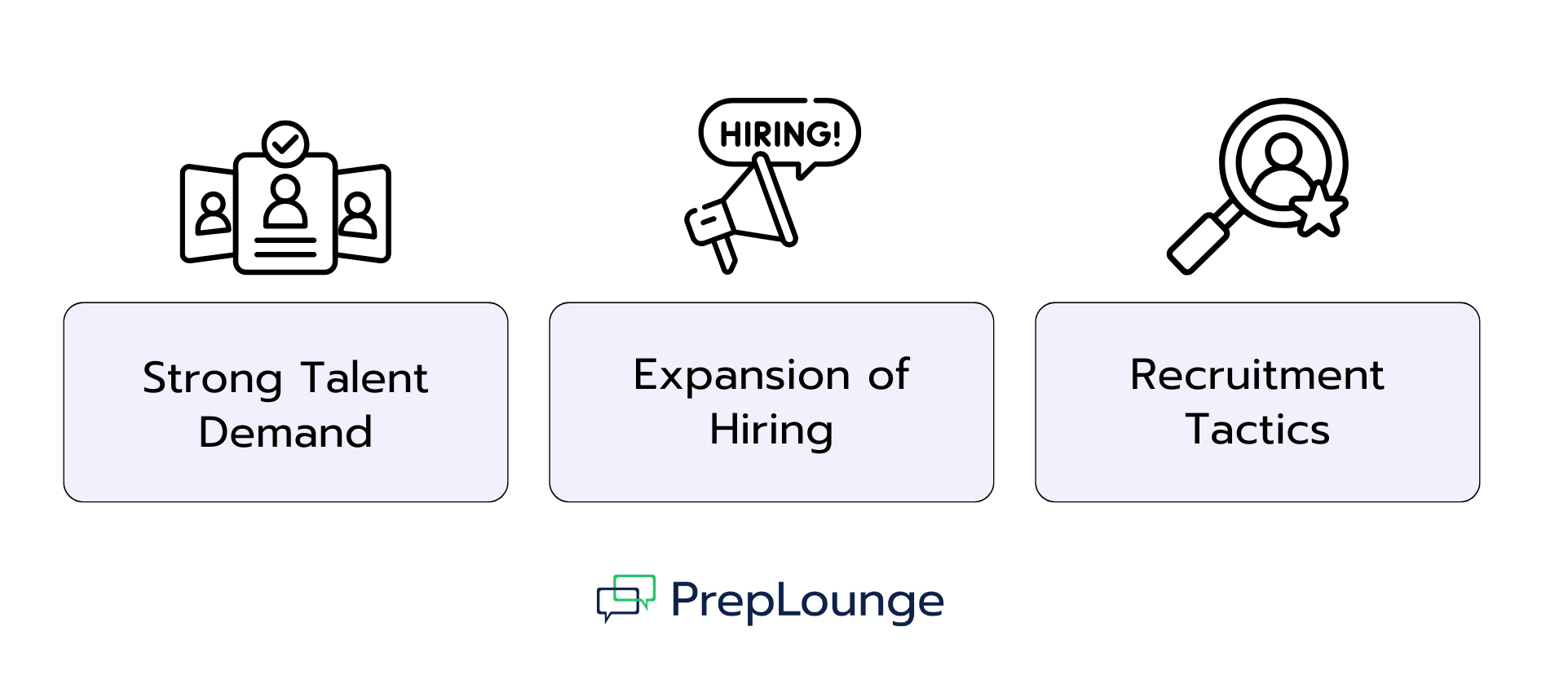
If building an investment banking career in Japan appeals to you so far, the key recruitment trends in 2026 include a hiring boom, expansion of specific industry groups, and aggressive or sometimes creative hiring tactics. Here’s what you should know about them.
Strong Talent Demand
One of the major IB recruiting trends in Japan for 2026 is a hiring boom. Recruiters such as DSJ report that firms are actively recruiting individuals with strong financial modelling skills and a mastery of both Japanese and English languages. The increasing demand for talent results from a weak yen, return of inflation, an increase in foreign investment, and mega deals.
Major global banks like Citigroup are planning to increase their investment banking headcount in Japan by 10-15% over the next year. Wall Street banks are competing fiercely for Japan's top young banking talent by increasing offers by about 10% annually, with associate-level pay rising to about $140,000 per year, although still lower than in New York.
Expansion of Hiring within Industry Groups
Another notable hiring trend in Japan in 2026 is the increased recruitment for bankers in specialized teams. These include those focused on technology, media, telecom (TMT), gaming and internet (GIG), and financial institutions groups (FIG). They are seeking both experienced professionals and hiring new graduates actively.
Aggressive and Creative Recruitment Tactics
Historically, Japan has one of the tightest labor markets with a low unemployment rate of 2.5%. That’s roughly half that of the US. The chronic labor shortage is due to an aging population, and younger workers are less attracted to finance jobs than in the past. As such, Wall Street firms are competing for talent with large Japanese banks using aggressive tactics such as:
Offering higher pay to attract talent, typically a 10% annual increase in offers over the last three years
Re-engaging alumnus or retired employees
Holdingnetworkingparties and "wining and dining" potential candidates
Partnering with recruiters
How Can You Find the Right Firm to Work for in Japan?
To find the best firm for your investment banking career in Japan, start with making a list of potential targets. Then network and connect to filter some out as you assess personal fit. Below is an overview of how to go about it.
Identify Top Investment Banks in Japan
The first step in finding the right firm to work for in Japan is identifying the leading investment banks. Make a list of those known for strong market presence and services such as the ones discussed earlier. Include both domestic and global firms, noting where each is strong.
Research Your Target Firms
These firms vary in culture, client focus, and service areas. Find their transaction history and check Japan league tables to see where each is strong. This will help you determine the ones aligned with personal interests such as M&A advisory, equity research, and trading.
Network and Assess Professional Fit
Once you have a list of potential targets and their deal track record, research each further and connect to assess fit. You can attend career fairs in Tokyo, including those held by universities or professional finance organizations. Look out for industry events as well.
Doing this will give you direct access to recruiters, partners, and banks’ recruiting staff. Try to build relationships with those whose contacts you get to receive insider information on your target firms such as:
Work environment and culture
Compensation and career development opportunities
You can also network by connecting with bankers on platforms like LinkedIn. They may give you insights and sometimes alumni introductions can maximize your chances of getting hired.
Global vs Domestic Firms
If you’re torn between global vs domestic banks, analyze the differences based on your career goals. Generally, Japanese megabanks and global firms differ in work culture. Some Japanese firms emphasize hierarchy and tradition, while foreign firms bring more diverse, inclusive, and flexible work environments. Research reviews from current employees, attend company info sessions, and seek advice from alumni or professionals in the industry to gauge fit.
Conclusion
Tokyo is a global financial hub that hosts Japan’s top investment banking firms such as Nomura, Mizuho, SMBC Nikko, Mitsubishi UFJ, and Daiwa. It’s also home to global banks such as Morgan Stanley, Goldman Sachs, Citi and JP Morgan. To find the right firm for you among the top ones, identify where each is strong, decide between global banks and domestic ones, and network to get insider information that can help you assess for more effectively.
In 2026, the investment banking firms in Tokyo, Japan are more attractive employers compared to previous years due to increasing deal flow, rising compensation, and low unemployment rate. The notable hiring trends include a demand for talent, increased recruitment for specific groups, and aggressive hiring tactics like connecting with alumni.
Most Asked Questions About Investment Banks in Japan
Japan’s leading investment banking firms include Mizuho Securities, Mitsubishi UFJ Financial Group (MUFG), Nomura, Daiwa Securities, and SMBC Nikko Securities. These domestic banks dominate Japan’s league tables in areas such as M&A advisory, equity / bond underwriting, and capital markets.
Many also have strong global footprints across Asia Pacific, Europe, and the Americas. While major Wall Street banks like Goldman Sachs, Morgan Stanley, Citi, and JP Morgan operate in Japan as well, the strongest market presence typically comes from local firms.
Tokyo is considered a major global financial center because it hosts the Tokyo Stock Exchange, Asia’s largest by market capitalization, and serves as headquarters for Japan’s megabanks, major insurers, and leading securities firms. The city also brings together key financial services such as private equity, venture capital, and hedge funds.
Thanks to its strategic time-zone position, Tokyo connects the U.S. market close with Europe’s market open. Favorable regulations and tax policies further enhance its appeal for international businesses.
Investment banks in Japan are considered highly attractive employers in 2026 mainly because of rising deal activity and competitive compensation. Japan’s M&A market grew strongly in 2024 and early 2025, with deal values in the first half of 2025 already surpassing the total for the previous year. This growth is creating more career opportunities.
Analyst compensation in Tokyo ranges from about $55,000 to $102,000 per year, which is lower than in New York, London, or Singapore, but living costs in Tokyo are also significantly lower. Both global and domestic banks are raising salaries and perks to attract and retain talent, making Japan appealing for finance professionals.
Key recruiting trends in Japan’s investment banking market for 2026 include a strong hiring boom and high demand for candidates with financial modelling skills who speak both Japanese and English. Banks are also expanding hiring within specialized industry groups such as TMT, GIG, and FIG, targeting both experienced professionals and new graduates.
Because Japan has one of the tightest labor markets, firms are using aggressive and creative tactics, including higher pay, alumni outreach, networking events, and partnerships with recruiters to compete for talent.
To identify the right investment bank in Japan, start by listing both domestic and global firms with strong market presence. Research their transaction history, Japan league table rankings, and focus areas such as M&A advisory or equity research to see which align with your interests.
Networking is essential, so attend career fairs, industry events, and connect with bankers or alumni on LinkedIn to gain insider insights on culture, compensation, and career development. This combination of research and relationship-building will help you determine the best professional fit.