The Recruiting Timeline in Investment Banking
Investment banking firms usually recruit during specific periods that work for them. These schedules vary depending on the program, firm, year, and candidate level. Here are the common recruitment timelines in investment banking.
Undergraduate Recruiting Timeline
Spring internships for first year students which last a few weeks to a month open applications around September and October. If all goes well, you may get a return offer for summer internship in your sophomore year.
Applications for the summer analyst program which most students do in junior year open about 18 months before actual internship starts. That means they open as early as January or February of the Sophomore year. The applications are on a rolling basis meaning you can get an interview as soon as yours is reviewed, not necessarily after the application deadline. Most banks give offers around April.
A high percentage of interns receive full-time return offers based on their performance during the internship. So the summer analyst program might be the most important step for any aspiring investment banker.
If you don’t secure return offers, another option is the graduate analyst program. It’s often off-cycle hiring as banks try to fill opportunities from those who didn’t accept their return offers. Applications often open during the third year at university around September. Keep an eye on off-cycle opportunities as well.
MBA Recruiting Timeline
If you’re taking an MBA, applications don’t begin until your academic year begins. Here’s the general recruitment timeline for MBA level internships in investment banking:
- First Year (Fall): The recruiting process kicks off shortly after the academic year begins. This involves networking, attending informational sessions, and preparing for interviews.
- First Year (Winter): Applications for summer internships are usually due between mid-November and December, culminating in interviews in January.
- Second Year (Fall): Full-time recruiting for MBA candidates often begins in the fall, with interviews and offers being extended for positions starting the following summer.
Full-Time Recruiting
For undergraduate and MBA full-time roles, the recruitment process begins in August or September for positions starting the following summer. The application deadlines in the U.S. are usually in October, while in Europe, they may extend into November.
Most full-time positions are offered to interns from the previous summer. Then addit positions may become available from mid-August through the fall.
Off-Cycle and Lateral Hiring
Off-cycle recruiting occurs throughout the year as banks hire on a need basis for roles that open unexpectedly. You should monitor job boards, check bank’s career portals, and maintain connections with recruiters to seize these opportunities.
For lateral roles opportunities may arise in the spring for graduating students with previous IB experience or for those seeking lateral moves.
What Does the Application Process for IB Roles Look Like?
The application process for investment banking (IB) roles involves several key steps including networking, submitting applications, initial screening, first-round interviews, superday interviews, and final job offer. Here’s an overview of each of these steps.
Networking
Before you apply for any internship or full-time investment banking role, it’s highly recommended that you network. Start as soon as you step in campus by:
- Attending employer events in and off campus to build relationships and learn about career paths in different firms
- Reach out to alumni and investment bankers in your target firms to set up phone calls or coffee chats
- Look at your university’s LinkedIn page to find alumni who worked or works at your target firms
If you want to secure an investment banking role, working on your networking skills is non-negotiable. You should ideally start networking several months before the formal application process starts, as it can enhance your visibility and chances of being considered for a role.
👉 More information about how to build finance-relationships in our article about Networking in Investment Banking.
Application Submission
Once you have established connections, created a list of target firms, and prepared your materials, the next step is to submit applications when they open. The process involves completing online applications through the bank's careers page. If you’re from a target school, you may also get a chance for on campus hiring as banks come to identify talent there.
Applying online requires providing a resume, and in some cases, a cover letter and academic transcripts. It’s important to ensure all application materials are free of errors, as small mistakes can lead to disqualification.
Initial Screening
After recruiters review the applications, the next stage for shortlisted candidates is an initial screening process, which often includes:
- Online assessments
- A short phone interview or video interview, sometimes using automated platforms like HireVue.
- Questions may cover basic behavioral topics and general interest in the firm and investment banking.
👉 In our article on the HireVue Interview, you’ll get a clear idea of what to expect and how the process works.
First-Round Interviews
Successful candidates from the initial screening are then invited to first-round interviews. These interviews may include a mix of behavioral and technical questions.
You should be prepared to discuss your background, motivations for pursuing a career in investment banking, and relevant technical knowledge, such as financial modeling and valuation methods.
👉 You can find examples to practice with in our article about Technical Questions in Investment Banking Interviews.
Superday Interviews
If you perform well in the first round, you may be invited to a "Superday," which consists of multiple back-to-back interviews with different bankers. This stage is intensive and may include:
- Behavioral interviews focused on cultural fit.
- Technical interviews assessing financial knowledge.
- Case studies or group exercises to evaluate problem-solving skills.
👉 Our article on the Investment Banking Superday covers everything you need to know about this part of the recruiting process.
Conclusion
Recruiters and senior investment bankers at many top firms are cautiously optimistic about hiring activity in IB in 2026. This is largely due to improved deal flow and stronger advisory revenues throughout 2025, which helped stabilize teams after the 2022–2023 slowdown. However, hiring remains selective rather than broadly expansionary, with banks prioritizing high-performing candidates and sector-specific expertise.
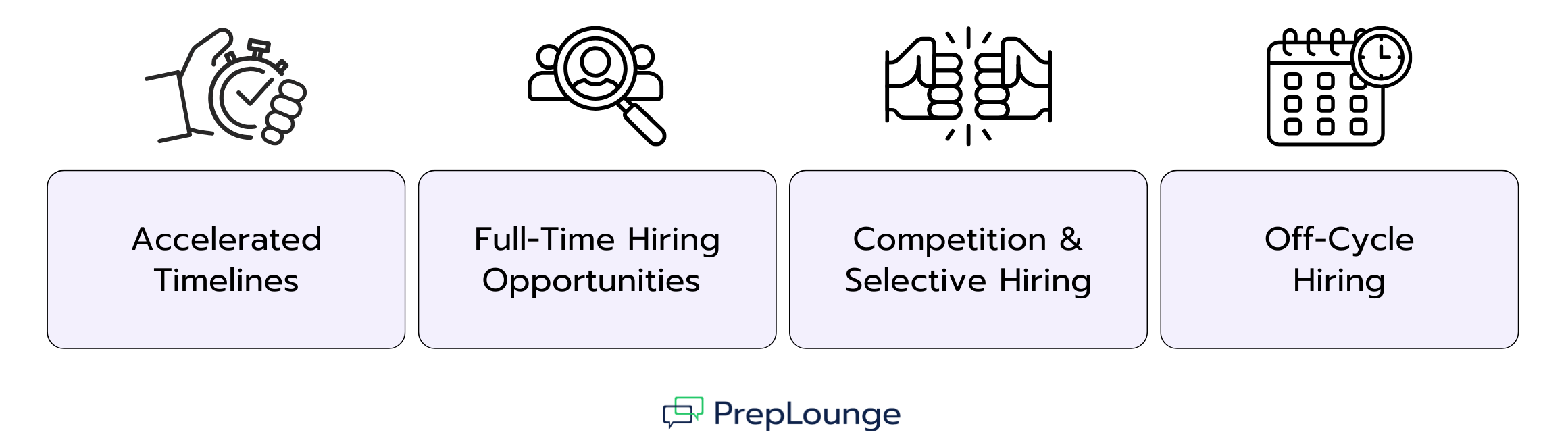
As such, some of the recruitment trends in 2026 include increased off-cycle hiring, accelerated recruitment timelines, selective full-time hiring opportunities (primarily for candidates with relevant internship experience), and continued intense competition due to record application volumes.
Securing an investment banking role still requires networking, closely monitoring application open dates for target firms, and submitting applications early. From there, banks typically conduct resume screenings, first-round interviews, and final-round “Superday” interviews for internship and full-time analyst positions.
Common Questions About Investment Banking Recruiting