1. Blog
  2. Finance
  3. Investment Banking
  4. Area
  5. What Is Investment Banking?

What Is Investment Banking?

Key Takeaways

  • Investment banking goes far beyond numbers: You work on deals, advise companies strategically, and contribute to major transactions.
  • Structured career path with a steep learning curve: From intern to managing director, your responsibilities and skills grow quickly.
  • Wide range of specializations: From M&A to capital markets or restructuring, you can shape your career early on.
  • High demands, strong rewards: Long hours come with high compensation, rapid development, and attractive exit opportunities.

Are you passionate about finance, math, and numbers? Are you good at advising others and solving problems? If so, a career in investment banking might be the perfect fit for you! This demanding job requires a lot of discipline and ambition, but it can be very rewarding. In this article, we provide you with key information about the job as an investment banker, including its tasks, focus areas, and possible career paths. We also highlight the top firms in investment banking and provide an overview of potential salaries.

Investment Banking Tasks: What Investment Bankers Do

Investment banking is a sector of financial services that helps companies and institutions raise capital and execute strategic transactions. This includes services such as advising on mergers and acquisitions, issuing stocks and bonds, and conducting market analysis. Investment bankers act as intermediaries between banks and clients, plan investments, and assist companies in carrying out complex financial transactions.

A successful career in investment banking requires a great deal of patience and perseverance. The tasks of an investment banker can be highly demanding and varied. Let’s take a look at the most common areas of responsibility in investment banking:

Tasks of Investment Bankers
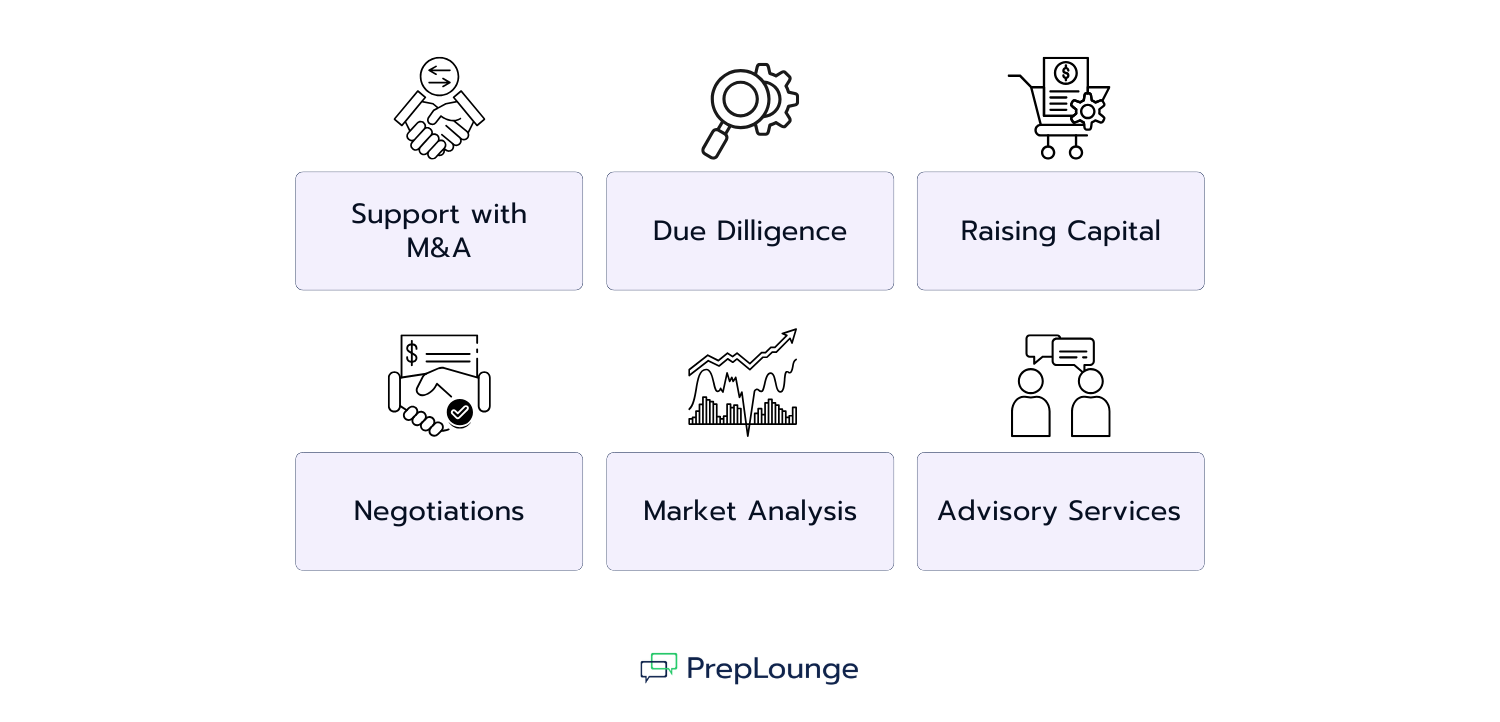
  • Support with Mergers and Acquisitions (M&A): Mergers & Acquisitions are processes where two companies merge into one, or one company buys another. These transactions help companies grow, gain market share, or create synergies. Investment bankers act as advisors and intermediaries in these transactions. They assist companies with strategic planning, evaluating target companies, and structuring transactions. They also help raise capital, whether through equity or debt, ​and conduct thorough due diligence to identify potential risks and opportunities. M&A is a crucial component of investment banking, influencing the development and growth of companies in the global economy
  • Due Diligence: Investment bankers conduct thorough due diligence to identify potential risks and opportunities in a transaction. They analyze the financial, legal, and operational aspects of a company to ensure that their clients can make informed decisions.
  • Raising Capital: Investment bankers perform market analyses to determine a company's capital needs and work closely with investors to secure the necessary funds. They support companies in issuing stocks and bonds or choosing the right financing options.
  • Negotiations: Investment bankers play a crucial role in negotiations with potential lenders and investors. They represent their clients' interests to secure the best terms. In transaction processes, they often act as a bridge between buyers and sellers to reach an agreement and ensure a smooth process.
  • Market Analysis: Investment bankers conduct comprehensive market analyses to examine current trends and identify relevant competitors. These analyses support data-driven decision-making and help evaluate strategic options.
  • Advisory Services: Additionally, investment bankers offer strategic advice on corporate development. They assist their clients with long-term planning and investment decisions to promote sustainable growth and achieve corporate goals.
Land your top job with PrepLounge!
Sign up now for free and get access to our Q&A, top coaches, preparation tools and much more.

Career Paths and Specializations in Investment Banking

Investment banking is far more diverse than it may seem at first glance. Beyond the classic career path from analyst to managing director, there is a wide range of functional areas that shape both your day-to-day work and your future specialization. These include transaction-focused areas such as mergers and acquisitions, capital markets, strategic corporate finance, restructuring, analytically driven fields like equity research, and advisory-related roles such as debt advisory. Each specialization comes with its own focus, tools, and ways of working, giving you the opportunity to develop a profile early on that aligns with your interests.

Many bankers choose to focus on a specific area over time, as this allows them to build expertise more quickly and work on projects that match their strengths. At the same time, it is important to keep in mind that specializing early can make it more challenging to switch to other areas later on.

Career Levels in Investment Banking

If you choose a career in investment banking, there are numerous opportunities for professional growth and attractive promotions available for you. Building strong client relationships is crucial, as trust is essential for securing significant mandates, especially in M&A transactions. It takes years of precise work to gain the confidence of major clients.

Teamwork is equally important. The success of a project depends on collaboration within the team, with each member bringing different skills to the table. Even as an entry-level professional, you can take on responsibilities and significantly contribute to the quality of projects.

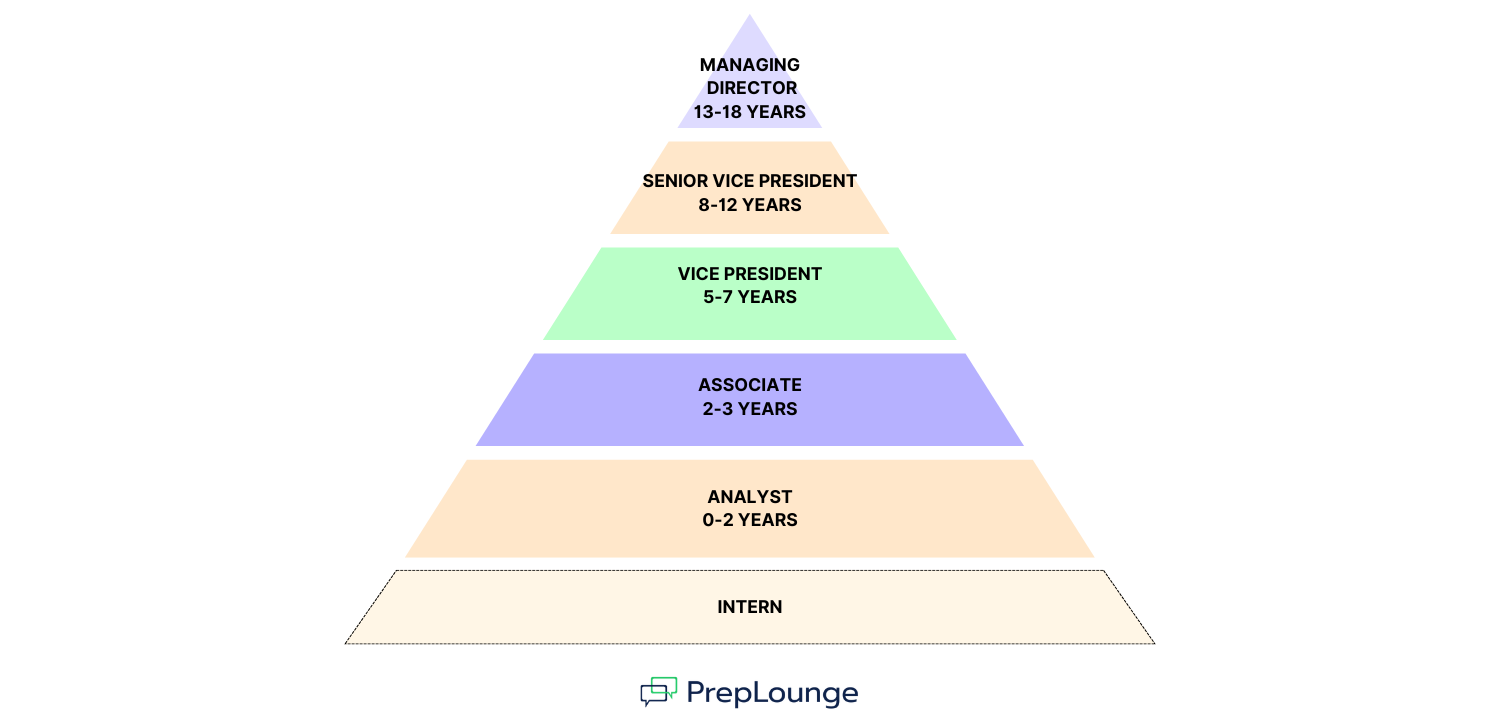
Career Levels in Investment Banking

Interns

Interns in investment banking build financial models, conduct market research, and prepare presentations. They assist with due diligence, analyze financial statements, and support various financial deals.These internships offer valuable hands-on experience and help to build a solid foundation for a future career in finance.

Financial Analyst

After successfully completing a bachelor's or master’s degree, you typically start as an analyst. In this role, your main tasks involve data analysis, creating financial models, and preparing presentations. Analysts also actively assist with transactions. This position generally lasts 2 to 3 years.

Associate 

With a few years of experience or an MBA, you can advance to an Associate position. Associates take on more responsibility, manage projects, and engage in more intensive client interactions. Their duties include overseeing the work of analysts and preparing and presenting strategic analyses. This role typically lasts 3 to 4 years and offers the opportunity for further development in investment banking.

Vice President 

The Vice President (VP) role is a crucial management level in investment banking. VPs are responsible for larger projects and maintain extensive client relationships. Their tasks include project management, delivering client presentations, and supervising associates and analysts. This role requires both strategic thinking and leadership skills and typically lasts 3 to 5 years as the VP continues to establish themselves in the industry.

Senior Vice President 

After several years of successful experience, bankers can be promoted to Senior Vice President (SVP). In this role, the focus is on acquiring new business and maintaining important client relationships. Duties include strategic planning, leading major transactions, and managing and developing teams. This position is key to the company's success and generally requires several years of professional experience.

Managing Director 

With a successful career path and additional years of industry experience, investment bankers can advance to Managing Director. In this role, they are responsible for the strategic direction of the firm and managing significant business units. Managing Directors focus on securing major clients and executing substantial transactions. They play a crucial role in business growth and work closely with their teams to achieve long-term success.

Specializations in Investment Banking

Investment banking offers various career paths, not just within the internal hierarchy but also through specialization in areas such as private equity, venture capital, or asset management. Investment bankers also have the opportunity to work in different international offices of the bank.

Additionally, they can focus on specific fields such as Mergers & Acquisitions (M&A), where they support clients in issuing stocks and bonds, or Corporate Finance, which deals with corporate funding and strategic decisions. In Restructuring, bankers advise companies in financial distress, while Equity Research involves analyzing stocks and making recommendations for investors. Debt Advisory provides support with bonds and debt financing.

A specialization can offer several advantages. By focusing on a specific area, bankers gain deep expertise, which can lead to faster career progression as specialized professionals are in high demand and can build valuable networks within their industry. Specialization also helps differentiate oneself from competitors and offer specific services.

However, a strong focus on one area can limit flexibility to switch sectors or roles. Dependence on industry-specific trends can also be problematic. Therefore, it’s important to carefully weigh the benefits and risks of specialization.


Key Players in Investment Banking: Roles and Participants Explained

Investment bankers play an important role in the financial sector, collaborating with various stakeholders to successfully execute transactions. Key players include investment banks, investors, and regulatory authorities. In this section, you'll learn more about these important actors and the top firms operating in the industry.

In investment banking, several interest groups are essential for smooth operations. The most important are investment banks, investors, regulatory authorities, corporate clients, financial service providers, and advisors.

Investment Banks

Investment banks such as Goldman Sachs or J.P. Morgan offer a wide range of services, including advisory on mergers and acquisitions (M&A) as well as the issuance of securities such as equities and bonds. They also structure and execute complex financial transactions. In doing so, they provide expertise and resources to support their clients in the strategic planning, valuation, and execution of their financial objectives.

Investors

Investors provide the capital necessary for transactions. This group includes institutional investors like pension funds, insurance companies, and mutual funds, as well as private investors. They invest in the financial instruments structured and offered by investment banks. Their engagement and trust are crucial for the success of capital raising and other financial transactions.

Regulatory Authorities

Regulatory authorities are ensuring that all transactions and activities comply with legal and regulatory requirements. They oversee the activities of investment banks, set standards for transparency and accountability, and protect the interests of investors and the public.

Corporate Clients

Corporate clients are companies that use the services of investment banks. They seek assistance with raising capital, M&A transactions, or strategic advice. These companies can come from various industries, including technology, healthcare, and manufacturing. Clients work closely with investment banks to achieve their financial and strategic goals.

Financial Service Providers and Advisors

In addition to investment banks and investors, financial service providers and advisors are important in investment banking as well. This group includes law firms, accounting firms, and consulting firms. They offer specialized services essential for the success of transactions, such as legal structuring, financial auditing, and strategic planning.

Top Investment Banks: The Top 5 Firms at a Glance

Among the many players in investment banking, a few stand out due to their size, influence, and comprehensive services. Here are the top 5 investment banks worldwide:

  • Goldman Sachs: Goldman Sachs is one of the most well-known investment banks worldwide, offering a wide range of services including investment banking, securities trading, and asset management.
  • JPMorgan Chase: As a global financial services firm, JPMorgan Chase places a strong emphasis on investment banking, financial advisory, securities services, and wealth management.
  • Morgan Stanley: Morgan Stanley is a globally recognized investment bank providing services in investment banking, securities trading, wealth management, and asset management.
  • Bank of America Merrill Lynch (BofA Securities): Known today as BofA Securities, the investment banking division of Bank of America offers comprehensive services in capital markets, advisory, trading, and wealth management.
  • Citi (Citigroup): Citigroup's investment banking unit provides a wide array of financial services, including investment banking, securities trading, and asset management. Citigroup has a robust global presence and operates in many markets.

Investment Banking Salaries: Overview by Career Level

Salaries in investment banking are heavily influenced by factors such as company size, region, and specific business unit. Large, renowned investment banks like Goldman Sachs, JPMorgan, or Morgan Stanley typically offer higher salaries and bonuses compared to smaller banks or boutiques.

Entry-level investment bankers usually earn between $70,000 and $140,000 annually, often with additional bonuses. Associates can expect $130,000 to $220,000. Vice Presidents earn approximately $200,000 to $400,000, while Senior Vice Presidents and Directors can make between $350,000 and $600,000 or more. Managing Directors may earn over $600,000 per year, often exceeding $1,000,000 with bonuses.

Salaries are often linked to performance-based bonuses, which can make up a significant portion of the total compensation.

Your Future in Investment Banking

If you're considering a career in investment banking, it’s important to look ahead. The field will be shaped by technological innovations such as AI and blockchain, which will make processes more efficient and transparent. Sustainable and ethical investing is also gaining importance, as investors increasingly focus on environmental and social issues. As an investment banker, you should engage with these topics and develop sustainable investment strategies.

Despite the challenges, the demand for specialized financial services remains high. By staying educated and adaptable, you can provide innovative solutions to your clients and guide them successfully through the ever-changing financial world.

Conclusion: Your Entry and Career Development in Investment Banking

Investment banking offers far more than just a traditional career path. Alongside the clearly structured progression from analyst to managing director, you have the opportunity to specialize in different areas such as M&A, capital markets, or corporate finance and build a distinct profile early on. Depending on your focus, your day-to-day work will vary, ranging from analytical tasks to strategic advisory and transaction-related work.

At the same time, your career follows a clear but dynamic development model. With each step, your responsibilities grow, from detailed analytical work in the early years to managing client relationships and driving business development. If you take the time early on to understand the different areas and requirements, you can make more informed decisions about your specialization and long-term career path in investment banking.


Frequently Asked Questions About Investment Banking

They support companies with M&A deals, capital raising, and strategic decisions through analysis, modeling, and client interaction.

Highly competitive. Strong academics, relevant internships, and analytical skills are essential.

Typically 60 to 90 hours per week, especially during active deal periods.

M&A, capital markets, restructuring, debt advisory, and equity research.

Yes, due to high compensation, steep learning curve, and strong exit opportunities like private equity or consulting.

Continue to Learn

What is M&A Consulting?
Apr 28, 2025
7 min
What is M&A Consulting? Find out in this article how consultants support companies with acquisitions, mergers, and strategic deals!
View article
Tax Consulting
What Is Tax Consulting?
Feb 13, 2025
6 min
Interested in a career in tax consulting? Explore career paths, skills, salaries, and top firms.
View article
Corporate Finance
What Is Corporate Finance?
Jul 23, 2024
5 min
Everything you need to know about corporate finance.
View article