
May 15, 2026
10 min
Find out what kind of questions to expect in your investment banking interview.

Are you wondering what your responsibilities might look like if you secure an investment banking associate role? In most IB firms, you'll be more like a bridge between the analysts and the senior bankers. This means you'll break down the senior bankers' vision into actionable tasks, assign and review the analysts' work, and perform other duties that keep the deals moving forward.
It's a demanding role. But it's also where you really start to get involved in the bigger picture of deals while still staying connected to the fundamental tasks like conducting research. 📊 In this article, we'll look at the role of an investment banking associate, how it compares to analyst and vice president positions, salary expectations, work-life balance, qualifications, and interview preparation tips.
Investment banking associates spend much of their work hours on tasks like:
Another big part of the investment banking associate role is team management. They perform the supporting work for senior bankers like preparing materials for meetings and calls. But most importantly, they delegate much of the work to analysts, mentor them, and ensure accuracy and timeliness.
So, a day in the life of an associate can be pretty busy. You might start your morning by meeting with a VP to discuss an upcoming pitch. After that, you could spend time reviewing an analyst’s work or drafting parts of a pitch book. You might even find yourself in a meeting with a client, discussing their needs and how your team can help.
As the day goes on, you’ll likely juggle multiple tasks. You could be on calls, drafting documents, and responding to urgent requests from senior bankers.

In the IB career path, associates are one rank above analysts, and are seen as mid-level professionals. But generally, analysts and associates are considered as junior bankers while VPs, Directors, and MDs are the senior bankers.
If you look keenly, you'll see that most of the duties of an associate are similar to those of analysts. So the difference between analysts and associates in investment banking isn't much about completely different tasks, but about complexity, responsibility, and management scope.
Analysts often spend 80-90% of their time doing the groundwork like building financial models, creating presentations, and conducting detailed research. As an associate, instead of doing these tasks yourself, you'll be checking the analyst's work, refining it, and presenting the insights to more senior team members.
Also, analysts normally don’t engage with clients as their work is mostly internal to support the team’s efforts. However, as an associate you might find yourself in meetings or even leading them.
While both roles demand long hours, analysts have more tight schedules, sometimes working over 80 hours a week during busy periods compared to associates’ 65 to 80 hours weekly load.
For more insights into everyday life as an analyst, take a look at the following article:
👉 What Does an Investment Banking Analyst Do?
The position after an investment banking associate is vice president. So, the associate role prepares you for the VP position if you plan to stay in the field for the long term. But if you're not interested in IB in the long-term, there are good associate exit opportunities especially in private equity and corporate finance.
The difference between IB associates and vice presidents is that the VCs don't do the groundwork. Instead, they oversee deal execution whether it's raising capital for a client or helping them buy another company, manage client relationships, and lead the team. VPs often focus on closing deals and building long-term client connections while associates focus on execution and support tasks.
So, going from an associate to a VP position is a shift from managing tasks to managing relationships. This also changes the level of responsibility. The investment banking associate role normally lasts three to four years.
The highest paid investment banking associate can get an average total pay of $555K/yr while the lowest paid ones can get about $309K in the United States.
The average base pay of IB associates in the US is $159,918 per year and the estimated additional annual pay is $248,095. 💰
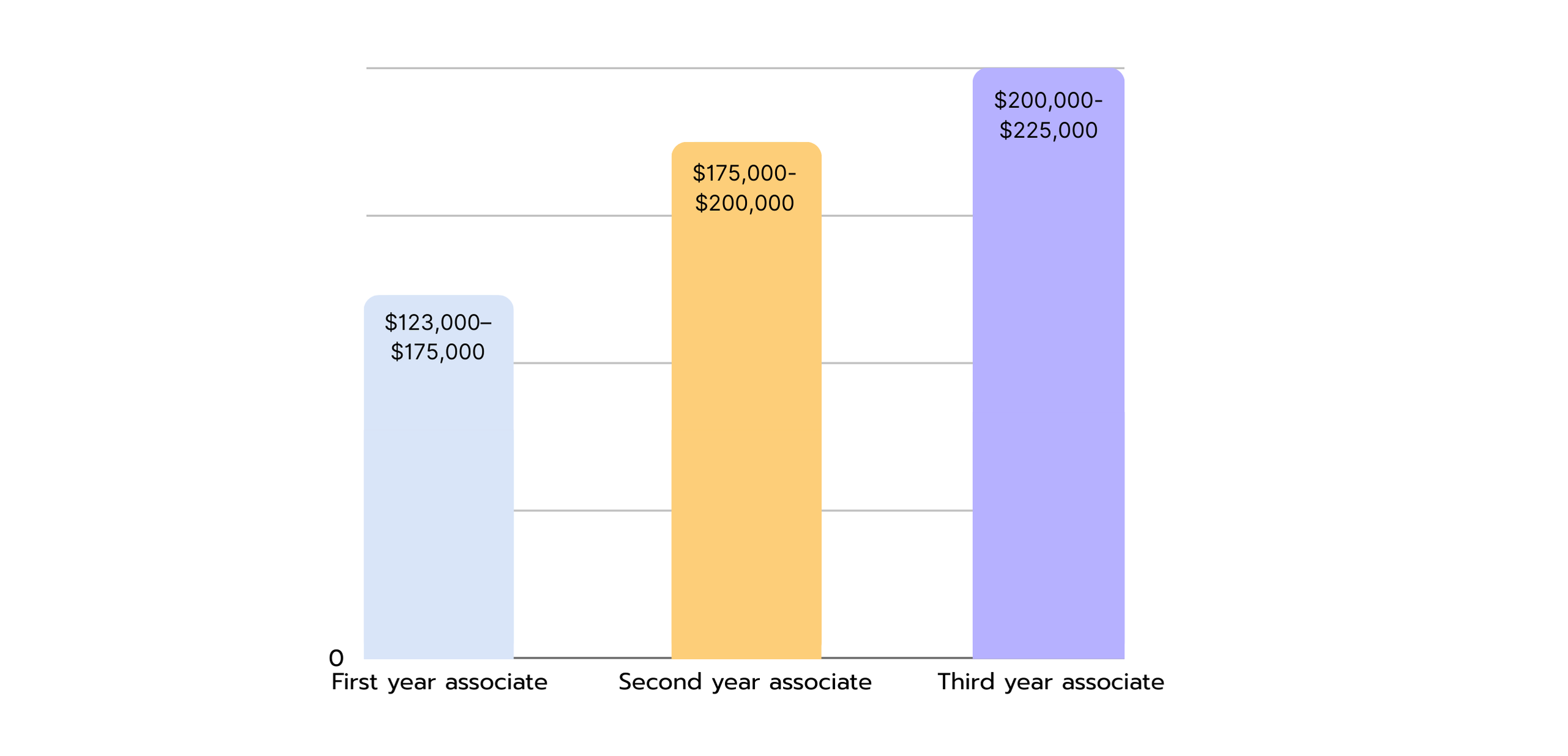
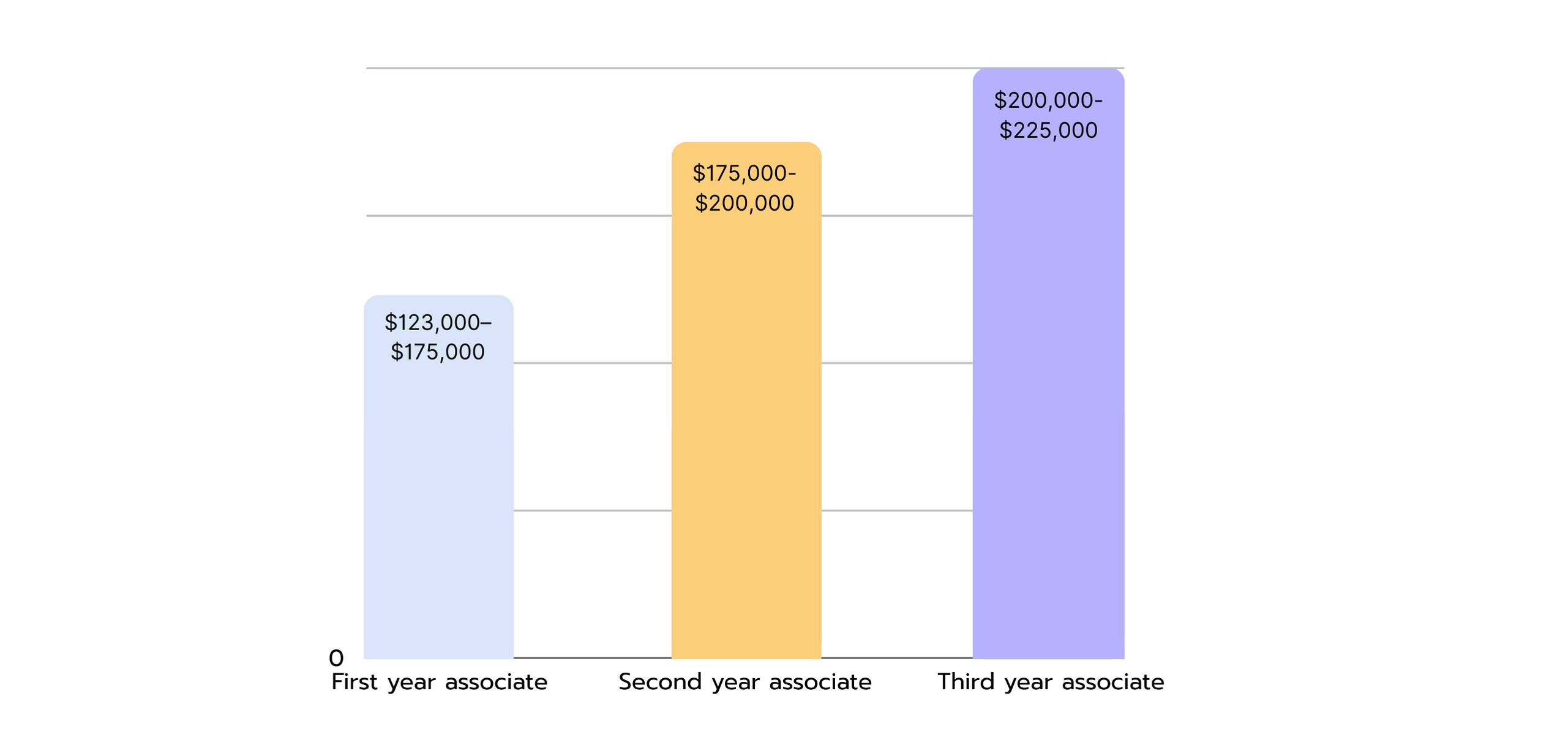
However, the salary for an investment banking associate can vary depending on the years of experience, the firm's size, and the location. For instance, here's how the associate base salaries might look like, depending on experience:
By the way, on PrepLounge, we have plenty of overviews of salaries in investment banking, for example:
👉 Investment Banking Salaries worldwide
👉 Investment Banking Salaries in the US
👉 Investment Banking Salaries in the UK
👉 Investment Banking Salaries in Germany
👉 Investment Banking Salaries in Canada
👉 Investment Banking Salaries in Singapore
Like with other IB positions, the work-life balance for an associate can be quite challenging. You may work long hours, typically between 65 to 80 hours a week. While this is an improvement compared to the analyst role, it still leaves little time for personal life or relaxation.
Investment banking associates are normally promoted internally after two or three years of working in an analyst position. IB firms also recruit associates from top MBA programs.
So, if you want to start from the ground up, you'll need to take a bachelor's degree in finance, economics, or a related field. 🎓 Then pursue summer internships in firms that you'd like to work for in the long term. For most banks, those who excel during their summer internships get return offers to be full time analysts after graduation. Doing well in the analyst role can then lead to the promotion to an associate position.
If you're transitioning from a non-related field, or you missed the analyst position, getting an MBA from a respected business school can be your ticket to securing an associate role.
Moreover, don't forget to network with professionals in the industry as it can open doors.
At this point, we have a helpful article for you:
👉 How to Land an Investment Banking Internship
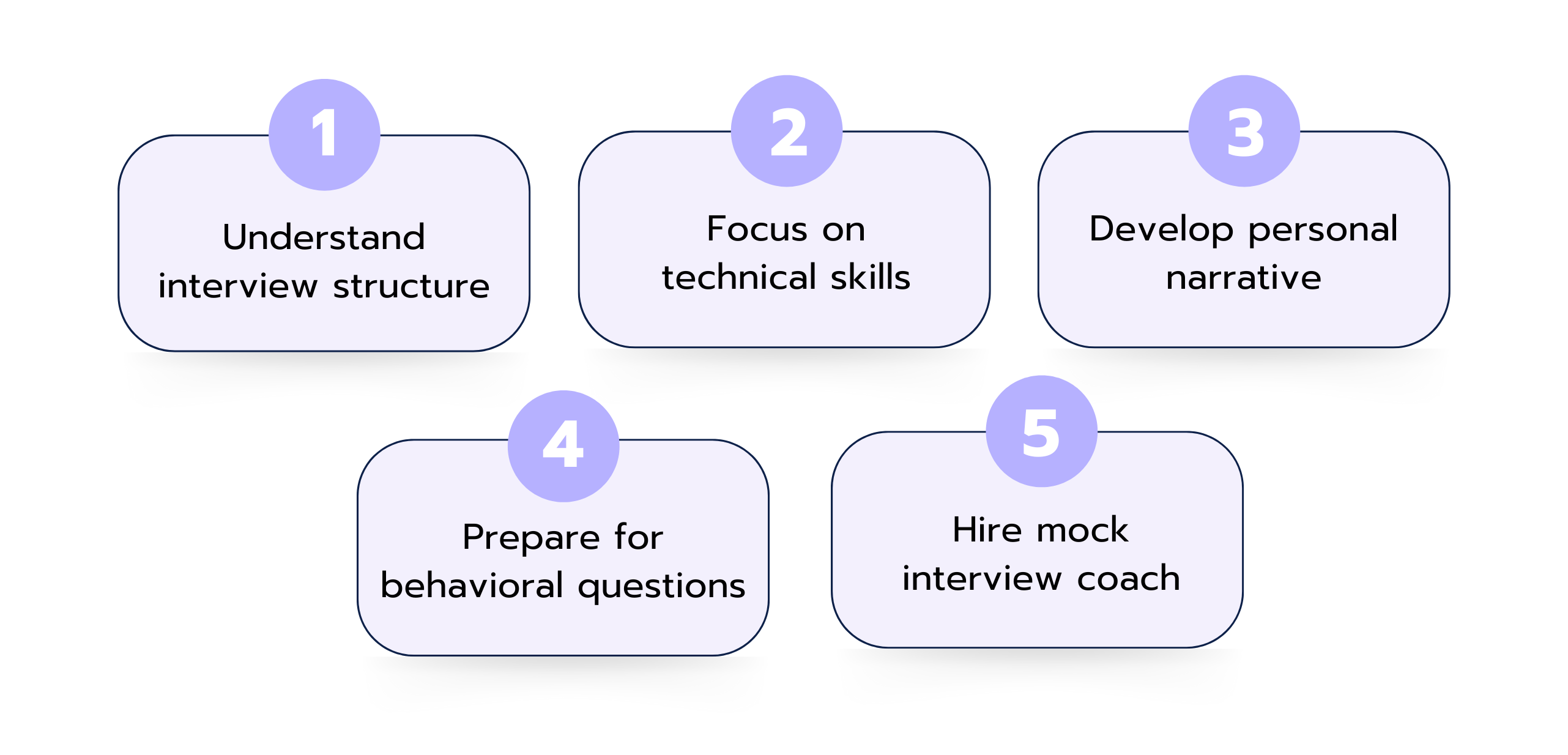
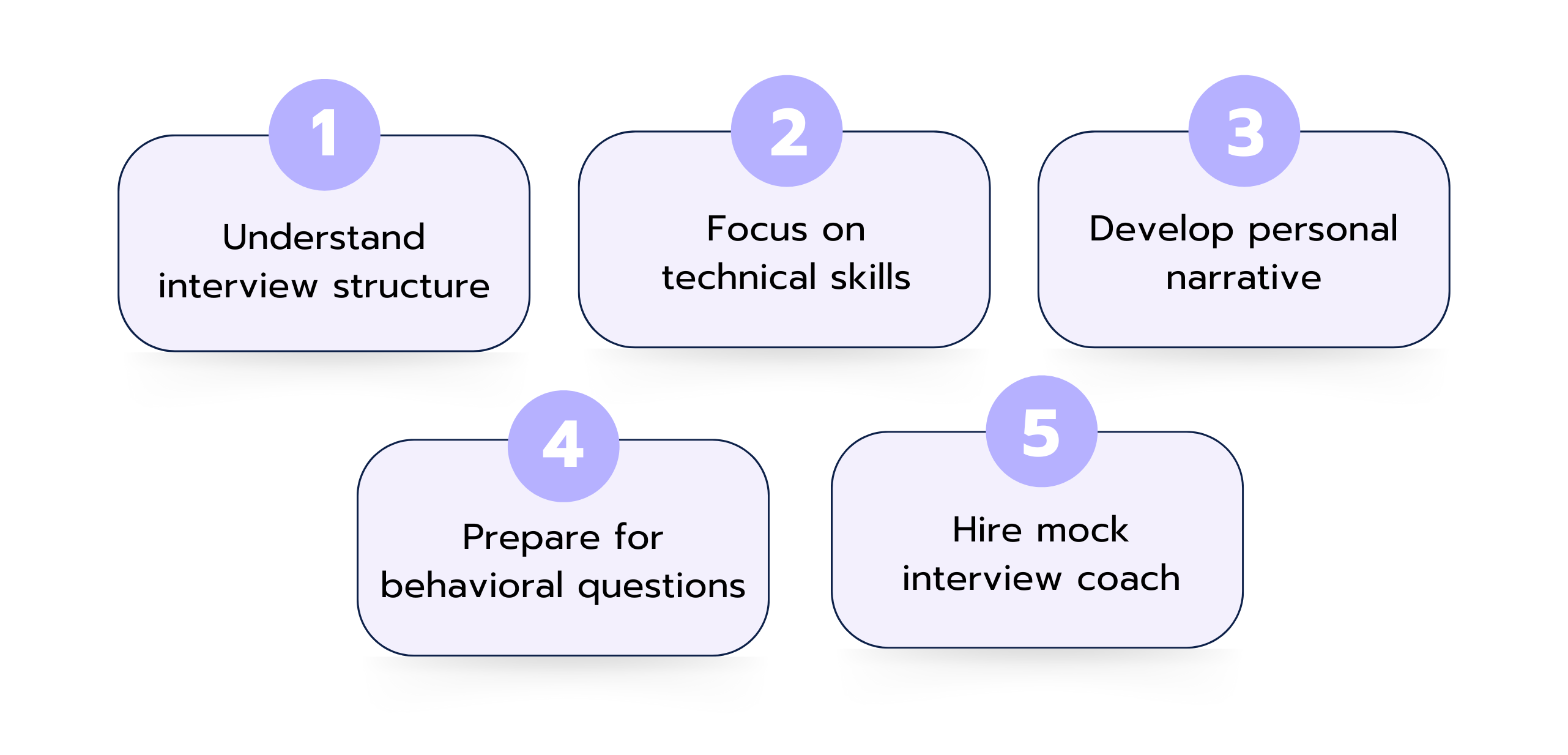
Landing an investment banking associate role requires you to ace the interview process. You can prepare to stand out by familiarizing yourself with the recruitment process, sharpening your technical skills, practicing behavioral or fit questions, and working with an expert interview coach.
Understand the Interview Structure
Generally speaking, investment banking interviews consist of several rounds, including online application, online assessments, initial phone screenings, and in-person or video interviews.
Each in-person or video round may include technical questions, behavioral questions, and case studies. Knowing this structure, and specifically the recruitment process for the firm you're targeting helps you prepare accordingly.
Focus on Technical Skills
Most IB firms look for candidates with analytical skills and the ability to deliver strategic advice to businesses. So, it's a good idea to brush up on your understanding of financial concepts and technical skills.
Familiarize yourself with valuation methods, financial modeling, and accounting principles. You should be ready to discuss topics like the DCF analysis, LBO modeling, and various valuation multiples. Practicing these concepts will help you answer technical questions confidently and ace verbal deal-based case studies if they come up.
Develop Your Personal Narrative
Craft a compelling personal story that outlines your background, why you’re interested in investment banking or that bank specifically, and what you bring to the role. This narrative often comes in handy in the “walk me through your resume” question. So, practice delivering it smoothly.
Prepare for Behavioral Questions
Expect questions about your strengths, weaknesses, and experiences working in teams. Interviewers will want to evaluate how you behave under different situations and assess if you're a good fit for their company’s overall culture.
Practice using the STAR method (Situation, Task, Action, Result) to structure your answers effectively. Also, prepare a few stories that highlight your skills and how you’ve handled different challenges.
Hire a Mock Interview Coach
If you really want to gain clarity on what interviewers look for and get personalized guidance during your preparation, consider hiring an IB interview coach. A good professional will simulate real interview scenarios to give you unmatched practice sessions.
Practicing with someone who understands the nuances of the industry gives you an edge that self-study can't match. Essentially, you'll get:
This relevant guide might be of interest to you: 👉 Finance Interview Coaching - and take a look at our finance coaches to find the right coach for you!