







Back to overview
Company case provided by
Mercedes-Benz Management Consulting

MBMC Case: AMG | Turning the most affluent prospects into loyal clients

Difficulty: Intermediate
Interviewer-led
0.0
0 Ratings
Times solved: 15.0k

Case Prompt:

Mercedes‑AMG stands for uncompromising performance, engineering excellence, and emotional driving experiences. Yet recently, AMG’s top management has become concerned that while the product itself continues to exceed customer expectations, the moment of purchase no longer does.

The trigger for this case was a concrete incident: a highly affluent customer configured an AMG top‑end vehicle in detail, was technically convinced, but ultimately decided against the purchase, stating: “It’s a fantastic car – but it didn’t feel special.” For the CEO of Mercedes‑AMG, this statement raises a critical question. In the luxury and performance segment, emotional differentiation at the point of decision is as important as horsepower or technology.

Against this backdrop, AMG is exploring new ways to elevate the buying experience for its most valuable customers. One idea under discussion is the introduction of AMG Individualization Hubs – exclusive physical spaces where customers would finalize their vehicle together with AMG experts in a highly personalized and immersive setting.

The management now asks you and your Consulting Team to assess this idea holistically:
How can AMG strengthen emotional differentiation during the purchase decision, and do Individualization Hubs represent a strategically sound and economically viable solution? The objective is to develop a clear recommendation that balances brand impact, customer experience, and profitability.

Overview of All Exhibits
Sample cases are the perfect preparation for your interview preparation.
Sign up now and solve your first case, either alone or together with another candidate that is currently preparing for their case interview.
Practice makes the difference
Practicing alone helps – with a partner it’s even better. Solve this case in a realistic mock interview.
Schedule on Meeting Board

Sample Structure

Show sample structure Hide sample structure

Part #1: Structuring & Exploring

You are joining our MBMC project team supporting the CEO of Mercedes‑AMG. The trigger: A highly affluent customer configured an AMG top-end vehicle, loved the product, but walked away saying: ‘Fantastic car — but it didn’t feel special.’ The CEO believes the key issue is not the car, but the purchase decision moment. To structure our work, let’s start with the end-to-end customer journey (B2C).

Exercise #1.1: From your perspective, what are the key phases of a top-end customer journey for Mercedes‑AMG?

Show additional information Hide additional information
Show solution Hide solution

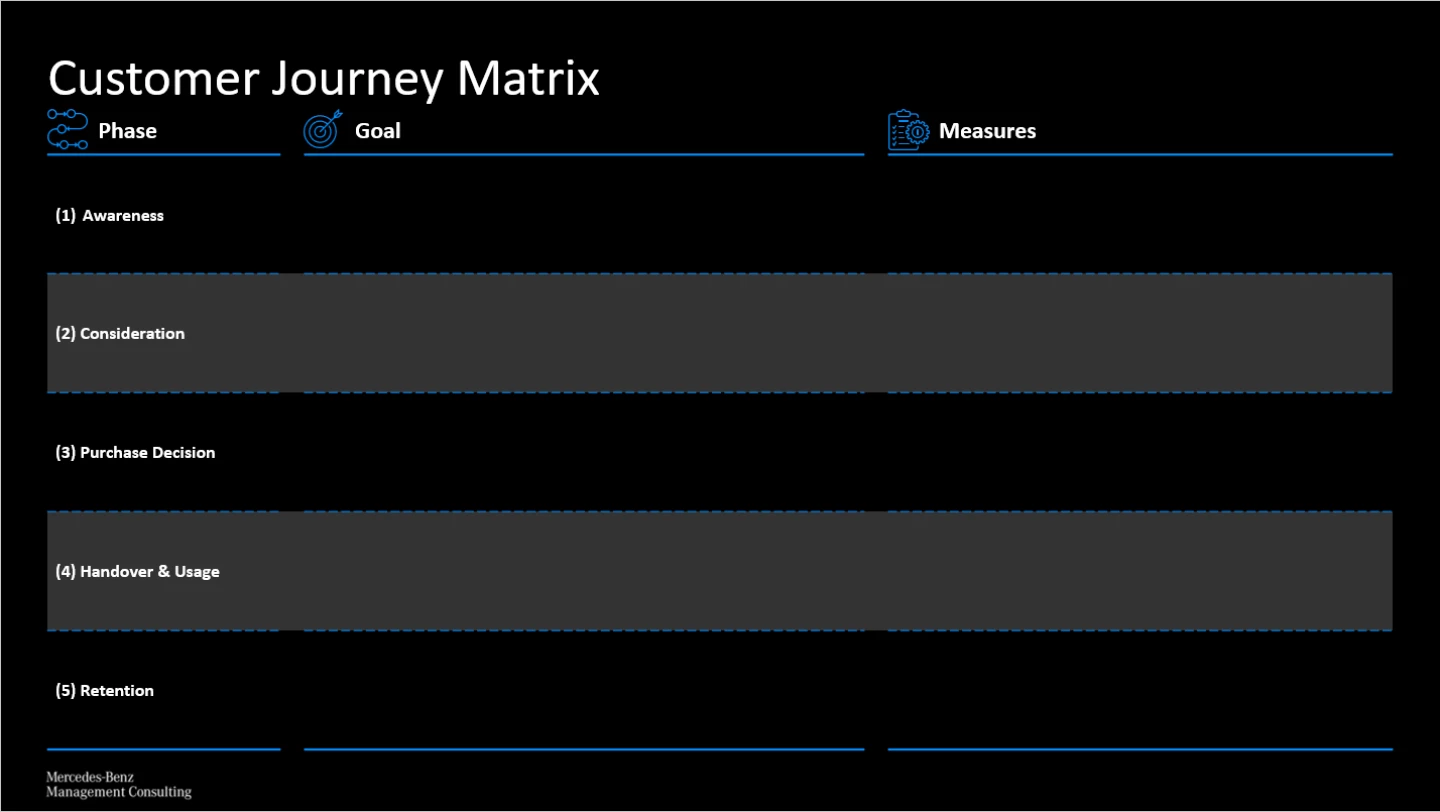
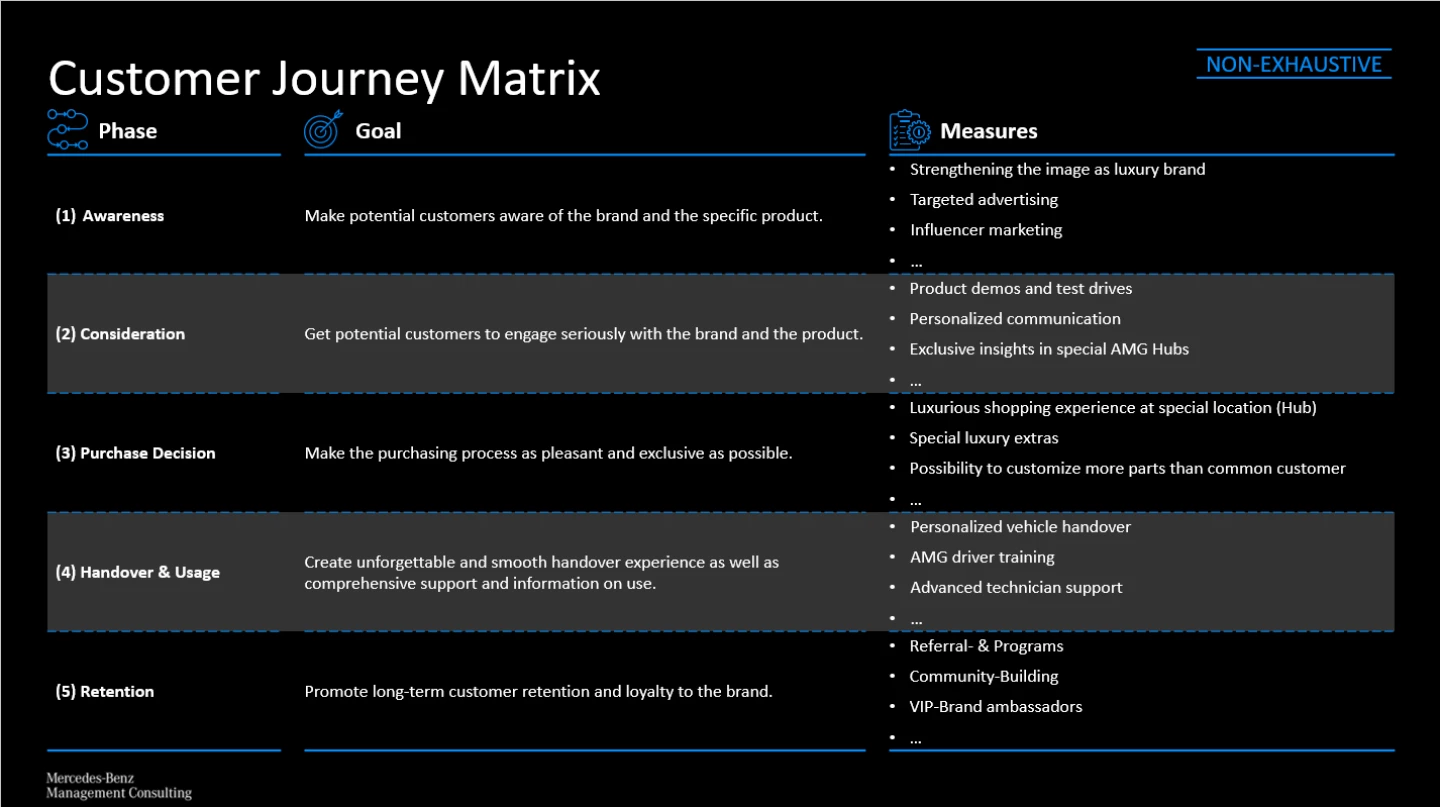
Exercise #1.2: For each phase of the customer journey, what would you define as the main goal from AMG’s perspective, and which concrete measures could support that goal?

Now that we have a common understanding of the end‑to‑end customer journey, the CEO asks us to go one step deeper. His question is not only how customers move through the journey, but what AMG is actually trying to achieve in each phase — and how this can be influenced.

Show additional information Hide additional information
Show solution Hide solution

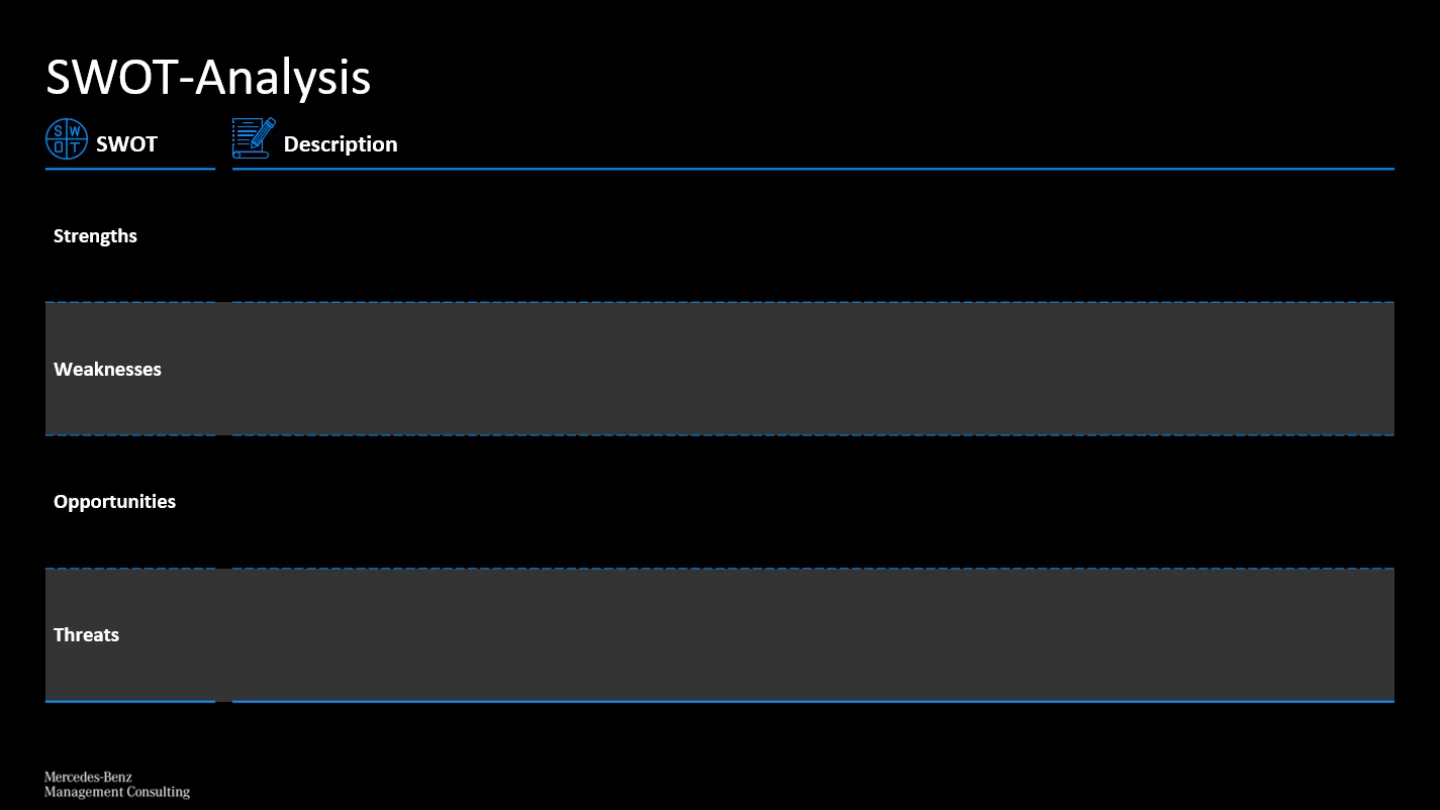
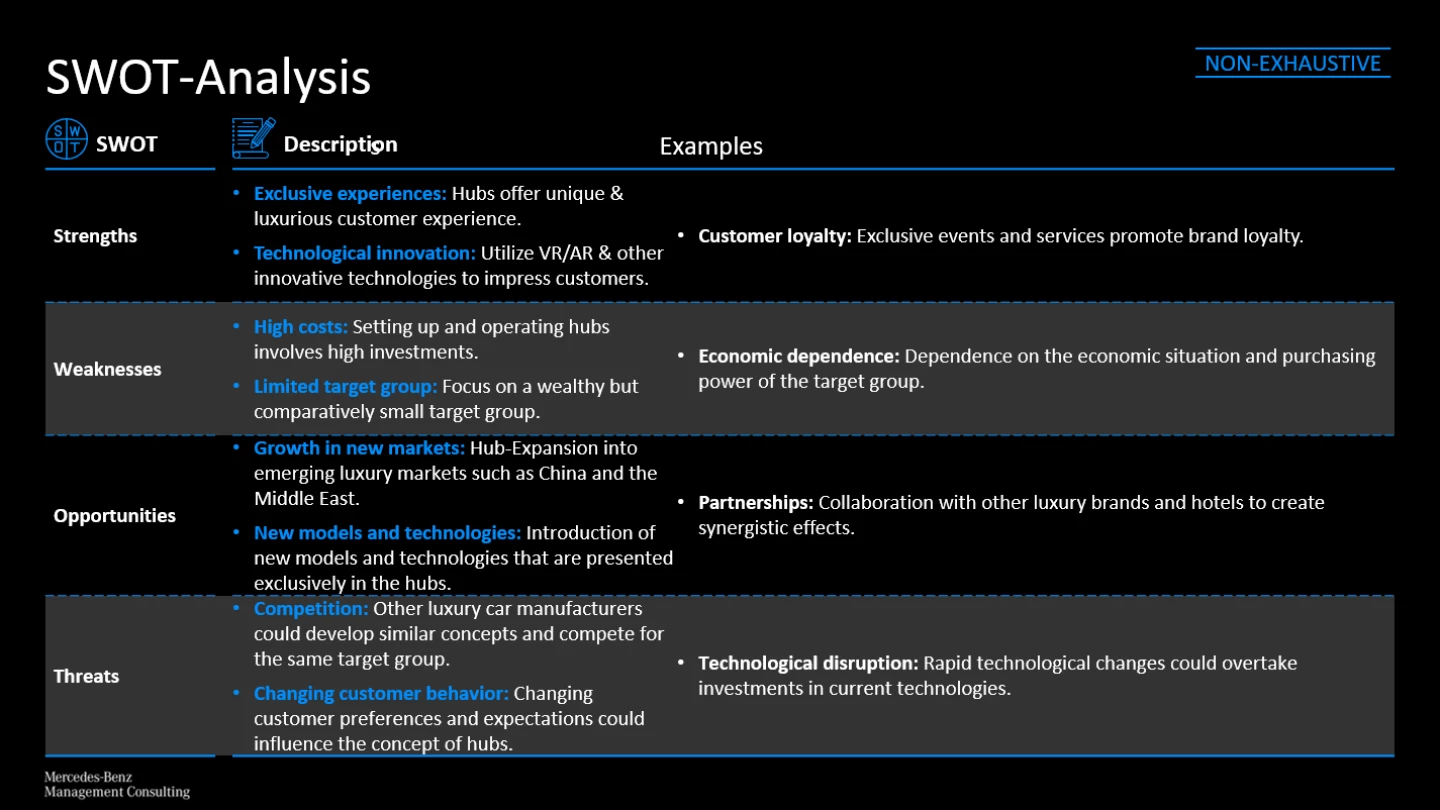
Exercise #1.3: How would you evaluate the idea of AMG Individualization Hubs? Please use a suitable framework and walk me through the key opportunities and risks.

Based on our discussion so far, the CEO would like to explore one concrete idea in more depth: AMG Individualization Hubs. Before we look at any numbers, he wants to understand whether this concept makes sense from a strategic and qualitative perspective.

Show additional information Hide additional information
Show solution Hide solution

Part #2: Quantitative Analysis

The CEO likes the idea of AMG Individualization Hubs from a brand perspective. However, the CFO is clear: the Board will only approve the concept if it makes economic sense. Before looking at any numbers, he asks a simple question: What do we actually need to calculate profitability?

Exercise #2.1: What information is required to assess the profitability of AMG Individualization Hubs?

Show additional information Hide additional information
Show solution Hide solution

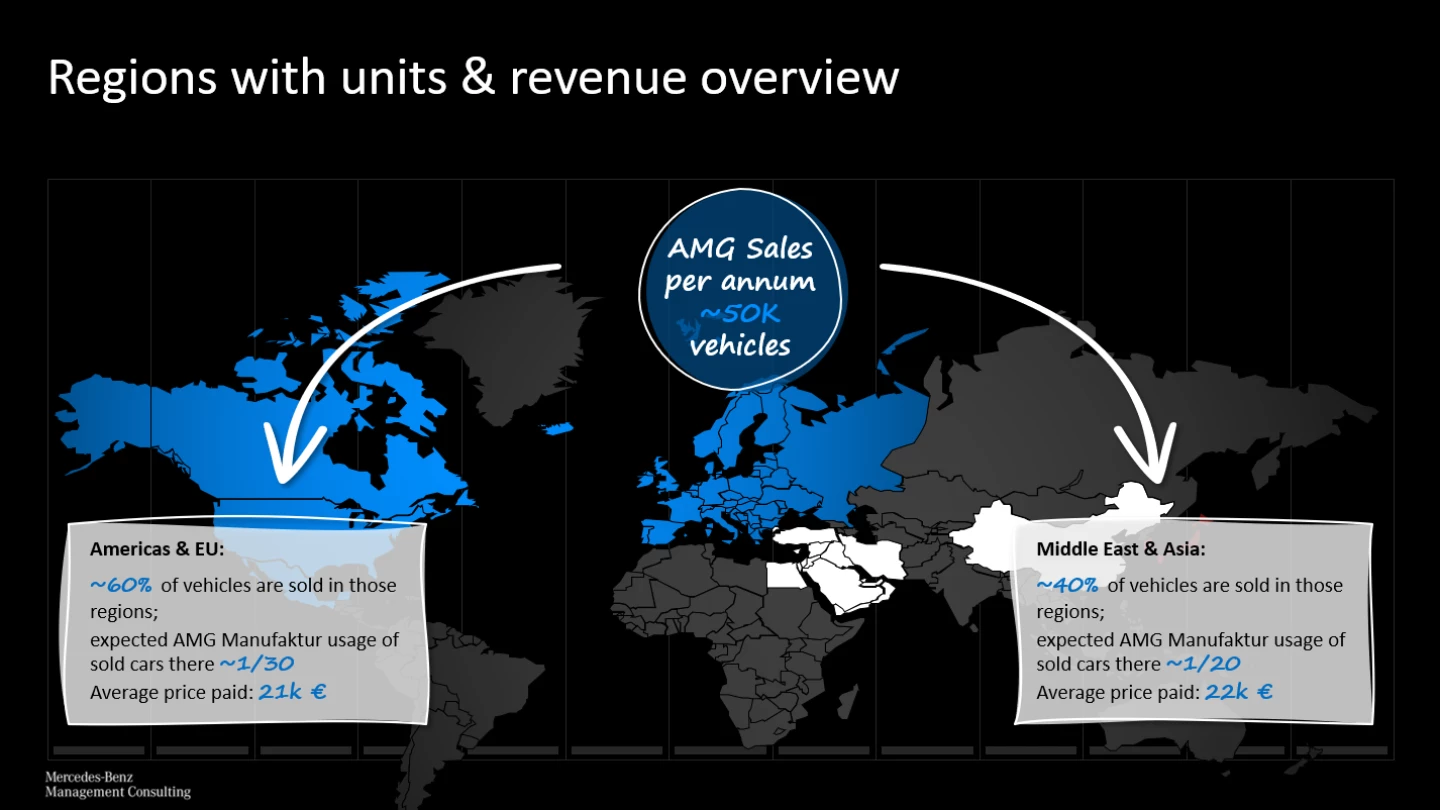
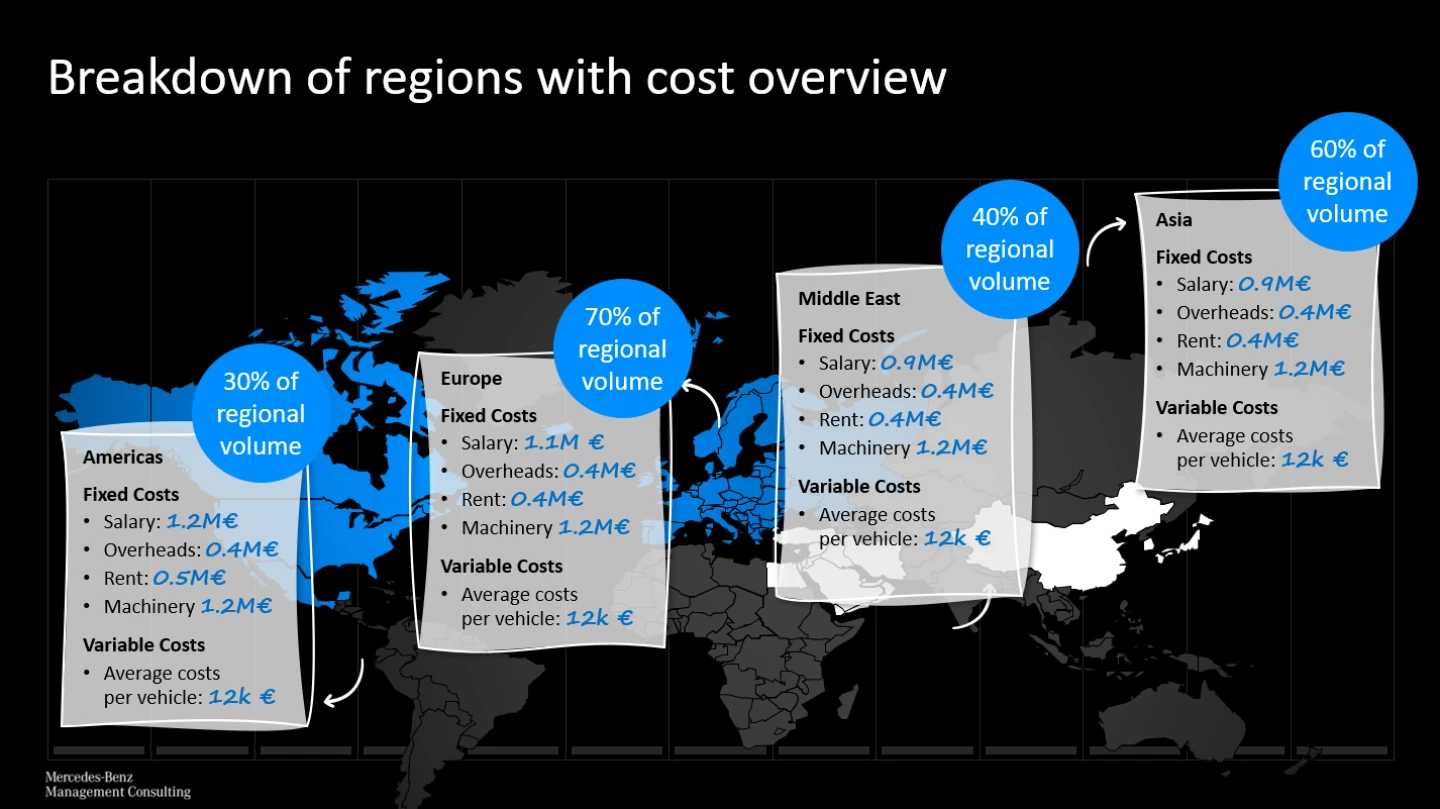
Exercise #2.2: What is the profitability (total return) for all regions and the overall profitability (total return and return on sales) worldwide?

To make this discussion concrete, the CFO asks us to quantify the business case. We will deliberately keep the model simple: one hub per region, annual view, and a classic contribution logic. But, these hubs are not mass‑market facilities. They are capacity‑constrained by highly specialized AMG engineers, designers, and craftsmen. At the same time, not every customer is willing to pay for the full individualization experience.

Show additional information Hide additional information
Show solution Hide solution

Exercise #2.3: Calculate and find measures to reach the needed adjustment.

Your manager is not excited about the profitability. He asks for the smallest possible adjustment that would make one unattractive region acceptable.

Show solution Hide solution

Part #3: Conclusion & Recommendation

You will be meeting the CEO of Mercedes-Benz with your manager later. On the car ride there you discuss your findings.

Exercise #3.1: What is your final recommendation?

Do you suggest investing in the hub structure in general? Justify & evaluate your recommendation!

Show additional information Hide additional information
Show solution Hide solution
Practice This Case With Peers Who Are Currently Looking for Interview Partners.
Do you have questions on this case?
Ask our community and receive answers and tips directly from our experts.
Ask a question Ask a question
More Cases from Mercedes-Benz Management Consulting
Related Case Interview Basics Articles
The Blue Ocean Strategy
Common Terms of Business
The Blue Ocean Strategy, developed by W. Chan Kim and Renée Mauborgne in their book Blue Ocean Strategy (2005), turns traditional business thinking upside down. It focuses on tapping into undiscovered markets – the "blue oceans" – where companies can operate alone and avoid competition. The result? More growth and higher profits. In contrast, the "red ocean" refers to the already overcrowded market space where competition is fierce, and companies are constantly striving to outdo each other. This often leads to declining profits and limited growth. 🌊 The Blue Ocean Strategy represents a shift away from this destructive competition towards a more constructive and creative form of market development. It encourages companies to go beyond the industry's conventional boundaries and create new markets, making competition irrelevant. [Blue vs. Red Ocean Strategy]
To the article
Growth Strategy
Types of Cases
In case interviews, you are often tasked with developing strategies to increase a company's revenue. It's crucial to conduct a systematic analysis to provide well-founded and actionable recommendations. Below, we’ll break down the key factors you need to consider and show you how to structure your response in a clear, effective way. Our goal is to give you a practical guide to help you ace your case interviews and build strong growth strategies.
To the article
GROW Model
Useful Business Analysis Tools
The GROW model, an acronym for Goal, Reality, Options, and Will, was developed in the late 1980s by Sir John Whitmore and his colleagues Graham Alexander and Alan Fine. It emerged from the realization that traditional training methods often failed to achieve sustainable performance improvements. Whitmore, a former racing driver and a pioneer in the field of executive coaching, played a significant role in popularizing the model and establishing it as a method for performance enhancement in the business world.
To the article
Practice makes the difference
Practicing alone helps – with a partner it’s even better. Solve this case in a realistic mock interview.
Add invitation
Do you have questions on this case?
Ask our community and receive answers and tips directly from our experts.
Ask a question Ask a question
More Cases from Mercedes-Benz Management Consulting