





Back to overview
Expert case by
Ian

Bain + BCG - Hot Wheels WITH VIDEO SOLUTION

Difficulty: Intermediate
Candidate-led
4.6
300+ Ratings
Times solved: 14.4k

Case Prompt:

Problem definition: Our client is Korean Car Parts (KCP), a multi-national original equipment manufacturer (OEM) of car parts based in Korea. They've recently seen a decline in profits and have brought us in to understand how to address this falling profitability.

========================================================

To get a deep-dive explanation of the case leadership behind this case, please read this article:  Candidate-Led Cases: What to Expect With Example Cases

This case is part one of a series. The goal of this series is to demonstrate how an identical case prompt (and corresponding framework) could lead to multiple different outcomes. The goal is to train you to adjust to case information in an agile and adaptable way.

The 2nd part of the series can be found here:

Case - BCG Hot Wheels Part 2 With Video Solution

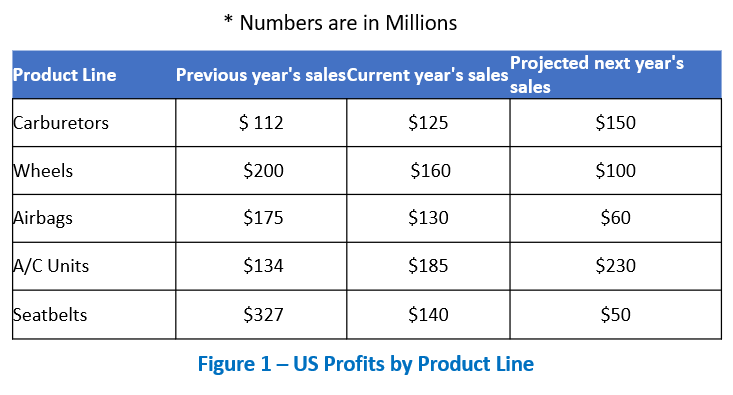
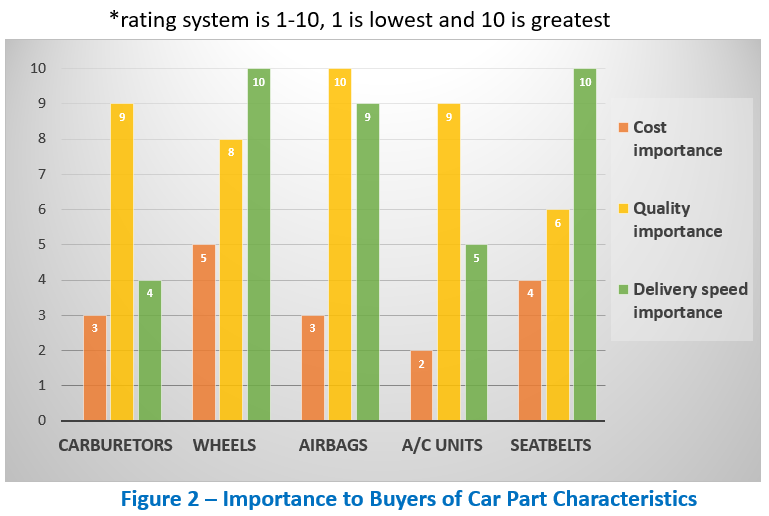
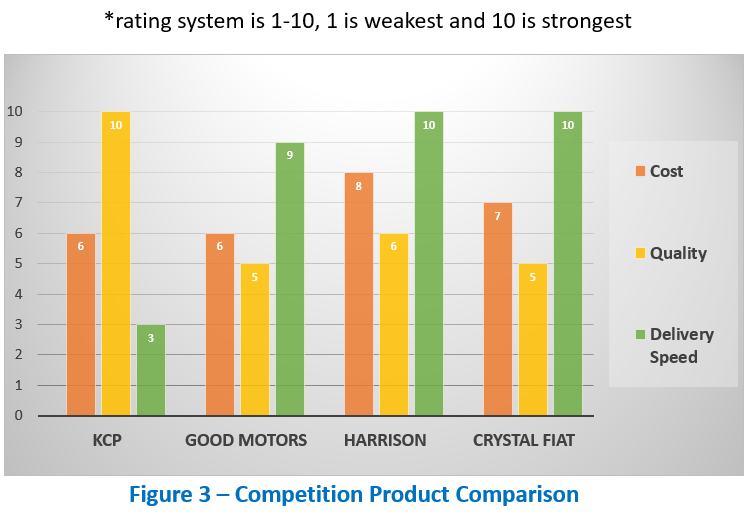
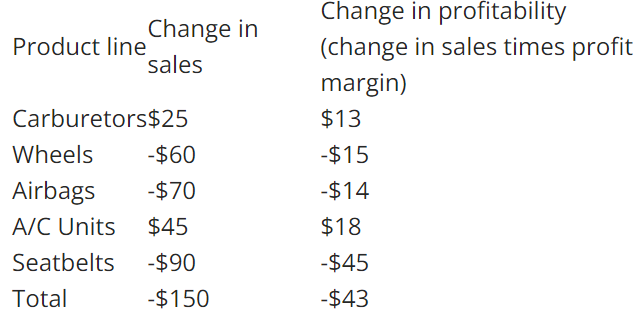
Overview of All Exhibits
Practice makes the difference
Practicing alone helps – with a partner it’s even better. Solve this case in a realistic mock interview.
Schedule on Meeting Board

Sample Structure

Show sample structure Hide sample structure
Show additional information Hide additional information
Show solution Hide solution
Show sample structure Hide sample structure

II: Parts Analysis - Part 1

Show additional information Hide additional information
Show solution Hide solution

II: Parts Analysis - Part 2

Show additional information Hide additional information
Show solution Hide solution

III. Solution

Show solution Hide solution

Further Questions

Question: Why do you think our client decided to get involved in the US market in the first place, given today's just-in-time supply chains?

Show solution Hide solution
Video Solution
Would you like to see the Video Gallery of this company?

Without your consent we cannot embed YouTube videos. Click the button below and accept the marketing cookies to allow YouTube videos to be embedded.

By allowing this service, you consent, in accordance with article 49 paragraph 1 sentence 1 lit. a GDPR, to your data being processed in the USA. The USA is not considered to have adequate data protection legislation. Your data could be accessed by law enforcement without prior public trial in court. You can change your settings regarding consent to external services at any time in our Cookie and Privacy Settings.

Practice This Case With Peers Who Are Currently Looking for Interview Partners.
Do you have questions on this case?
Ask our community and receive answers and tips directly from our experts.
Ask a question Ask a question
Related Case Interview Basics Articles
The PESTEL Analysis for Consulting
Frameworks
The PESTEL analysis is an important tool for understanding a company’s external environment. It examines political, economic, sociological, technological, environmental, and legal factors. In consulting, the PESTEL analysis helps identify opportunities and risks that can influence your strategic decisions. This allows you to provide informed recommendations and give clients a better understanding of market conditions. In this article, we’ll take a closer look at the PESTEL analysis and explain its six key components. We’ll also demonstrate how this tool can be applied to the consulting industry, along with a practical example. 🔎💡

To the article
Unique Value Proposition (UVP)
Common Terms of Business
As an aspiring consultant, you will quickly realize that a company's success is closely linked to its ability to differentiate itself from the competition. Here, just like the business model, the Unique Value Proposition (UVP) plays a crucial role. Understanding and applying the UVP in various contexts, especially in case interviews, can give you a significant advantage in grasping problem situations. [The Unique Value Proposition at the intersection of customer needs, company strengths, and competitor strengths.]
To the article
How to Build a Good Structure
Case Structuring
Poor structure, or sometimes no structure at all is one of the main reasons why candidates fail in case interviews. Why? Because case interviews are designed to simulate real-life consulting scenarios. And in the real consulting world, you need to structure problems all day long. If you cannot clearly demonstrate this skill during your interview, you probably won’t be able to apply it on the job and therefore not succeed in a consulting career. But let’s stay positive: Structuring skills can be learned. With some basic principles in mind and lots of practice afterwards, you will be able to excel in this consulting-crucial discipline.
To the article
ADKAR Model
Useful Business Analysis Tools
The ADKAR Model, developed by Jeff Hiatt, founder of Prosci, is a practical change management framework. It's designed to help organizations to successfully implement change and increase employee acceptance. As one of the most popular models for change management, ADKAR highlights an often overlooked fact: changes can only be successful if employees are actively involved. 🔎 In this article, we'll introduce you to the components of the ADKAR Model and how it can be applied to challenges within organizations.
To the article
Correlation and Causality
Useful Business Analysis Tools
Correlation and causality are two important terms in statistics that are often confused with each other. In this text, the difference between the two is explained with understandable examples and related to the business consulting industry. Keep in mind that math is an important aspect of the case interview.
To the article
Practice makes the difference
Practicing alone helps – with a partner it’s even better. Solve this case in a realistic mock interview.
Add invitation
Do you have questions on this case?
Ask our community and receive answers and tips directly from our experts.
Ask a question Ask a question