



Expert case by
Dennis

Business Strategy: Home Delivery Solution for Retailer Chain

Difficulty: Advanced
Candidate-led
< 100 Ratings
Times solved: 2.1k

Case Prompt:

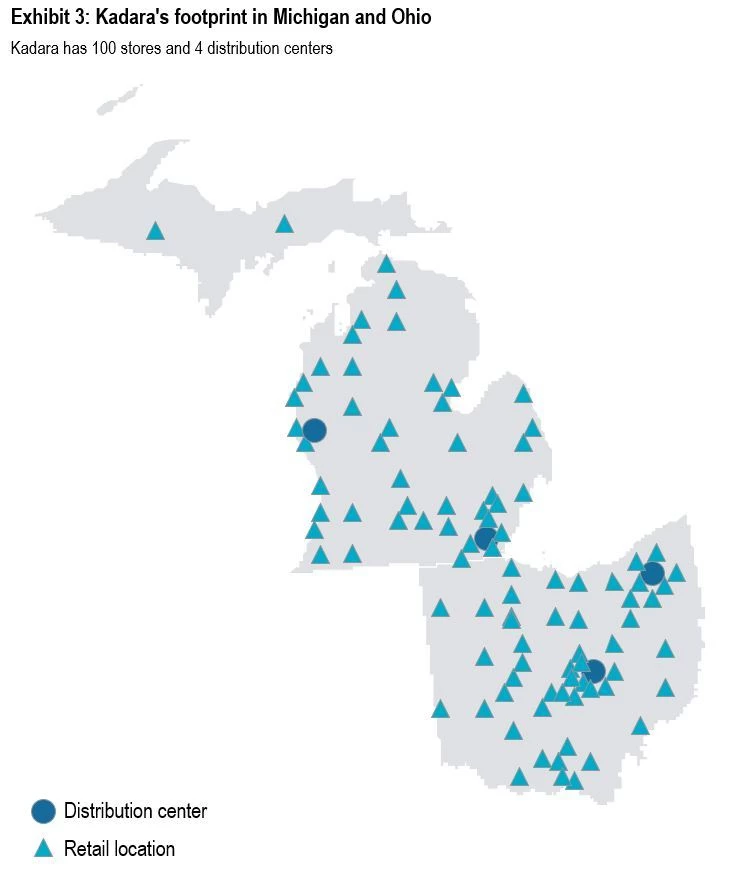
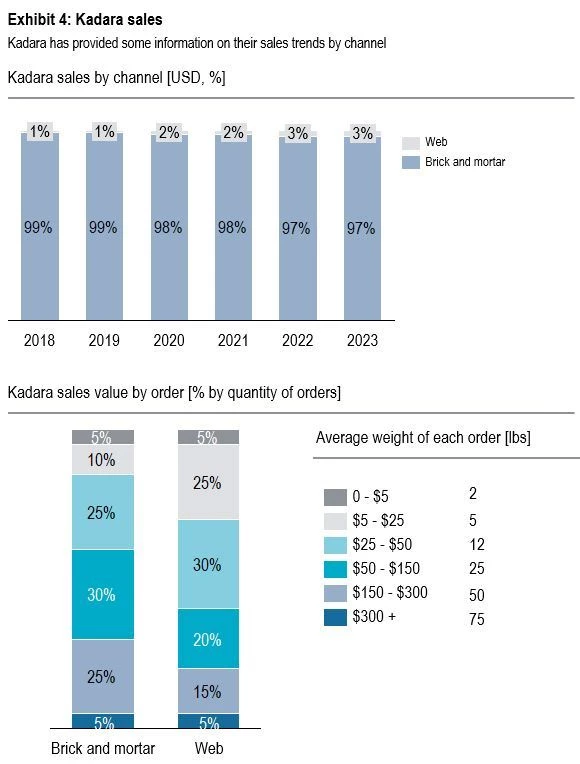
Kadara, a privately-held US retailer active in the Midwest with annual sales of approximately USD 3 bn, is trying to figure out a solution to last-mile home delivery.  The company currently operates out of 100 brick-and-mortar stores selling primarily groceries and home essentials (e.g. paper towels, diapers, blenders). They also sell all non-perishable products offered in their stores through their website. Currently, all sales from their website are delivered via 3rd parties (e.g. FedEx, USPS), picking up products from regional distribution centers, and their minimum delivery time is next day. Kadara does not have out-of-store delivery options but they know that services such as Instacart and Postmates are being used by customers to arrange home delivery of groceries.  Kadara's management believes that they are, at best, leaving money on the table due to their limited home delivery options and, at worst, at risk of being de-selected by customers as they move towards delivery options.   

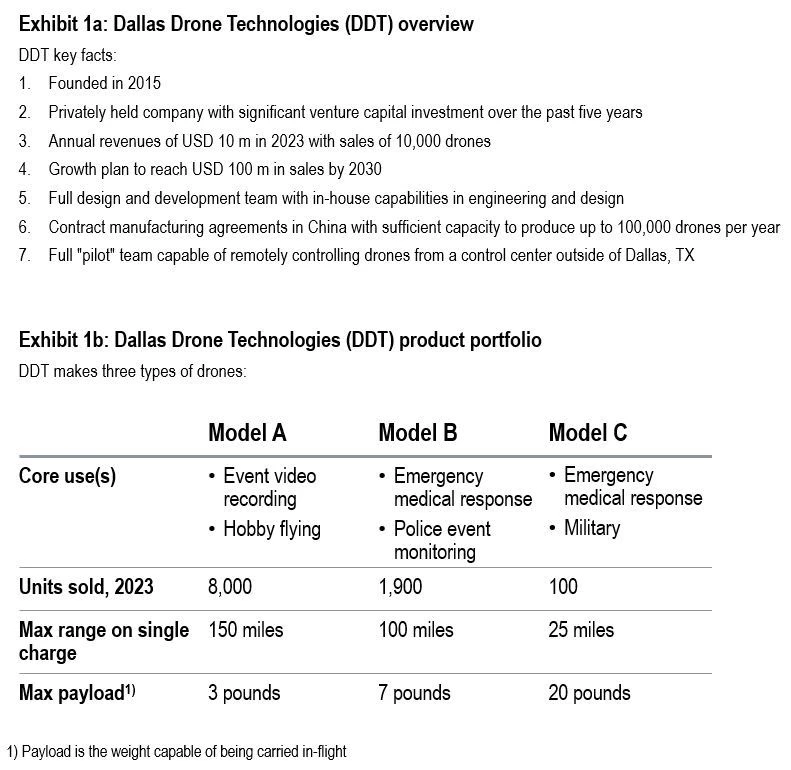
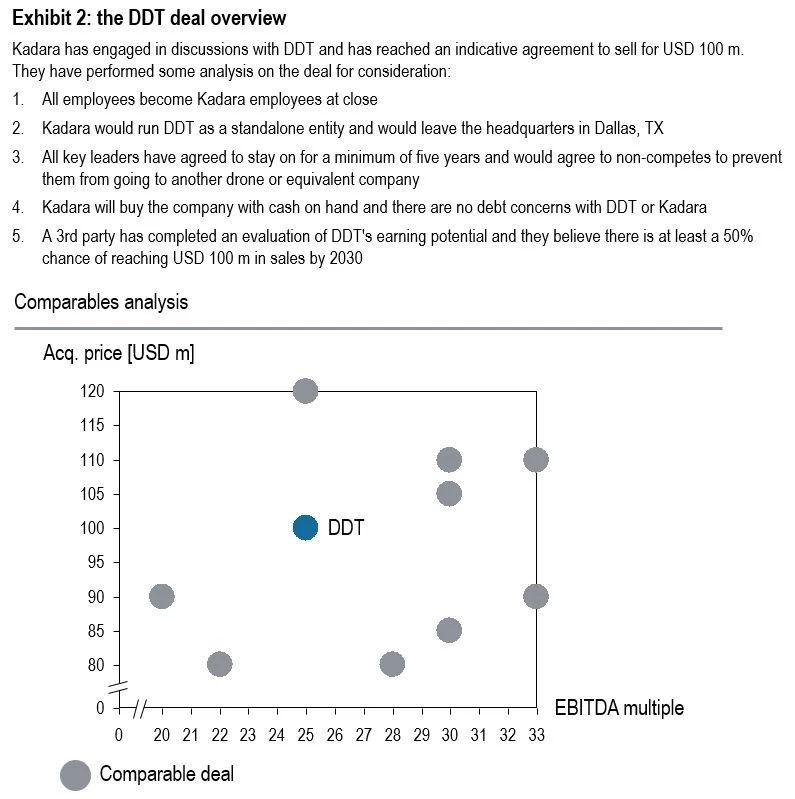
Kadara’s future CEO, the granddaughter of the founder, has jumped on the chance to move the company into the future. To that end, she has developed a recommendation to Kadara's board to buy Dallas Drone Technologies (DDT).  DDT designs, manufactures and operates small-to-midsize flying drones. Their initial models focused on aerial photography but they added goods movement capabilities about two years ago. The future CEO believes that drone delivery is key and that Kadara should buy DDT for USD 100 m to become a leader in the space. 

Kadara's current CEO would like your help specifically in evaluating the option to buy DDT and generally in how to think about home delivery and the future of their business.

Overview of All Exhibits
Practice makes the difference
Practicing alone helps – with a partner it’s even better. Solve this case in a realistic mock interview.
Schedule on Meeting Board

Acquisition Decision

Should Kadara buy DDT?  Why or why not?

Show additional information Hide additional information
Show solution Hide solution

Strategic Recommendation

With or without the acquisition of DDT, what do you recommend Kadara do next with regards to home delivery?

Show solution Hide solution
Practice This Case With Peers Who Are Currently Looking for Interview Partners.
Do you have questions on this case?
Ask our community and receive answers and tips directly from our experts.
Ask a question Ask a question
Related Case Interview Basics Articles
Growth Strategy
Types of Cases
In case interviews, you are often tasked with developing strategies to increase a company's revenue. It's crucial to conduct a systematic analysis to provide well-founded and actionable recommendations.Below, we’ll break down the key factors you need to consider and show you how to structure your response in a clear, effective way. Our goal is to give you a practical guide to help you ace your case interviews and build strong growth strategies.
To the article
GROW Model
Useful Business Analysis Tools
The GROW model, an acronym for Goal, Reality, Options, and Will, was developed in the late 1980s by Sir John Whitmore and his colleagues Graham Alexander and Alan Fine. It emerged from the realization that traditional training methods often failed to achieve sustainable performance improvements. Whitmore, a former racing driver and a pioneer in the field of executive coaching, played a significant role in popularizing the model and establishing it as a method for performance enhancement in the business world.

To the article
The Blue Ocean Strategy
Common Terms of Business
The Blue Ocean Strategy, developed by W. Chan Kim and Renée Mauborgne in their book Blue Ocean Strategy (2005), turns traditional business thinking upside down. It focuses on tapping into undiscovered markets – the "blue oceans" – where companies can operate alone and avoid competition. The result? More growth and higher profits.In contrast, the "red ocean" refers to the already overcrowded market space where competition is fierce, and companies are constantly striving to outdo each other. This often leads to declining profits and limited growth. 🌊The Blue Ocean Strategy represents a shift away from this destructive competition towards a more constructive and creative form of market development. It encourages companies to go beyond the industry's conventional boundaries and create new markets, making competition irrelevant.
To the article
Practice makes the difference
Practicing alone helps – with a partner it’s even better. Solve this case in a realistic mock interview.
Add invitation
Do you have questions on this case?
Ask our community and receive answers and tips directly from our experts.
Ask a question Ask a question