How Consulting Demand Is Shifting Across Industries in 2026
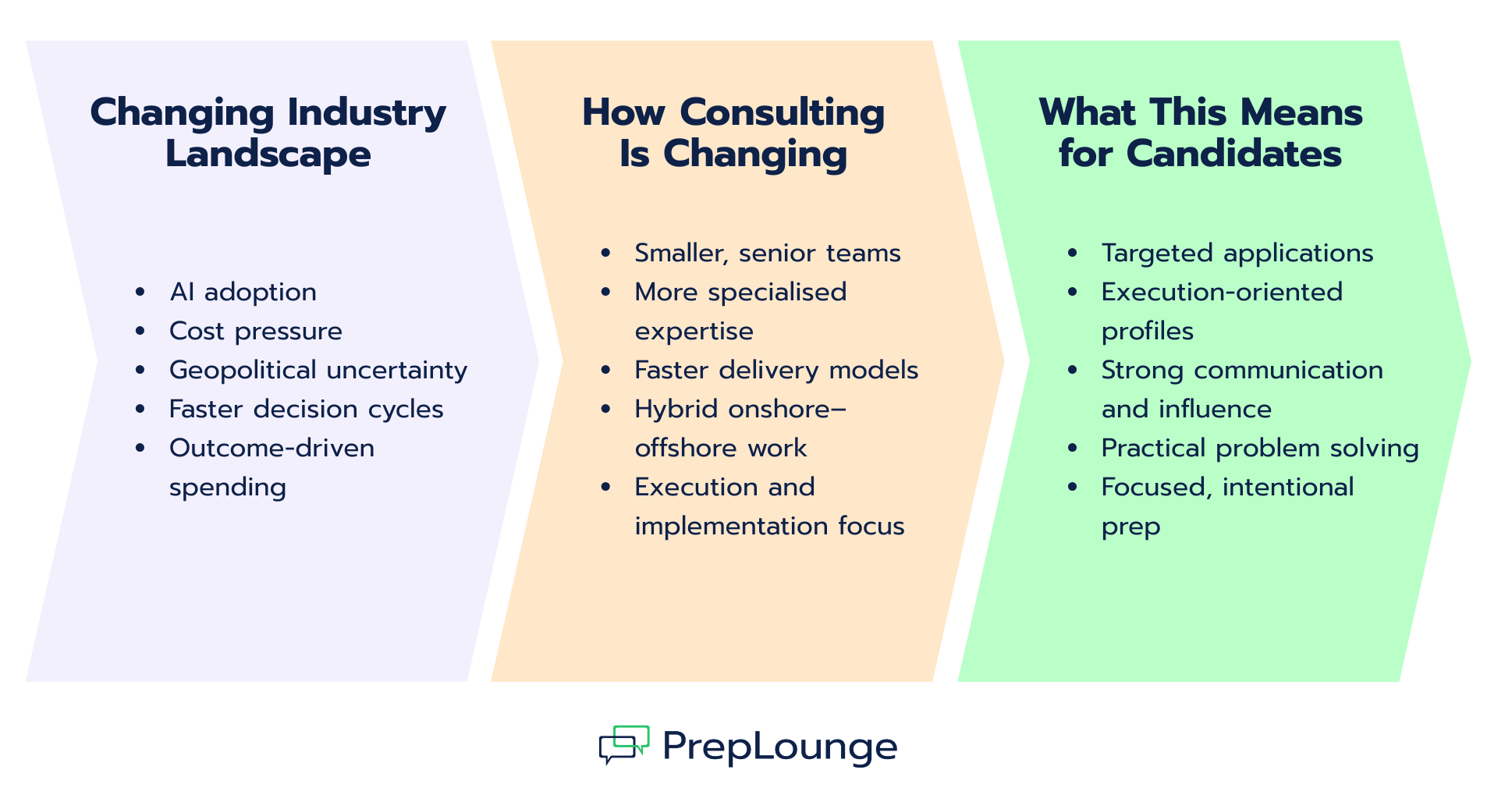
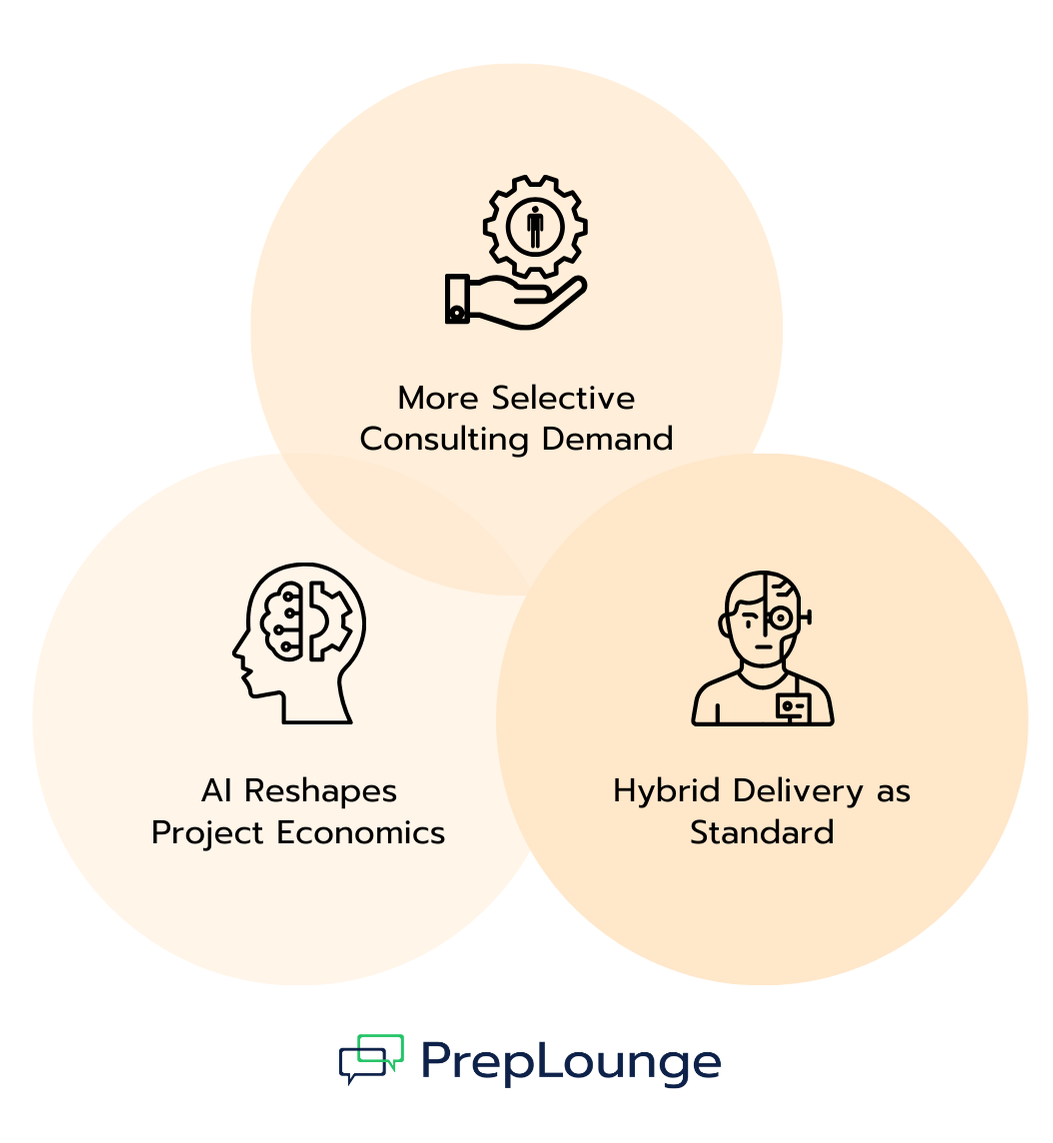
The consulting market is not shrinking, but demand is moving to different areas. Five topics stand out as growth drivers going into 2026.
- Healthcare and digital health continue to generate steady demand. Ageing populations, rising costs, and the push toward digital care models create ongoing transformation work across providers, payers, and health systems.
- Public sector and infrastructure work is expanding in many regions. Governments are investing in digital services, climate adaptation, transport, education, and national capability building. These programs often require long-term advisory and implementation support.
- Energy and sustainability remain major growth areas. Companies are under pressure to decarbonise while maintaining profitability. This creates demand for practical transition plans, new operating models, and investment prioritisation.
- AI and digital transformation now cut across almost every sector. Consulting work increasingly focuses on how organisations redesign processes, governance, and skills to extract real value from technology.
- Operational excellence and cost improvement have returned as priorities. With margins under pressure, companies are willing to invest in initiatives that show tangible financial impact in the near term.
Rising Mid-Sized and Specialized Firms in 2026
Large global firms will remain important players, but some of the fastest and most consistent growth over the last few years has come from mid-sized and specialist consultancies. These firms are benefiting from two clear trends: clients wanting deeper expertise in specific areas, and clients wanting smaller, more senior teams.
These examples illustrate this shift clearly:

Roland Berger has continued to strengthen its position globally by doubling down on industrials, automotive, energy transition, and public sector work. Its strong European base, combined with expansion in the Middle East and Asia, has allowed it to win large transformation and policy-driven engagements that require both strategy and execution depth.

Oliver Wyman has grown steadily by focusing on regulated and complex industries such as financial services, aviation, transportation, and healthcare. Clients value its ability to combine deep technical expertise with strategic thinking, especially in risk-heavy environments.
Alvarez & Marsal represents another growth story, driven by its focus on performance improvement, restructuring, and hands-on execution. In uncertain markets, its operator-led model has resonated strongly with clients who want immediate impact rather than long diagnostic phases.

LEK Consulting continues to perform well by maintaining a sharp focus on life sciences, healthcare, and private equity support. Its reputation for rigorous analysis in specific sectors allows it to compete effectively without needing the scale of the largest firms.
Clients are increasingly comfortable working with firms like these because they offer deeper domain understanding, more senior involvement, and faster decision-making. For candidates, this means the consulting ecosystem is broader than the traditional top-tier firms. Career growth, responsibility, and learning can be just as strong, and sometimes stronger, in specialist environments.
How Hiring Strategies Are Changing in 2026
Hiring in consulting has become more intentional and more selective. What used to be a fairly standard, predictable pipeline has fragmented into distinct hiring approaches. Three changes are especially important to understand.
Change 1: From Large Campus Intakes to Demand-Led Hiring
Campus hiring still exists, but it plays a smaller role than in the past. Firms are far less willing to hire large cohorts months in advance and let people sit on the bench. Instead, hiring is increasingly tied to near-term project demand, leading to more off-cycle roles, more lateral hiring, and greater variation in timing across offices and practices.
Change 2: From General Acceptance to Preference-Based Selection
Meeting the basic bar is no longer enough. Strong academics, clean casing, and solid communication are now considered hygiene factors. Interviewers increasingly ask whether they want to work with a candidate and whether that person clearly adds something to the team. Candidates with a visible spike are much easier to say yes to than those who are good at everything but distinctive at nothing.
Change 3: From Fixed Employment Models to Flexible Talent Pools
Firms are expanding beyond traditional full-time hiring. Contract consultants, independent specialists, and short-term experts are used to plug specific capability gaps, especially in digital, data, transformation, and sector-heavy work. This does not replace full-time roles, but it changes how teams are staffed and which profiles are valued.
What Interviewers Are Really Looking For in 2026
Interview expectations have evolved alongside the industry. Solving the case correctly is no longer enough on its own. Interviewers are typically evaluating a small set of signals that predict whether someone will succeed on real projects. Five qualities stand out consistently.
- Structured thinking with adaptability: Interviewers want to see that you can break problems down clearly, but also adjust your approach when new information appears. Rigid frameworks without judgment signal preparation, not consulting maturity.
- Ability to lead the problem, not just respond to it: Strong candidates take ownership of the discussion. They clarify ambiguity, suggest logical next steps, and keep the case moving forward instead of waiting to be guided.
- Practical and implementable recommendations: Ideas matter only if they can be executed. Interviewers listen closely for realism, trade-offs, and awareness of constraints such as timelines, capabilities, and stakeholder resistance.
- Clear communication under pressure: Consulting requires calm, precise communication in uncertain situations. Interviewers assess how clearly you explain your thinking, how well you listen, and how composed you remain when challenged.
- Personal presence and trust-building: Beyond analysis, interviewers ask themselves whether they would feel comfortable putting you in front of a client. Credibility, humility, and confidence together carry far more weight than technical perfection.
Part 2: What This Means for Candidates Applying in 2026
Understanding the shifts above only matters if it changes how you act. The biggest risk for candidates in 2026 is preparing the same way as everyone else. The candidates who perform well are not necessarily smarter or more experienced. They are simply better aligned with how consulting firms now think about value, hiring, and readiness.
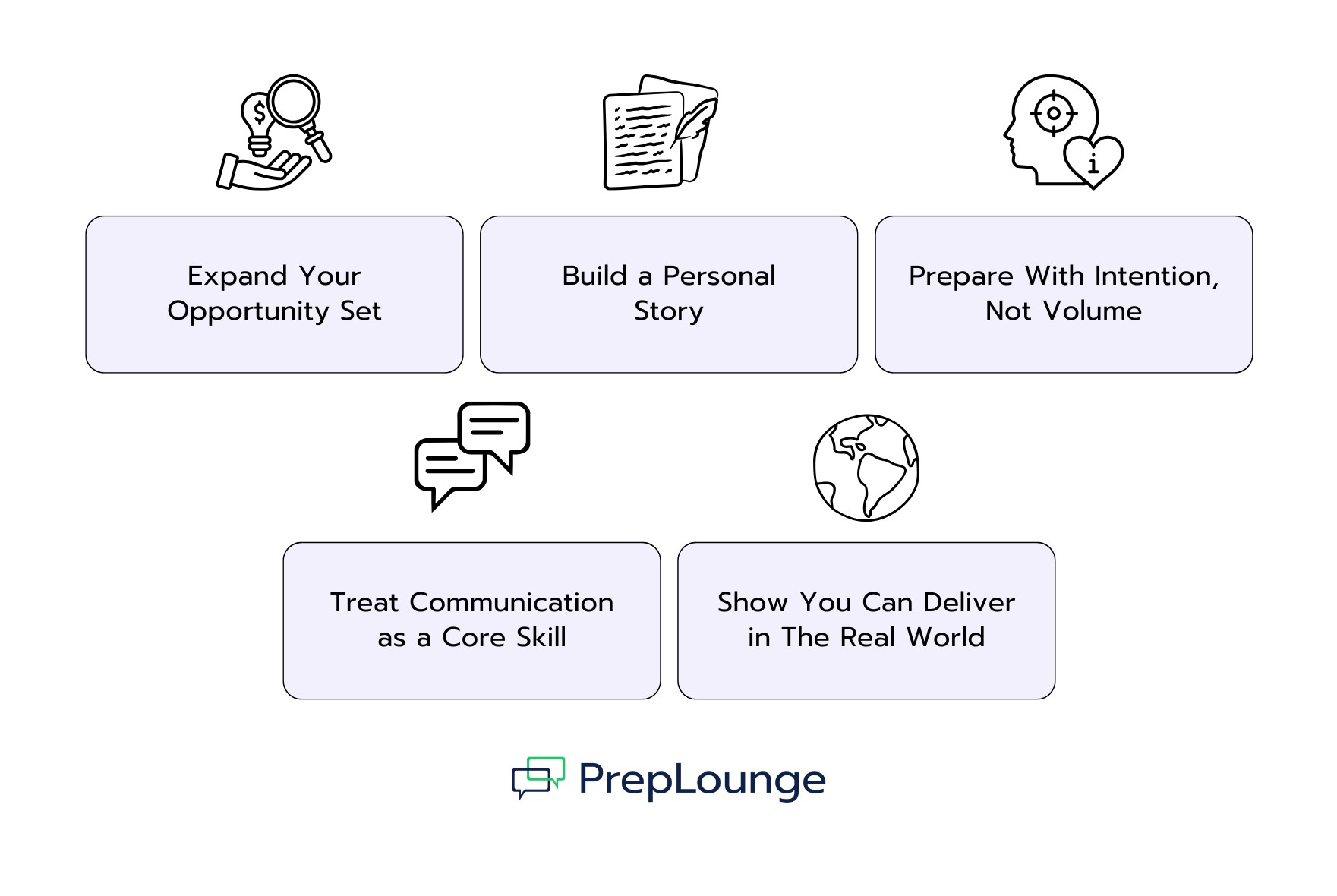
Expand Your Opportunity Set
In a selective and uneven hiring market, concentration risk is real. Candidates who rely on a single office, a single firm, or a single hiring window expose themselves unnecessarily. Strong candidates expand their opportunity set in this three intentional ways:
- Across time: They apply earlier than they think they need to. Internships, off-cycle roles, and rolling applications are treated as parallel paths rather than backups. This creates multiple entry points instead of a single high-stakes moment.
- Across geography: They target offices where demand aligns with their background, not just offices with the strongest brand recognition. Smaller or less obvious offices often hire with lower competition and faster timelines.
- Across role types: They view consulting, internal strategy, transformation roles, and chief of staff positions as part of the same ecosystem. Early career moves are evaluated for learning and exposure, not just title prestige.
Build a Sharp and Credible Personal Story
In 2026, interviewers decide faster. Generic narratives are filtered out early. A strong personal story helps interviewers understand, within minutes, why you make sense for their team.
A compelling story usually has three clear components:
- A visible direction or spike: You do not need to be an expert, but you do need clarity. Whether your interest lies in healthcare, energy, digital transformation, operations, public sector, or another area, interviewers want to see intent rather than randomness.
- Proof of execution: Ideas alone are no longer impressive. Candidates stand out when they can show how they moved from analysis to action, dealt with ambiguity, influenced stakeholders, and delivered results despite constraints.
- Comfort with technology and AI: You are not expected to be technical. You are expected to be fluent. Being able to speak naturally about how AI fits into real work and how you have used it responsibly signals readiness for modern consulting teams.
Prepare With Intention, Not Volume
Many candidates respond to tougher conditions by doing more. More cases. More videos. More frameworks. This often creates fatigue without improvement.
Effective preparation in 2026 is selective and deliberate!
- Master fundamentals deeply: Clear structuring, sound judgment, and calm communication matter more than exotic frameworks.
- Practise with a purpose: Each case should target a specific weakness, whether it is synthesis, creativity, numbers, or leadership presence.
- Simulate real interview pressure early: Waiting until the end to practise under time pressure is a common mistake. Strong candidates stress-test themselves early and often.