


Case by
PrepLounge

Daily Journal

Difficulty: Intermediate
Interviewer-led
1.1k Ratings
Times solved: 15.5k

Case Prompt:

Our client, Daily Journal is a highly respected & upscale newspaper which is read widely in the UK. The paper is positioned between the Wall Street Journal and the New York Times. Recently, the newspaper added an online segment which is a spin-off from the motherfirm. Dailyjournal.com is currently just an online version of the newspaper, but work is underway to structure the online version into a consumer-appealing website. 

Their main goal is to earn revenue from the website and that's where you come in. The client wants to know how to generate revenue from the website?

Overview of All Exhibits
Practice makes the difference
Practicing alone helps – with a partner it’s even better. Solve this case in a realistic mock interview.
Schedule on Meeting Board

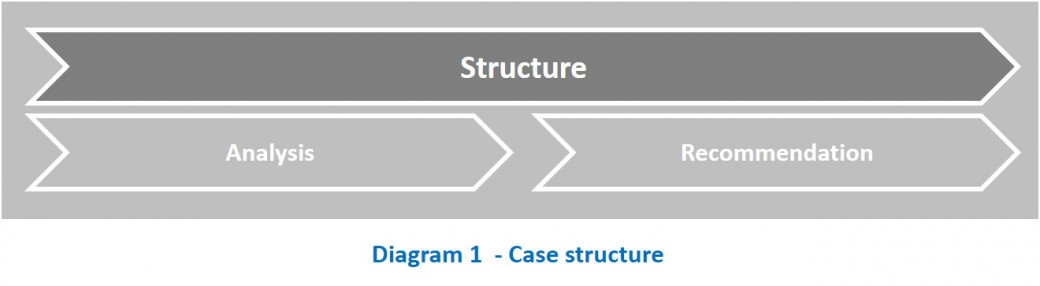
Sample Structure

Show sample structure Hide sample structure

I. Approach

1. How would you approach such a case?

Show additional information Hide additional information
Show solution Hide solution

II. Revenue Models

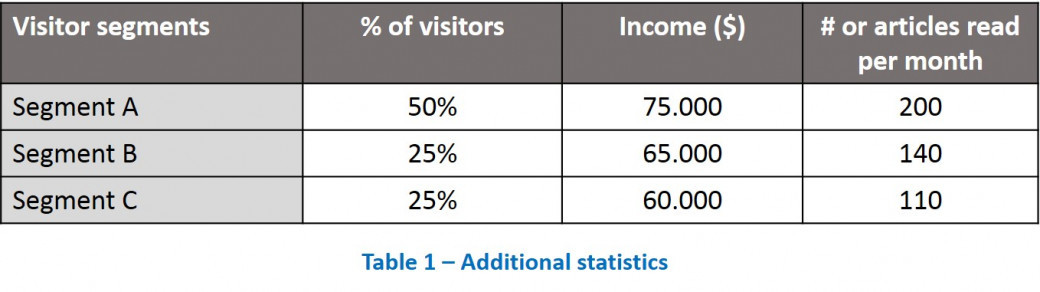
2. Now that you have some information on the site stats, what kind of revenue models can we think of for the client?

Show solution Hide solution

III. Transaction Model

3. Let's look into the transaction model, how would that look like and what is the estimated revenue the company can generate?

Show solution Hide solution

IV. Revenue Calculation

4. Great, say we want to estimate how much revenue could the company generate with this model, assuming that the site gets 1 m unique visitors per year and annually 25 m articles are read, the company wants to publish 100,000 premium articles a year and it is expected that each visitor will read about a 1,000 premium articles a year?

Show additional information Hide additional information
Show solution Hide solution

V. Recommendation

5. Since we have less time, let's round it up. Say you come across the client and he wants a quick summary - what would you say to him?

Show solution Hide solution

Further Questions

In today's age and with the knowledge you might have on newspapers & magazines, which model is better to pursue - subscription model, advertising or transaction model? Why?

Practice This Case With Peers Who Are Currently Looking for Interview Partners.
Do you have questions on this case?
Ask our community and receive answers and tips directly from our experts.
Ask a question Ask a question
Related Case Interview Basics Articles
Servant Leadership
Common Terms of Business
The term Servant Leadership may sound unusual at first. Typically, when we think of leaders, we imagine individuals who give orders and set the direction. However, this approach flips that notion upside down: a leader is not someone who dictates what needs to be done, but rather someone who asks how they can best support their team to ensure its success. What Does Servant Leadership Mean?Servant Leadership is about focusing on empowering the team, removing obstacles, and providing the necessary support. A servant leader ensures that employees have the right tools, feel valued, and have opportunities for both personal and professional growth. The goal? To create an environment where employees can perform at their best. When the team thrives, so does the company: engaged, motivated, and satisfied employees are more creative, productive, and deliver better results. 😊 The Origins of the ConceptThe term Servant Leadership was coined by Robert K. Greenleaf in his 1970 essay The Servant as Leader. Greenleaf spent many years working at AT&T, where he had the opportunity to observe numerous leaders. He noticed that the most successful and inspiring leaders were those who genuinely served their employees rather than simply giving orders. Servant Leadership vs. Other Leadership StylesServant Leadership is often compared to two other leadership styles: authoritarian leadership and transformational leadership.Authoritarian Leadership: In this style, leaders give direct orders, and employees are expected to follow them. Decisions are made hierarchically, with little room for creativity or employee involvement.Transformational Leadership: Here, the leader acts as an inspirational figure who pursues a vision and motivates the team to achieve it. However, the primary focus is on fulfilling the leader’s vision. In contrast, Servant Leadership prioritizes the well-being and growth of employees—under the belief that this, in turn, benefits the company. The 10 Characteristics of a Servant LeaderLarry C. Spears, a leading expert on Servant Leadership, identified ten key characteristics of this leadership style:Listening: Servant leaders actively listen to understand employees' needs and concerns.Empathy: They show genuine compassion and try to see things from their employees' perspectives.Healing: A servant leader creates a supportive environment where employees feel comfortable discussing challenges.Self-awareness: They reflect on their own behavior and understand how it impacts others.Persuasion: Instead of leading through authority, servant leaders influence through dialogue and consensus.Foresight: They anticipate future developments and make decisions accordingly.Stewardship: They take responsibility for the company and its long-term success.Commitment to Employee Growth: Servant leaders foster both personal and professional development.Building Community: They promote teamwork and create a sense of belonging.Community Awareness: A servant leader considers the impact of decisions on society as a whole.These characteristics help cultivate a work environment where employees can reach their full potential. However, not every leader needs to master all ten traits, what matters most is a balanced and situationally appropriate leadership approach. How Servant Leadership Can Improve Business PerformanceImplementing Servant Leadership can positively transform workplace culture and enhance performance. Here are some practical steps to introduce this leadership style:Raising Awareness: Leaders should familiarize themselves with the concept through workshops or coaching.Leading by Example: Leaders must embody the principles of Servant Leadership, such as active listening and employee empowerment.Collecting Employee Feedback: A continuous feedback system helps understand employees' needs and address them effectively.Encouraging Growth: Providing ongoing training and mentoring supports employee development.✨ The benefits of this leadership style are extensive: it increases employee satisfaction, strengthens team cohesion, and fosters innovation. Employees feel valued and motivated, which boosts productivity and creativity. Challenges in Implementing Servant LeadershipOf course, there are challenges to consider:Time Investment: The cultural shift towards Servant Leadership requires patience and long-term commitment.Misinterpretations: Some may perceive this approach as a sign of weakness or lack of authority.Finding the Right Balance: In high-pressure situations, it can be challenging to balance serving employees with making quick decisions when necessary. When is Servant Leadership a Good Fit?Servant Leadership is particularly beneficial when:A company seeks cultural change, such as fostering more collaboration and innovation.Employee engagement and satisfaction need improvement.Teamwork and cohesion should be strengthened.By prioritizing the well-being and growth of employees, Servant Leadership creates a workplace where people feel empowered to contribute their best - leading to long-term success for both individuals and the organization. 
To the article
ADKAR Model
Useful Business Analysis Tools
The ADKAR Model, developed by Jeff Hiatt, founder of Prosci, is a practical change management framework. It's designed to help organizations to successfully implement change and increase employee acceptance. As one of the most popular models for change management, ADKAR highlights an often overlooked fact: changes can only be successful if employees are actively involved.🔎 In this article, we'll introduce you to the components of the ADKAR Model and how it can be applied to challenges within organizations. 
To the article
The Tuckman Model
Common Terms of Business
At the core of comprehending team dynamics is the ingenious creation of Bruce Tuckman, the Tuckman Model. Bruce Tuckman, an eminent psychologist and researcher, introduced this model in 1965, and it has since been a fundamental framework for understanding team behavior and guiding team development.Tuckman, with his deep-rooted interest in group dynamics, recognized the evolution teams go through in their journey towards high performance. His model offered a lucid, linear path for this evolution, making it easily understandable and implementable in varied team environments.His ground-breaking work has led to profound shifts in how organizations manage their teams, promoting a more empathetic and result-oriented approach. Tuckman's model stands out as an insightful roadmap that helps navigate the complex maze of team development, and its utility spans multiple disciplines and industries.In a consultancy environment, the model is especially relevant due to the constant team reshuffling and the high value placed on effective teamwork. With consultants often stepping into pre-established teams, understanding the team's current developmental stage - whether it's forming, storming, norming, performing, or adjourning—is invaluable.By using Tuckman's model as a reference, consultants can quickly assess team dynamics, identify issues, and devise strategies to move the team towards the next stage. In essence, Tuckman's model provides a clear framework that can be used to maximize team effectiveness, making it a critical tool in the consultant's toolkit.
To the article
Kotter Change Management Model
Useful Business Analysis Tools
As graduates venturing into the world of consulting, it is essential to equip ourselves with effective change management frameworks. One such model that holds significant importance is the 8-Step Kotter Change Model. Developed by renowned leadership expert John P. Kotter, it is a widely recognized framework that helps organizations navigate through periods of change. Originally introduced in 1995, this 8-Step Model has become one of the go-to methods for supporting employees and managers during times of transformation. In the world of consulting, where change is a constant, understanding and effectively utilizing this model is essential for success. Overview of the 8-Step Kotter Change ModelKotter's model is based on Kurt Lewin's field theory and draws insights from successful change projects in large organizations. It emphasizes the importance of people and effective communication in driving sustainable change within a company. By addressing resistance, creating a shared vision, and embedding new behaviors, the model aims to facilitate successful organizational transformations.The 8-Step Model serves as a roadmap to guide organizations through change initiatives. It comprises a sequence of steps that address various crucial elements of the change process.  Here is a brief overview of each step:Create a sense of urgency: This step involves creating awareness and a compelling reason for change, emphasizing the need for immediate action.Build a guiding coalition: Forming a dedicated team of influential individuals who share a common vision and have the capability to drive change is crucial for its successful implementation.Form a strategic vision and initiatives: Developing a clear and compelling vision for the future state of the organization, along with actionable initiatives, provides a roadmap for change.Enlist a volunteer army: Effective communication of the vision to all stakeholders helps foster understanding, alignment, and commitment towards the change effort.Enable action by removing barriers: Empowering employees to take ownership and initiative in driving the change process helps to overcome resistance and promotes a culture of collaboration.Generate short-term wins: Celebrating and showcasing early wins in the change journey boosts morale, builds momentum, and creates confidence in the change process.Sustain acceleration: Building upon the initial successes, it is crucial to sustain the momentum of change and drive further improvements to solidify the new ways of working.Institute change: To ensure the longevity of the change, embedding new behaviors and practices into the organizational culture is vital, fostering a sustainable transformation. Benefits of the 8-Step Kotter Change ModelThe Kotter Change Management Model offers several advantages for consultants:Structured approach: The model provides a systematic and well-defined framework to guide consultants through the complex process of change management, ensuring a methodical approach achieving desired outcomes.Stakeholder engagement: By involving key stakeholders at various stages, the model encourages collaboration, creates buy-in, and fosters a sense of ownership, which is essential for successful change implementation.Agility and flexibility: The model recognizes the importance of adaptability, enabling consultants to navigate unexpected challenges and adjust strategies based on feedback and evolving circumstances.Focus on short-term wins: The emphasis on generating early successes helps consultants gain credibility, build support, and maintain momentum throughout the change journey. Limitations and ConsiderationsSimplification: The model provides a simplified view of the change process, and real-world situations may involve additional complexities that need to be addressed.Contextual factors: The model does not explicitly address industry-specific or organizational context factors, which may require customization and adaptation of the steps. Importance of the Model for ConsultantsClient engagement: The model enables consultants to engage clients in a structured change management process, fostering trust and establishing their expertise in driving successful transformations.Change leadership: By applying the model, consultants can effectively lead change initiatives, align stakeholders, and guide organizations towards desired outcomes, establishing themselves as trusted advisors.Framework for analysis: The model provides a framework to analyze the current state of organizations, identify gaps and opportunities, and develop comprehensive change strategies, enhancing the value consultants bring to their clients. ConclusionAs aspiring consultants, mastering the 8-Step Kotter Change Model can significantly enhance our ability to drive successful change initiatives. Its structured approach, stakeholder engagement, and focus on short-term wins make it a valuable tool for guiding organizations through complex transformations. By understanding and applying this model, we can contribute to the success of our clients' change journeys and establish ourselves as effective change agents in the consulting industry.Further Reading:Download Kotter's 8-Steps Ebook here.
To the article
Growth Strategy
Types of Cases
In case interviews, you are often tasked with developing strategies to increase a company's revenue. It's crucial to conduct a systematic analysis to provide well-founded and actionable recommendations.Below, we’ll break down the key factors you need to consider and show you how to structure your response in a clear, effective way. Our goal is to give you a practical guide to help you ace your case interviews and build strong growth strategies.
To the article
Practice makes the difference
Practicing alone helps – with a partner it’s even better. Solve this case in a realistic mock interview.
Add invitation
Do you have questions on this case?
Ask our community and receive answers and tips directly from our experts.
Ask a question Ask a question