



Back to overview
Expert case by
Francesco

Bain 1st Round Case – BlissOttica

Difficulty: Intermediate
Candidate-led
4.0
100+ Ratings
Times solved: 15.7k

Case Prompt:

Our client is a BlissOttica, an Eyewear Manufacturer that is looking to reach a 10% increase in profits. How would you help our client?

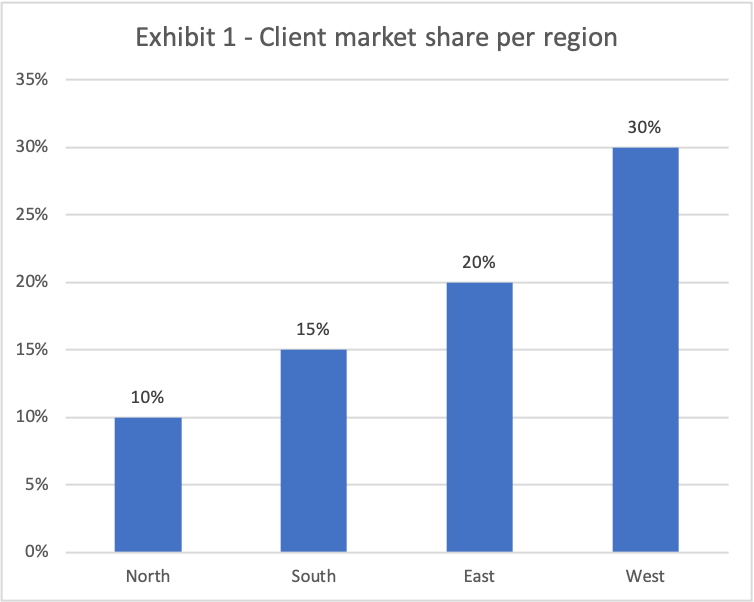
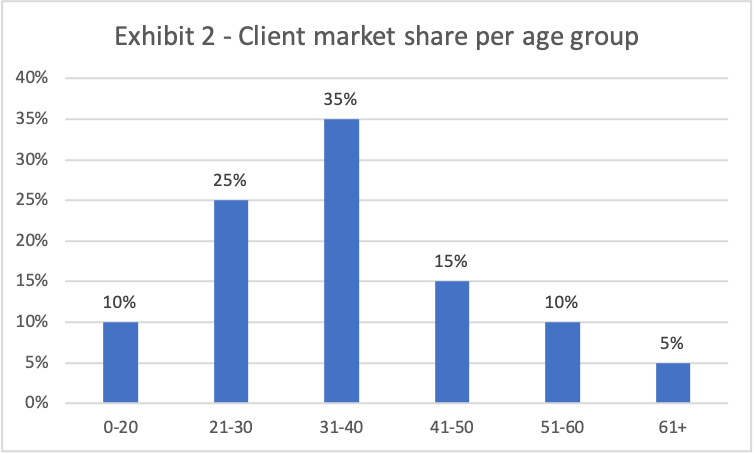
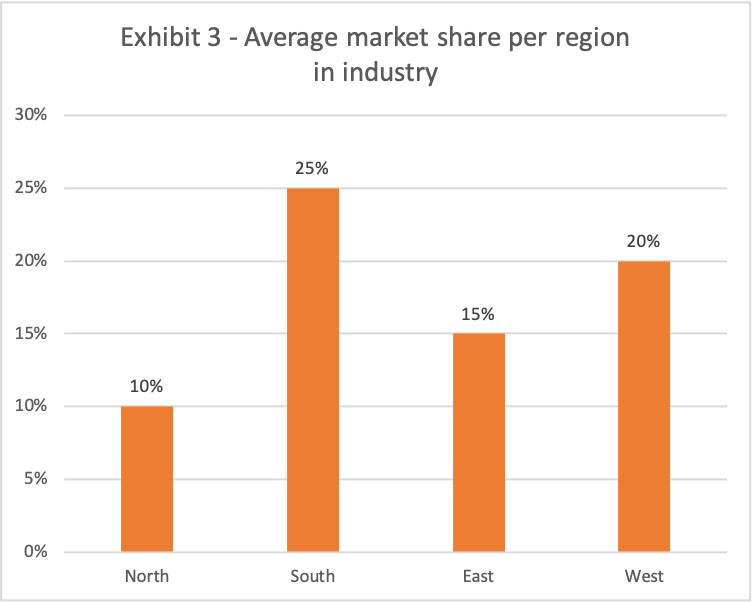
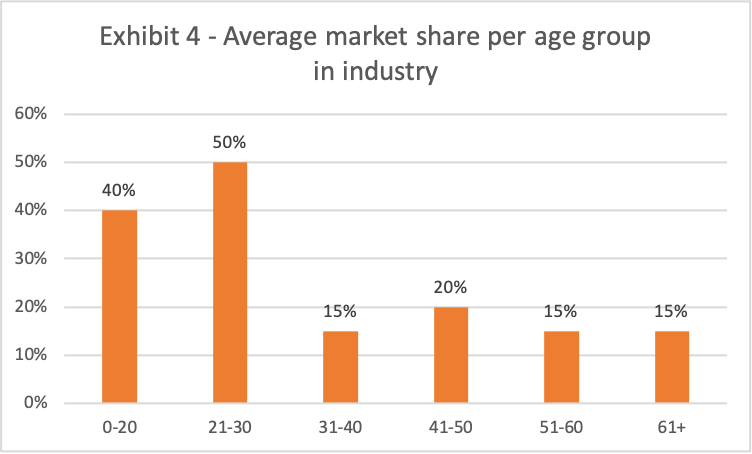
Overview of All Exhibits
Practice makes the difference
Practicing alone helps – with a partner it’s even better. Solve this case in a realistic mock interview.
Schedule on Meeting Board

Part 1 - Case Opening

Show additional information Hide additional information
Show solution Hide solution

Part 2 – Analysis of Optimal Segments

Show additional information Hide additional information
Show solution Hide solution

Part 3 – Math Question Part 1

Show additional information Hide additional information
Show solution Hide solution

Part 4 – Math Question Part 2

Show additional information Hide additional information
Show solution Hide solution

Part 5 – Conclusion

Show additional information Hide additional information
Show solution Hide solution

Final Remarks

Thanks for completing the case!

------------------------------------------------------------------------------------------------------------------------

Looking for free tips? Click on the links below to find more information about some of the most common topics in consulting:


  1. 11 New Consulting Trends You Should Know
  2. 4 Ways to Land an MBB Interview
  3. Making $ in the Middle East - 16+ Data Points on Consulting Salaries in Dubai and Co
  4. How to Make $1M+ by Working in Consulting
  5. Top 15 Consulting Firms by Revenues and Prestige
  6. How to Master the 6 Games of the McKinsey Problem Solving Game
  7. 10 Must-Know Tips to Master the BCG Online Case  
  8. Consulting Firms in Singapore - Learn Everything About 18 Top Consulting Firms in the Lion City
  9. Revealed: The Real 32 MBB Target Schools for US Applicants
  10. Salaries of the Best 16 Consulting Firms in Singapore - Everything You Need to Know
  11. BCG Potential Test - 9 Exclusive Tips


------------------------------------------------------------------------------------------------------------------------

For any questions, please drop me a message here, happy to help.

Best,

Francesco

Practice This Case With Peers Who Are Currently Looking for Interview Partners.
Do you have questions on this case?
Ask our community and receive answers and tips directly from our experts.
Ask a question Ask a question
Related Case Interview Basics Articles
The Tuckman Model
Common Terms of Business
At the core of comprehending team dynamics is the ingenious creation of Bruce Tuckman, the Tuckman Model. Bruce Tuckman, an eminent psychologist and researcher, introduced this model in 1965, and it has since been a fundamental framework for understanding team behavior and guiding team development.Tuckman, with his deep-rooted interest in group dynamics, recognized the evolution teams go through in their journey towards high performance. His model offered a lucid, linear path for this evolution, making it easily understandable and implementable in varied team environments.His ground-breaking work has led to profound shifts in how organizations manage their teams, promoting a more empathetic and result-oriented approach. Tuckman's model stands out as an insightful roadmap that helps navigate the complex maze of team development, and its utility spans multiple disciplines and industries.In a consultancy environment, the model is especially relevant due to the constant team reshuffling and the high value placed on effective teamwork. With consultants often stepping into pre-established teams, understanding the team's current developmental stage - whether it's forming, storming, norming, performing, or adjourning—is invaluable.By using Tuckman's model as a reference, consultants can quickly assess team dynamics, identify issues, and devise strategies to move the team towards the next stage. In essence, Tuckman's model provides a clear framework that can be used to maximize team effectiveness, making it a critical tool in the consultant's toolkit.
To the article
Theory of Constraints
Common Terms of Business
Theory of Constraints (TOC), also known as Bottleneck theory, was developed by Israeli physicist and entrepreneur Eliyahu M. Goldratt. This theory is a management approach that aims to improve organizational performance by focusing on identifying and eliminating bottlenecks. A bottleneck is a part of the production process or a resource that limits a company's production capacity and thus affects overall performance. Similar to a bottleneck that reduces the flow of a liquid, creating a bottleneck, certain factors in organizations create bottlenecks that can slow, limit or prevent operations.
To the article
SMART Goals in Consulting
Useful Business Analysis Tools
As a consultant, setting clear and concise goals is critical to making your work effective and successful. SMART goals are a proven way to achieve this. In this article, we'll go into detail about what smart goals are and how you can use them effectively in consulting.
To the article
The Capability Maturity Model (CMM)
Useful Business Analysis Tools
A career in consulting requires a deep understanding of various methods and models that can help clients optimize their processes and maximize performance. One such model is the Capability Maturity Model (CMM), which can serve as a compass for organizations seeking to improve their project management and service capabilities.Developed by the Software Engineering Institute (SEI) at Carnegie Mellon University, the CMM, as well as its extension to the Capability Maturity Model Integration (CMMI), focuses on improving processes within an organization. The models provide a better view of process improvement within five levels (initial to optimized). Each level represents a different level of process maturity and guides an organization toward continuous process improvement.
To the article
Kotter Change Management Model
Useful Business Analysis Tools
As graduates venturing into the world of consulting, it is essential to equip ourselves with effective change management frameworks. One such model that holds significant importance is the 8-Step Kotter Change Model. Developed by renowned leadership expert John P. Kotter, it is a widely recognized framework that helps organizations navigate through periods of change. Originally introduced in 1995, this 8-Step Model has become one of the go-to methods for supporting employees and managers during times of transformation. In the world of consulting, where change is a constant, understanding and effectively utilizing this model is essential for success. Overview of the 8-Step Kotter Change ModelKotter's model is based on Kurt Lewin's field theory and draws insights from successful change projects in large organizations. It emphasizes the importance of people and effective communication in driving sustainable change within a company. By addressing resistance, creating a shared vision, and embedding new behaviors, the model aims to facilitate successful organizational transformations.The 8-Step Model serves as a roadmap to guide organizations through change initiatives. It comprises a sequence of steps that address various crucial elements of the change process.  Here is a brief overview of each step:Create a sense of urgency: This step involves creating awareness and a compelling reason for change, emphasizing the need for immediate action.Build a guiding coalition: Forming a dedicated team of influential individuals who share a common vision and have the capability to drive change is crucial for its successful implementation.Form a strategic vision and initiatives: Developing a clear and compelling vision for the future state of the organization, along with actionable initiatives, provides a roadmap for change.Enlist a volunteer army: Effective communication of the vision to all stakeholders helps foster understanding, alignment, and commitment towards the change effort.Enable action by removing barriers: Empowering employees to take ownership and initiative in driving the change process helps to overcome resistance and promotes a culture of collaboration.Generate short-term wins: Celebrating and showcasing early wins in the change journey boosts morale, builds momentum, and creates confidence in the change process.Sustain acceleration: Building upon the initial successes, it is crucial to sustain the momentum of change and drive further improvements to solidify the new ways of working.Institute change: To ensure the longevity of the change, embedding new behaviors and practices into the organizational culture is vital, fostering a sustainable transformation. Benefits of the 8-Step Kotter Change ModelThe Kotter Change Management Model offers several advantages for consultants:Structured approach: The model provides a systematic and well-defined framework to guide consultants through the complex process of change management, ensuring a methodical approach achieving desired outcomes.Stakeholder engagement: By involving key stakeholders at various stages, the model encourages collaboration, creates buy-in, and fosters a sense of ownership, which is essential for successful change implementation.Agility and flexibility: The model recognizes the importance of adaptability, enabling consultants to navigate unexpected challenges and adjust strategies based on feedback and evolving circumstances.Focus on short-term wins: The emphasis on generating early successes helps consultants gain credibility, build support, and maintain momentum throughout the change journey. Limitations and ConsiderationsSimplification: The model provides a simplified view of the change process, and real-world situations may involve additional complexities that need to be addressed.Contextual factors: The model does not explicitly address industry-specific or organizational context factors, which may require customization and adaptation of the steps. Importance of the Model for ConsultantsClient engagement: The model enables consultants to engage clients in a structured change management process, fostering trust and establishing their expertise in driving successful transformations.Change leadership: By applying the model, consultants can effectively lead change initiatives, align stakeholders, and guide organizations towards desired outcomes, establishing themselves as trusted advisors.Framework for analysis: The model provides a framework to analyze the current state of organizations, identify gaps and opportunities, and develop comprehensive change strategies, enhancing the value consultants bring to their clients. ConclusionAs aspiring consultants, mastering the 8-Step Kotter Change Model can significantly enhance our ability to drive successful change initiatives. Its structured approach, stakeholder engagement, and focus on short-term wins make it a valuable tool for guiding organizations through complex transformations. By understanding and applying this model, we can contribute to the success of our clients' change journeys and establish ourselves as effective change agents in the consulting industry.Further Reading:Download Kotter's 8-Steps Ebook here.
To the article
Practice makes the difference
Practicing alone helps – with a partner it’s even better. Solve this case in a realistic mock interview.
Add invitation
Do you have questions on this case?
Ask our community and receive answers and tips directly from our experts.
Ask a question Ask a question