When an MBA Makes Strategic Sense
An MBA can be powerful if:
- You’re pivoting industries
- Your undergraduate institution limits access to consulting recruiting
- You lack business exposure or network
- You want structured, on-campus recruiting access
- You’re targeting the Associate level rather than Business Analyst
In these cases, an MBA can improve likelihood of success. But it is a strategic investment decision. It’s not a default choice.
The Cost You Must Consider
An MBA is expensive.
Tuition alone can exceed $150,000–$200,000. Add opportunity cost of 1–2 years of lost income (not accounting for summer internships and part-time internships). Add living costs.
Before committing, you should ask:
- Am I clearly about my reasons for the MBA?
- Have I thought about both costs and benefits?
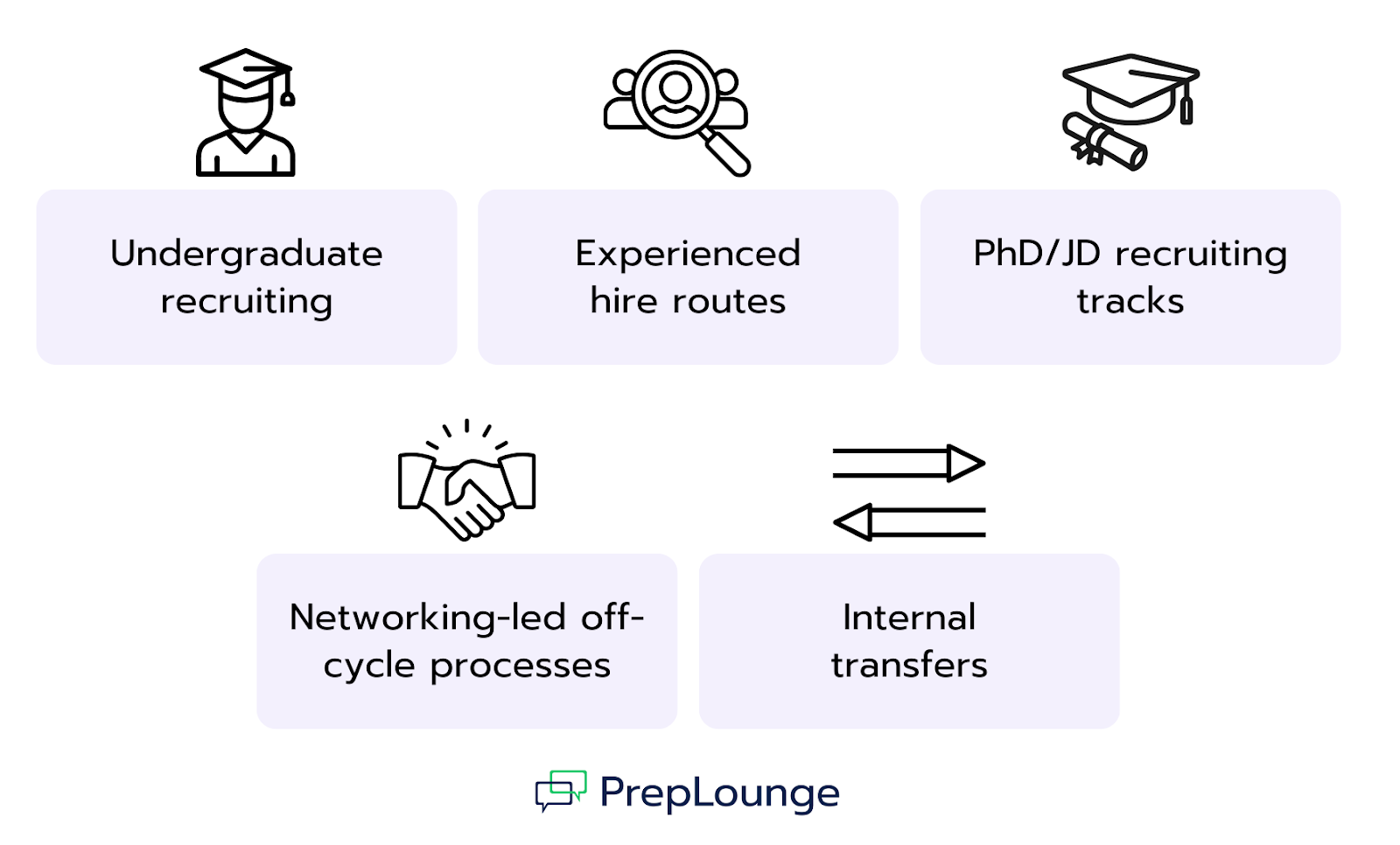
- Have I fully explored direct-entry or experienced-hire routes?
- What is my likelihood of converting without an MBA vs. boost from an MBA?
Too many candidates default to “I’ll just do an MBA” without doing the math.
The Truth About MBB Recruiting
MBB does not hire degrees. They hire signal.
Signal of:
- Structured thinking
- Analytical rigor
- Leadership
- Communication
- Judgment
An MBA can signal these things — but so can strong work experience, competitive achievements, entrepreneurial success, or top-tier performance elsewhere.
What firms really care about is whether you can perform at offer-level standards. If you can demonstrate that, multiple paths are open.
The Real Question
The real question isn’t: “Do I need an MBA?”
It’s: “What is the most capital-efficient, time-efficient, probability-maximizing path for me personally?”
For some people, that is an MBA. For others, it is not. This is not a one-size-fits-all decision.
Your Starting Decision-Making Framework
This framework isn’t a checklist or a formula — it’s a few questions to get you thinking in the right direction. It’s meant to help you pause, reflect, and consider your goals, current strengths, and potential paths.
By running through these points, you can start to see which options make the most sense for you personally, without assuming there’s only one “correct” route. Supplement these questions with conversations with people who have been in your shoes.
1. Career Direction
- Am I trying to pivot industries, roles, or functions?
- Would an MBA meaningfully accelerate my career trajectory compared to staying in the workforce?
2. Access & Network
- Do I currently have access to the companies or industries I want to enter?
- Would the MBA recruiting ecosystem (campus recruiting, alumni networks, internships) significantly expand my opportunities?
- Is my current professional network limiting my mobility?
3. Skill Development
- Are there capabilities I want to build that an MBA environment supports (leadership, management, business fundamentals, exposure to different industries)?
- Would structured learning, peers, and projects help me develop faster than learning on the job?
4. Economics & Timing
- What is the total cost of an MBA (tuition + lost income)?
- How long would it take for the career upside to justify that investment?
- Is this the right moment in my career and personal life to step away for 1–2 years?
Conclusion
An MBA is a powerful tool. But it is a tool, not a prerequisite. The candidates who succeed think strategically about their path, they evaluate trade-offs, understand optionality, and move intentionally.
If you’re debating whether an MBA is the right move for your consulting ambitions, I’m happy to help you think through it clearly and realistically. Book a session with me, and we’ll map out your optimal path.
About the Author