Why the Imposter Syndrome Is Common in Consulting
If you resonate with that description and cycle, you may be relieved to know that experiencing imposter syndrome at consulting firms is almost inevitable. The competitive systems including a culture of comparison, pressure to perform, an elite environment, and a steep learning curve can all fuel it. Here’s how each of these factors make feeling like a fraud in consulting very common.
Comparison Culture in Consulting
One of the reasons why consultants face imposter syndrome is the culture of comparison and pressure to perform. Consulting firms explicitly rank employees, use up-or-out promotion systems, and make staffing decisions where being picked or not for prestigious projects reveals your standing.
All these create pressure to perform while being compared to others who also graduated from top schools, were valedictorians, aced impossible case interviews, and were selected from applicant pools with less than 1% acceptance rates. In such environments, getting an average rating feels like a failure and makes one feel out of place.
Working Alongside Elite Clients and High-Achieving Peers
Another reason why imposter syndrome in management consulting is common is the elite environment where everyone has a similar high-status background. You may have impressive achievements too, but it’s easy to overlook them and amplify those of others.
Besides, the people you’re often in the room with can be very elite including CEOs, government ministers, and board members. It’s hard not to experience professional self-doubt or performance anxiety at work when presenting strategic recommendations to executives who've been in the industry longer than you've been alive. Yet you just researched everything last week.
Project-Based Work Intensify the Learning Curve and Self-Doubt
There’s also the project-based nature of work in consulting that creates one of the steepest learning curves. You change clients or industries every 3–6 months. As soon as you’ve mastered retail, you get another project in nuclear energy or a client with a different problem.
As a result, you might be a perpetual day one amateur for most of your strategy or management consulting career. That feeling like you do not know what you’re doing and dreading clients questions make it hard not to experience professional self-doubt or performance anxiety at work
Typical Situations Where Consultants Face Imposter Feelings
Though the systems in the consulting industry fuel imposter feelings, you may not always feel the fear of not being smart enough as a consultant randomly. Instead, there are common situations that trigger imposter syndrome such as:
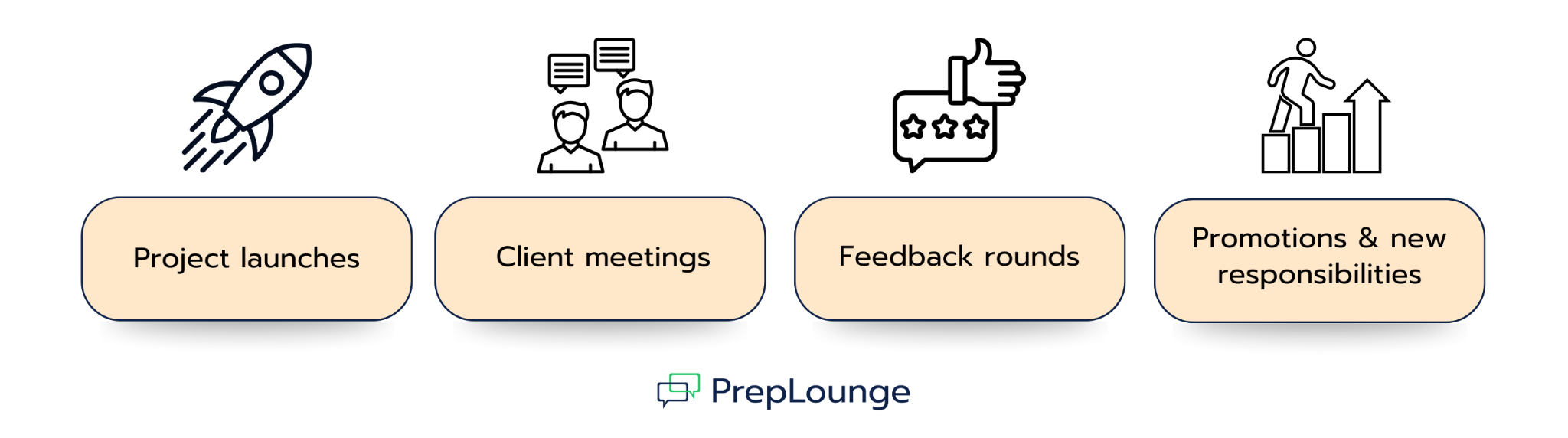
- Project launches: Most consultants experience imposter syndrome after being staffed on a new project, industry, or problem type. You have an empty deck and huge excel files. Then you realize during the first project meeting that you don’t understand half the terminology, the client knows exponentially more about their business than you ever will, and you’re expected to perform before you feel ready.
- Client meetings: In consulting, client meetings are high-stakes settings where you don’t want to show visible uncertainty. So, most consultants dread the moment when a client asks a question that they have no idea how to answer.
- Feedback rounds: Feedback from an engagement manager, partner, or another teammate on your analysis or deck can easily trigger imposter syndrome. Even constructive feedback feels like confirmation that you don't measure up rather than normal iteration.
- Promotions and new responsibilities: Getting promoted in consulting, especially ahead of schedule, can trigger imposter feelings. It is also common to experience self-doubt as a consultant when you move from doing the major work in analyst positions to managing people in associate or manager roles. You struggle to internalize and accept the new role and dread the day they will realize their mistake.
Impact of Imposter Feelings on Performance, Mental Health & Career Development
Regardless of the specific moments that may trigger imposter feelings, the harsh reality is that there are consequences. It can hurt your self-confidence, affect your decision making abilities, impact career growth, and increase mental health struggles.
When Self-Doubt Undermines Your Performance
Whenever you experience professional self-doubt, it somehow affects your confidence. Then the blip in confidence leads to actions or inactions that hurt you further. For instance, the fear of being wrong or found out can prevent you from making the bold recommendations that lead to strong ratings in performance reviews. Getting average rating in turn confirms the feeling that everyone else belongs here but you.
When Preparation Turns Into Paralysis
Feeling like a fraud in consulting creates analysis paralysis that leads to overworking and affects your decision-making abilities. You may find yourself sacrificing sleep and personal time for a task that requires only three hours because you’re terrified of being asked a question you can’t answer. It becomes hard to trust that you’ve prepared enough.
You may also keep second-guessing your analysis, recommendations, and insights even when they prove correct. So you seek excessive validation, checking in with colleagues repeatedly as you’re unable to trust your own judgment.
From High Performance to Burnout Risk
Career burnout and imposter syndrome often go hand in hand. The performance anxiety at work usually results in overworking which sometimes leads to great results like positive feedback and promotions. However, that may come at the expense of burnout and you may be tempted to exit consulting prematurely if the emotional cost of feeling like a fraudster becomes unsustainable.
On the other end of the spectrum, lack of confidence in consulting can make you take less risk and refrain from advocating for yourself because you believe you haven’t earned it. The result would be delayed promotions or limited networking with senior stakeholders because you feel like an imposter around them.
The Psychological Cost of Feeling Like a Fraud
Persistent imposter feelings are often linked to increased isolation, anxiety, and depression. All the overworking, burnout, chronic self criticism, and insomnia can eventually take a toll on your mental health if not addressed.
Strategies for Consultants to Overcome Imposter Syndrome
Given the implications of imposter syndrome on your mental health, career development, and self confidence, it’s crucial to understand how to manage and overcome it. Below is an overview of each of these tips.
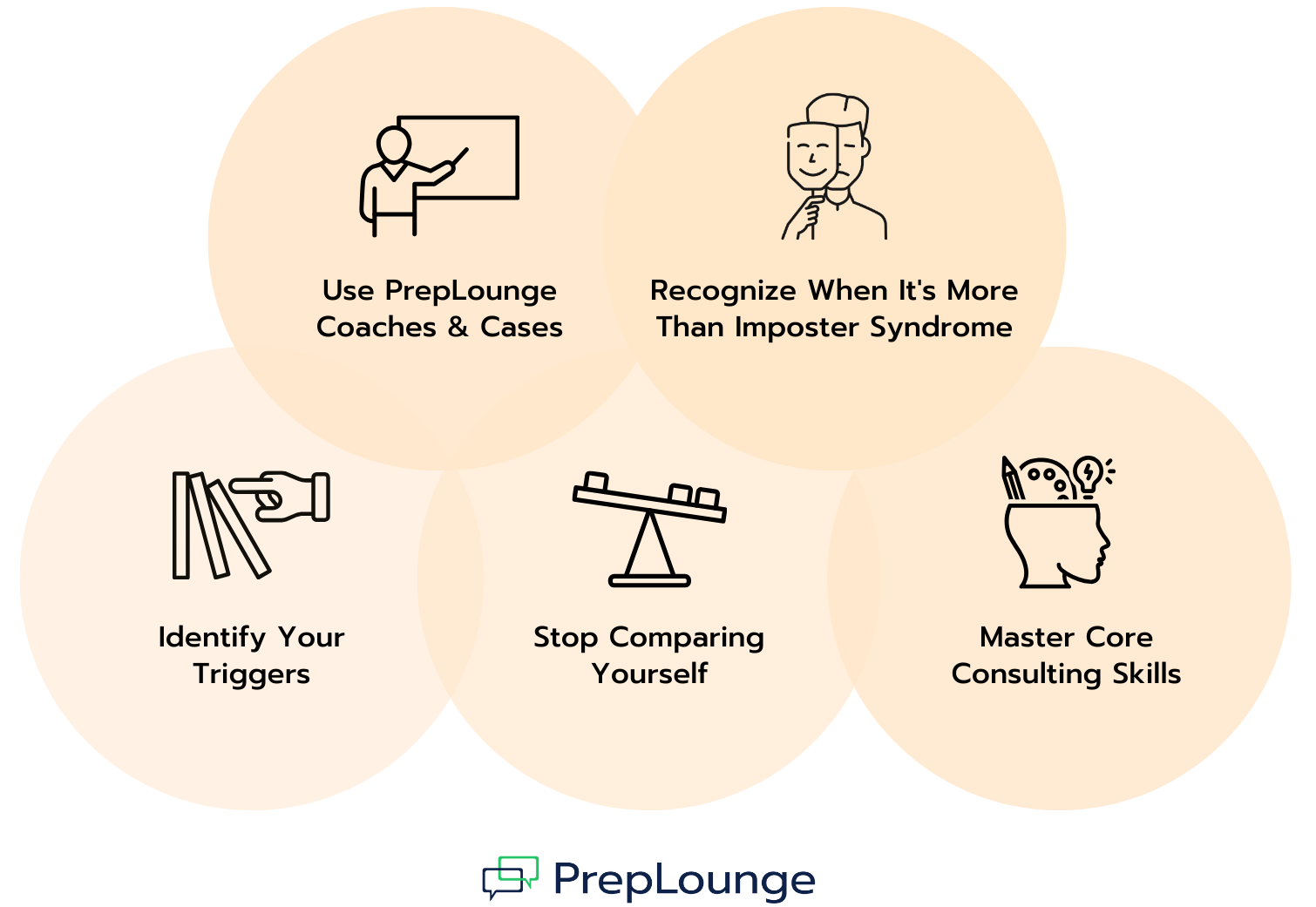
Identify Your Imposter Syndrome Triggers
What triggers imposter feelings in one consultant may not trigger yours. Notice the moments you feel like a fraud: before a new project, during a client call, or around performance reviews. Pay attention to your internal dialogue and write down facts that counter those cognitive distortions.
For example, if you feel out of place after viewing colleagues’ LinkedIn profiles, remind yourself of the facts proving you’re qualified. Top consulting firms don’t hire incapable people. You passed a rigorous selection process because you demonstrated the required capabilities. Nothing has changed except your anxiety.
Revisit your documented wins regularly and reframe them — as you would for a close friend who downplays their achievements.
Stop Comparing Yourself to Other Consultants
The comparison culture in consulting is real, but you can minimize it at a personal level. Often, every other analyst, associate, and senior consultant seems more sharp, proficient, and knowledgeable than you. So it feels like everyone else belongs here but you. However, you only see their highlights, not internal or private battles.
Chances are also high that like most smart people who are high achievers, you carry a deep seated desire to be a genius. But letting go of it can help you put in the right amount of work without feeling like it should be more effortless for you to prove you’re capable.
Build Confidence by Mastering Core Consulting Skills
After letting go of the guilt of not being a genius, accept the fact that you will not know everything. Neither does anyone else. Instead of being overwhelmed by all the knowledge you feel you don’t have, focus on developing deep expertise in core consulting skills. Learn everything needed to ace your job for instance:
Once you increase your competence in these foundational skills, it will boost your confidence and give you something solid to stand on even when the client’s content is unfamiliar.
Leverage PrepLounge Coaches and the Case Library
PrepLounge resources can come in handy if you want to overcome imposter syndrome in consulting through continuous skill building and problem solving. You can book a session with a professional consulting coach who was at your specific firm for performance coaching. These are former Project Leaders and Engagement Managers who understand the consulting career challenges and can help you through struggles with projects. It’s a safe space to be vulnerable away from your actual firm’s HR or managers.
If new projects are your trigger for imposter feelings, use PrepLounge’s Case Library as a framework cheat sheet. Browse expert cases by industry or problem type to revisit the standard issue trees used by top firms and see how high-level consultants structure complex problems. Building pattern recognition over time will make new cases feel less overwhelming.
You can also visit the Consulting Q&A which is an anonymous forum where people ask about firm culture, work life, performance reviews, and exit opportunities. Read through the relevant threads or post your questions to hear from other consultants and mentors.
Recognize When It's More Than Imposter Syndrome
Sometimes what feels like imposter syndrome can actually be:
- Clinical anxiety or depression requiring professional support
- Burnout from unsustainable workloads
- Poor fit with your team, project, or firm culture
- Legitimate skill gaps that need addressing through training
If imposter feelings significantly affect your functioning or cause physical symptoms like insomnia or panic attacks, consider seeking professional support through HR resources, a therapist, or trusted mentors.
Why Talking About Imposter Syndrome Is a Competitive Advantage
Talking to coaches or a therapist about your struggle with imposter syndrome in consulting can create unexpected advantages. They can reflect what they genuinely see in you, offer guidance, and remind you that you're not alone in these doubts. As you work through your specific triggers with them, you may finally drop the mask of a genius consultant who knows everything, build true confidence, and master what it takes to flourish at your job.
That can make you the most grounded person in the room and help to build trust with clients while other consultants continue to experience the exhausting mental load of constant performance. You also tend to learn faster when you’re not wasting energy maintaining a facade.
Conclusion
Imposter phenomenon or imposter syndrome is an internal experience that makes you feel you’re not as capable as others believe — and that you might be “found out.” It’s especially common in consulting due to the comparison culture, constant performance pressure, elite environment, and steep learning curve. These imposter feelings often surface during key moments such as project launches, client meetings, feedback rounds, and promotions.
If left unchecked, they can damage your confidence, decision-making ability, career development, and mental health. Practical ways to overcome imposter syndrome in consulting include identifying your triggers, reducing comparison, letting go of the need to be a “genius,” and mastering the fundamentals of your role.
If you want support with performance coaching or need guidance through consulting career challenges, you can book a session with a professional mentor on PrepLounge. You can also use the consulting forum to connect with peers anonymously and access the Case Library to strengthen your command of essential frameworks.
Common Questions About the Imposter Syndrome in Consulting