





Back to overview
Expert case by
Francesco

Bain 1st Round Case – BlissOttica

Difficulty: Intermediate
Candidate-led
4.0
100+ Ratings
Times solved: 15.7k

Case Prompt:

Our client is a BlissOttica, an Eyewear Manufacturer that is looking to reach a 10% increase in profits. How would you help our client?

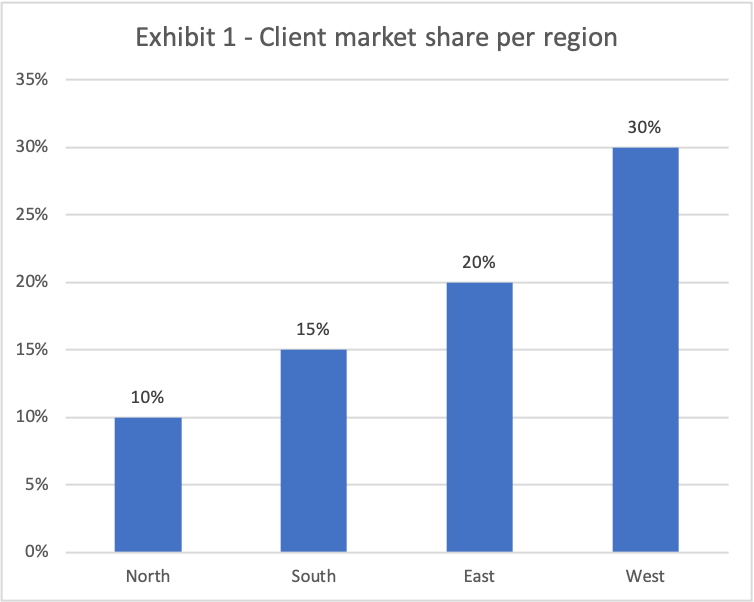
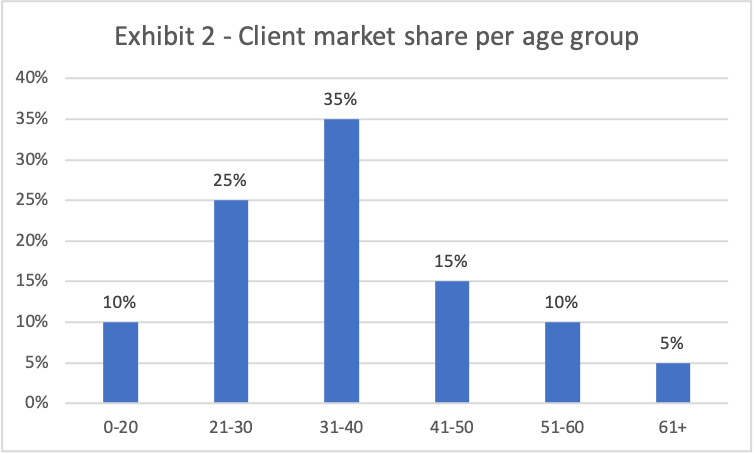
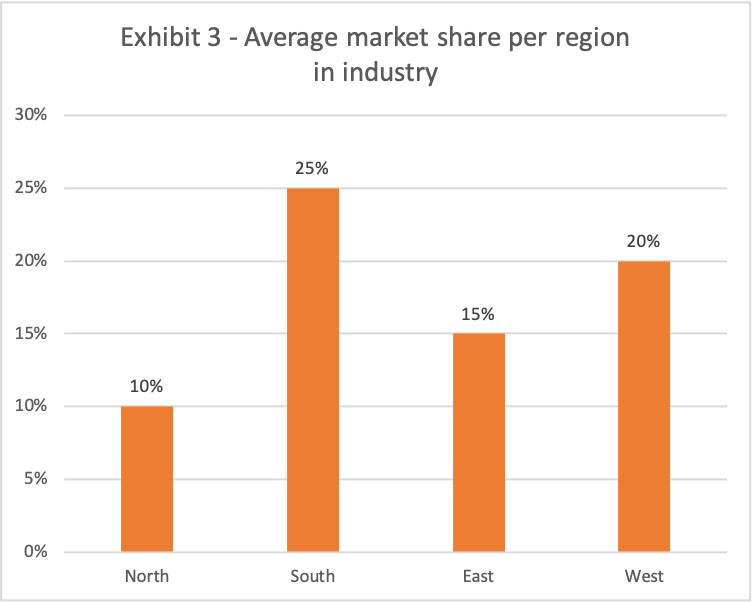
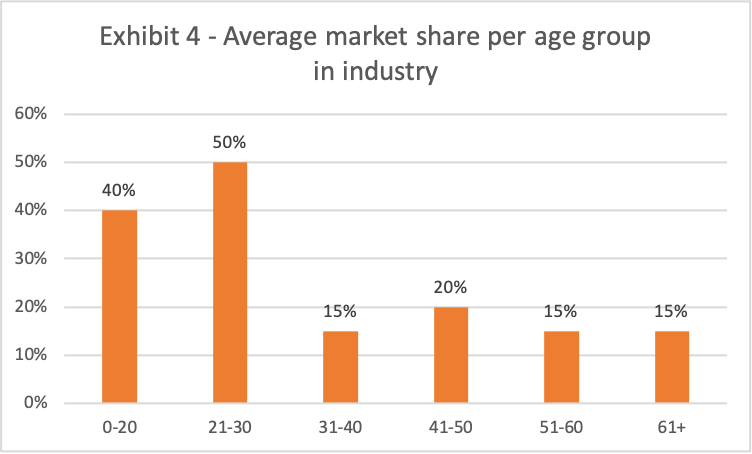
Overview of All Exhibits
Practice makes the difference
Practicing alone helps – with a partner it’s even better. Solve this case in a realistic mock interview.
Schedule on Meeting Board

Part 1 - Case Opening

Show additional information Hide additional information
Show solution Hide solution

Part 2 – Analysis of Optimal Segments

Show additional information Hide additional information
Show solution Hide solution

Part 3 – Math Question Part 1

Show additional information Hide additional information
Show solution Hide solution

Part 4 – Math Question Part 2

Show additional information Hide additional information
Show solution Hide solution

Part 5 – Conclusion

Show additional information Hide additional information
Show solution Hide solution

Final Remarks

Thanks for completing the case!

------------------------------------------------------------------------------------------------------------------------

Looking for free tips? Click on the links below to find more information about some of the most common topics in consulting:


  1. 11 New Consulting Trends You Should Know
  2. 4 Ways to Land an MBB Interview
  3. Making $ in the Middle East - 16+ Data Points on Consulting Salaries in Dubai and Co
  4. How to Make $1M+ by Working in Consulting
  5. Top 15 Consulting Firms by Revenues and Prestige
  6. How to Master the 6 Games of the McKinsey Problem Solving Game
  7. 10 Must-Know Tips to Master the BCG Online Case  
  8. Consulting Firms in Singapore - Learn Everything About 18 Top Consulting Firms in the Lion City
  9. Revealed: The Real 32 MBB Target Schools for US Applicants
  10. Salaries of the Best 16 Consulting Firms in Singapore - Everything You Need to Know
  11. BCG Potential Test - 9 Exclusive Tips


------------------------------------------------------------------------------------------------------------------------

For any questions, please drop me a message here, happy to help.

Best,

Francesco

Practice This Case With Peers Who Are Currently Looking for Interview Partners.
Do you have questions on this case?
Ask our community and receive answers and tips directly from our experts.
Ask a question Ask a question
Related Case Interview Basics Articles
Servant Leadership
Common Terms of Business
The term Servant Leadership may sound unusual at first. Typically, when we think of leaders, we imagine individuals who give orders and set the direction. However, this approach flips that notion upside down: a leader is not someone who dictates what needs to be done, but rather someone who asks how they can best support their team to ensure its success. What Does Servant Leadership Mean?Servant Leadership is about focusing on empowering the team, removing obstacles, and providing the necessary support. A servant leader ensures that employees have the right tools, feel valued, and have opportunities for both personal and professional growth. The goal? To create an environment where employees can perform at their best. When the team thrives, so does the company: engaged, motivated, and satisfied employees are more creative, productive, and deliver better results. 😊 The Origins of the ConceptThe term Servant Leadership was coined by Robert K. Greenleaf in his 1970 essay The Servant as Leader. Greenleaf spent many years working at AT&T, where he had the opportunity to observe numerous leaders. He noticed that the most successful and inspiring leaders were those who genuinely served their employees rather than simply giving orders. Servant Leadership vs. Other Leadership StylesServant Leadership is often compared to two other leadership styles: authoritarian leadership and transformational leadership.Authoritarian Leadership: In this style, leaders give direct orders, and employees are expected to follow them. Decisions are made hierarchically, with little room for creativity or employee involvement.Transformational Leadership: Here, the leader acts as an inspirational figure who pursues a vision and motivates the team to achieve it. However, the primary focus is on fulfilling the leader’s vision. In contrast, Servant Leadership prioritizes the well-being and growth of employees—under the belief that this, in turn, benefits the company. The 10 Characteristics of a Servant LeaderLarry C. Spears, a leading expert on Servant Leadership, identified ten key characteristics of this leadership style:Listening: Servant leaders actively listen to understand employees' needs and concerns.Empathy: They show genuine compassion and try to see things from their employees' perspectives.Healing: A servant leader creates a supportive environment where employees feel comfortable discussing challenges.Self-awareness: They reflect on their own behavior and understand how it impacts others.Persuasion: Instead of leading through authority, servant leaders influence through dialogue and consensus.Foresight: They anticipate future developments and make decisions accordingly.Stewardship: They take responsibility for the company and its long-term success.Commitment to Employee Growth: Servant leaders foster both personal and professional development.Building Community: They promote teamwork and create a sense of belonging.Community Awareness: A servant leader considers the impact of decisions on society as a whole.These characteristics help cultivate a work environment where employees can reach their full potential. However, not every leader needs to master all ten traits, what matters most is a balanced and situationally appropriate leadership approach. How Servant Leadership Can Improve Business PerformanceImplementing Servant Leadership can positively transform workplace culture and enhance performance. Here are some practical steps to introduce this leadership style:Raising Awareness: Leaders should familiarize themselves with the concept through workshops or coaching.Leading by Example: Leaders must embody the principles of Servant Leadership, such as active listening and employee empowerment.Collecting Employee Feedback: A continuous feedback system helps understand employees' needs and address them effectively.Encouraging Growth: Providing ongoing training and mentoring supports employee development.✨ The benefits of this leadership style are extensive: it increases employee satisfaction, strengthens team cohesion, and fosters innovation. Employees feel valued and motivated, which boosts productivity and creativity. Challenges in Implementing Servant LeadershipOf course, there are challenges to consider:Time Investment: The cultural shift towards Servant Leadership requires patience and long-term commitment.Misinterpretations: Some may perceive this approach as a sign of weakness or lack of authority.Finding the Right Balance: In high-pressure situations, it can be challenging to balance serving employees with making quick decisions when necessary. When is Servant Leadership a Good Fit?Servant Leadership is particularly beneficial when:A company seeks cultural change, such as fostering more collaboration and innovation.Employee engagement and satisfaction need improvement.Teamwork and cohesion should be strengthened.By prioritizing the well-being and growth of employees, Servant Leadership creates a workplace where people feel empowered to contribute their best - leading to long-term success for both individuals and the organization. 
To the article
M&A Cases
Types of Cases
M&A cases are quite common in management consulting, especially for candidates applying to firms with a focus on strategy, corporate finance, or (of course) mergers and acquisitions. While they don’t make up the majority of cases, they are frequently used to assess your strategic thinking, ability to analyze financial data, and understanding of the impact of complex business decisions. 
To the article
The Tuckman Model
Common Terms of Business
At the core of comprehending team dynamics is the ingenious creation of Bruce Tuckman, the Tuckman Model. Bruce Tuckman, an eminent psychologist and researcher, introduced this model in 1965, and it has since been a fundamental framework for understanding team behavior and guiding team development.Tuckman, with his deep-rooted interest in group dynamics, recognized the evolution teams go through in their journey towards high performance. His model offered a lucid, linear path for this evolution, making it easily understandable and implementable in varied team environments.His ground-breaking work has led to profound shifts in how organizations manage their teams, promoting a more empathetic and result-oriented approach. Tuckman's model stands out as an insightful roadmap that helps navigate the complex maze of team development, and its utility spans multiple disciplines and industries.In a consultancy environment, the model is especially relevant due to the constant team reshuffling and the high value placed on effective teamwork. With consultants often stepping into pre-established teams, understanding the team's current developmental stage - whether it's forming, storming, norming, performing, or adjourning—is invaluable.By using Tuckman's model as a reference, consultants can quickly assess team dynamics, identify issues, and devise strategies to move the team towards the next stage. In essence, Tuckman's model provides a clear framework that can be used to maximize team effectiveness, making it a critical tool in the consultant's toolkit.

To the article
How to Practice Math Skills
Case Math
When preparing for a case interview in consulting, you will quickly realize that math is an essential component. Don’t worry, you don’t need to be a math genius – it’s enough to handle numbers in a structured and confident manner.
To the article
The Kanban Framework
Common Terms of Business
In your journey to becoming an efficient consultant, understanding various work management systems is crucial. One such system that has made a profound impact, particularly in the world of technology and services, is Kanban.Before we dive into the current applications of Kanban, it's important to acknowledge its origins. Kanban was born in the late 1940s within the walls of Toyota's manufacturing plant in Japan. Taiichi Ohno, an industrial engineer at Toyota, introduced Kanban to improve manufacturing efficiency. The word 'Kanban' translates to 'billboard' or 'signboard' in English, emphasizing the visual nature of the system. Ohno was inspired by the supermarket model of product replenishment, where stock is replaced as soon as it depletes. He applied the same principle to Toyota's production lines, effectively aligning inventory levels with actual parts of consumption. The implementation of Kanban led to significant improvements in Toyota's productivity and efficiency, setting the foundation for what we now call 'Lean Manufacturing'.Fast-forward to the present, Kanban has evolved beyond manufacturing and found its way into the technology and services industries. The system, still true to its origins, is designed to maximize efficiency, limit work in progress, and, most importantly, visualize your work. Derived from the Japanese word for 'visual signal', Kanban is an effective tool for making intangible or invisible work more understandable.By understanding the roots and evolution of Kanban, you, as a consultant, can better appreciate its applicability across industries and harness its principles to improve operational efficiency on diverse projects. It is also important to realize that Kanban is a process management system that aids decision-making in a collaborative manner.
To the article
Practice makes the difference
Practicing alone helps – with a partner it’s even better. Solve this case in a realistic mock interview.
Add invitation
Do you have questions on this case?
Ask our community and receive answers and tips directly from our experts.
Ask a question Ask a question