1. Blog
  2. Consulting
  3. Area
  4. Energy Consulting: Why the Energy Sector Needs Consultants

Energy Consulting: Why the Energy Sector Needs Consultants

Key Takeaways

  • Energy consulting combines traditional consulting skills with specialized knowledge of energy markets, regulation, infrastructure, and technology.
  • Typical projects range from strategy and pricing to commercial due diligence, infrastructure investment, and operational improvement.
  • Candidates should prepare for standard consulting cases while also building a solid understanding of the energy value chain, current industry trends, and their motivation for the sector.

The energy sector is experiencing a fundamental transformation. Renewable energy is expanding, electricity grids need to be modernized, regulation is evolving, and energy security has become a strategic priority. At the same time, new technologies and significant infrastructure requirements are reshaping how energy is produced, distributed, and consumed. As a result, utilities, investors, governments, and industrial companies increasingly need support with complex strategic and commercial decisions. Energy consultants help clients translate technological, regulatory, and market developments into business decisions. For aspiring consultants, this creates the opportunity to combine traditional consulting skills such as problem-solving, data analysis, and strategy development with a sector undergoing significant long-term transformation.

This article explains what energy consulting involves, which projects consultants work on, why the energy transition is creating demand for advisory services, and how to prepare for a career and interviews in the sector.

What Is Energy Consulting?

Energy consulting is a specialized area of consulting focused on companies and organizations involved in the production, distribution, procurement, or consumption of energy. Depending on the consulting firm and project, clients can include:

  • electricity and gas utilities
  • renewable energy developers
  • oil and gas companies
  • grid operators
  • industrial companies
  • infrastructure investors
  • governments and regulators
  • technology providers
  • companies seeking to reduce their energy consumption or emissions

The scope is broad, ranging from energy efficiency and consumption optimization to strategic topics such as market entry, renewable energy investments, infrastructure development, pricing, and utility transformation. 

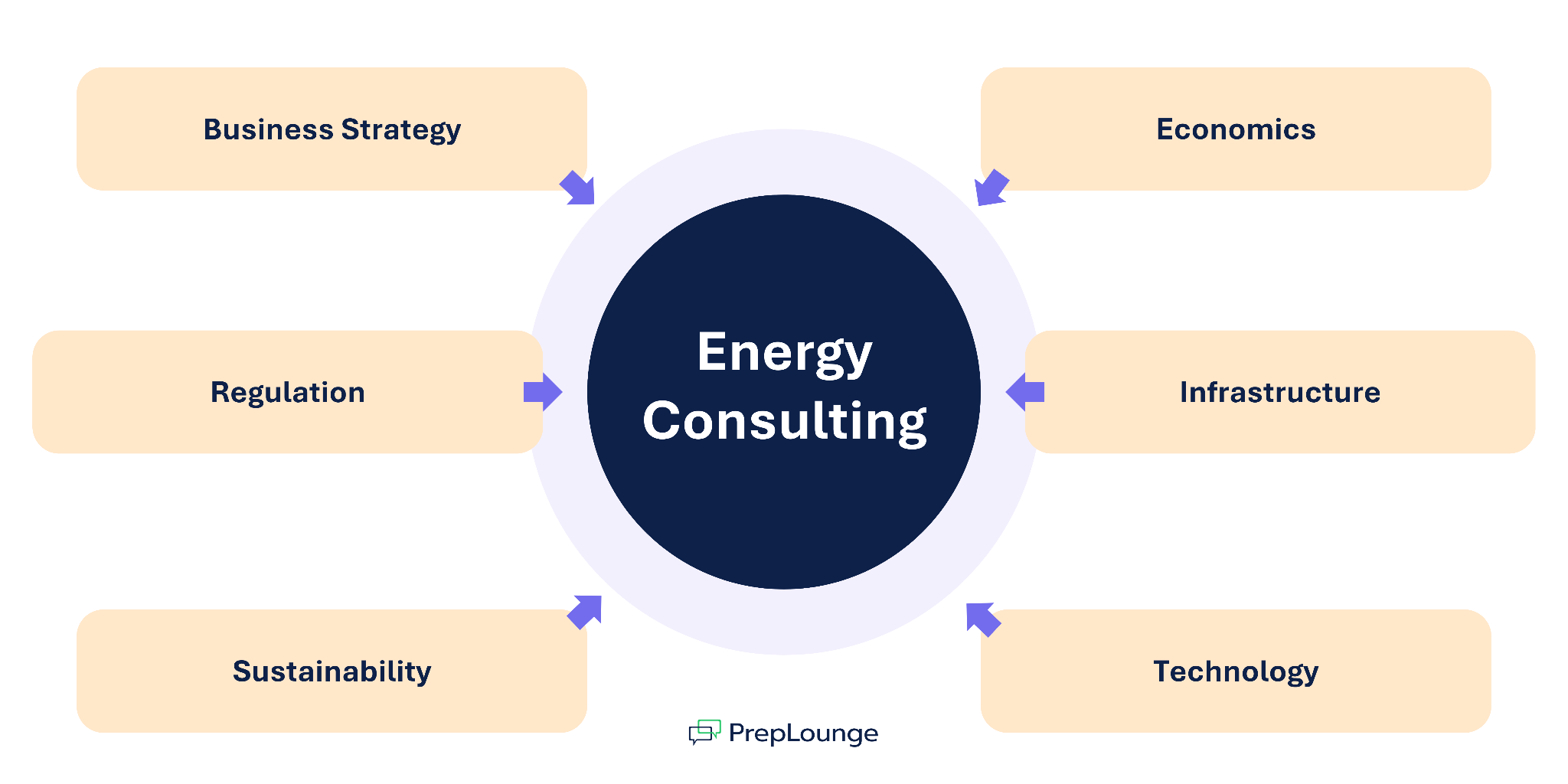
Diagram: Energy Consulting at the center, surrounded by six disciplines: Business Strategy, Economics, Regulation, Infrastructure, Sustainability and Technology.

Why the Demand for Energy Consultants Is Growing

The transformation of the energy industry is also creating opportunities for consulting firms. In Germany, for example, the energy and utilities sector was one of the stronger sources of consulting-market growth in 2025. According to the German Association of Management Consulting (BDU), consulting revenues from the energy and utilities client sector grew by 5.4%. Several structural factors are contributing to this growing demand: significant investment requirements, new business models around technologies such as storage and hydrogen, growing attention to energy security, and the need for companies across industries to rethink how they procure and consume energy. As a result, energy expertise is increasingly relevant across industries beyond traditional utilities.

Kickstart Your Career in Energy Consulting!
Practice real-world case interviews, tackle energy industry challenges, and build the consulting skills you need to succeed.🚀

Typical Projects in Energy and Utilities Consulting

Because the energy sector is changing across almost every part of its value chain, energy consultants work on a wide variety of projects.

Energy Strategy and Transformation

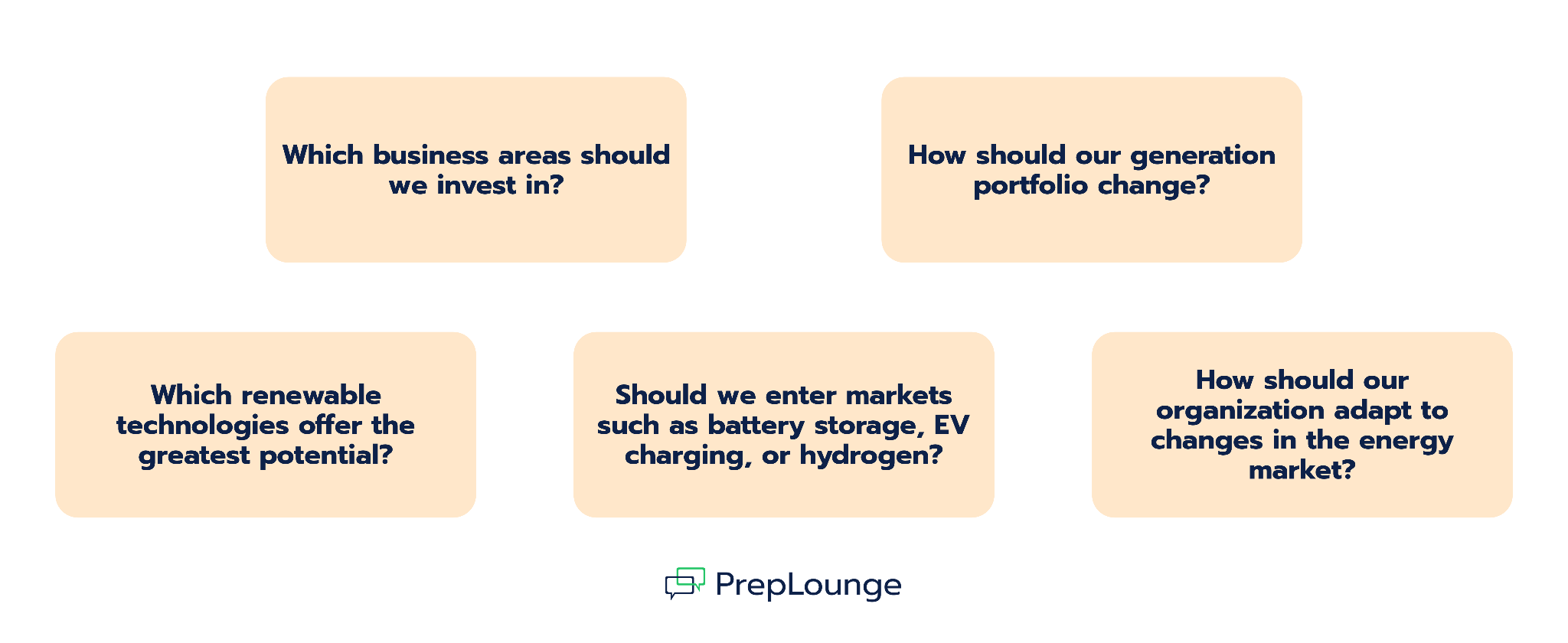
Energy companies need to rethink their business models as renewable generation expands and established sources of revenue come under pressure. Consultants may help a utility answer questions such as:

Diagram showing five key questions about energy infrastructure, including location, financing, technology investments, regulation and affordable energy.

These projects can resemble classic corporate strategy engagements but require deeper knowledge of energy markets and regulation.

Pricing and Commercial Strategy

Energy markets can be highly competitive and volatile. Consultants therefore also work on pricing, product development, sales, and customer strategy. For example, projects may involve developing new electricity tariffs, improving customer retention, designing a go-to-market strategy, or determining how innovative energy products can be monetized. Simon-Kucher, for example, highlights projects ranging from go-to-market approaches for energy providers to digital strategies for utilities and the management of commercial risks in volatile energy markets.

Market Analysis and Investment

Before building a wind farm, battery storage facility, hydrogen plant, or charging network, companies and investors need to understand whether the project will be economically viable. Consultants can evaluate:

  • market size and growth
  • future electricity demand
  • competitor activity
  • regulatory frameworks
  • technology costs
  • expected power or energy prices
  • investment requirements
  • potential returns

Private equity firms, infrastructure funds, and energy companies may also hire consultants for commercial due diligence before investing in energy assets or businesses.

Operational Improvement

Not every energy project is about long-term strategy. Energy consultants may also help organizations improve day-to-day operations. For utilities, this might mean optimizing customer service or digitalizing internal processes. For industrial companies, consultants might identify ways to reduce energy consumption and production costs. Energy specialists therefore need to understand both the strategic and operational sides of the industry.

Land your top job in consulting!
Join the world's leading case interview community today and get everything you need to prepare for your upcoming case interviews!

Infrastructure and Regulation 

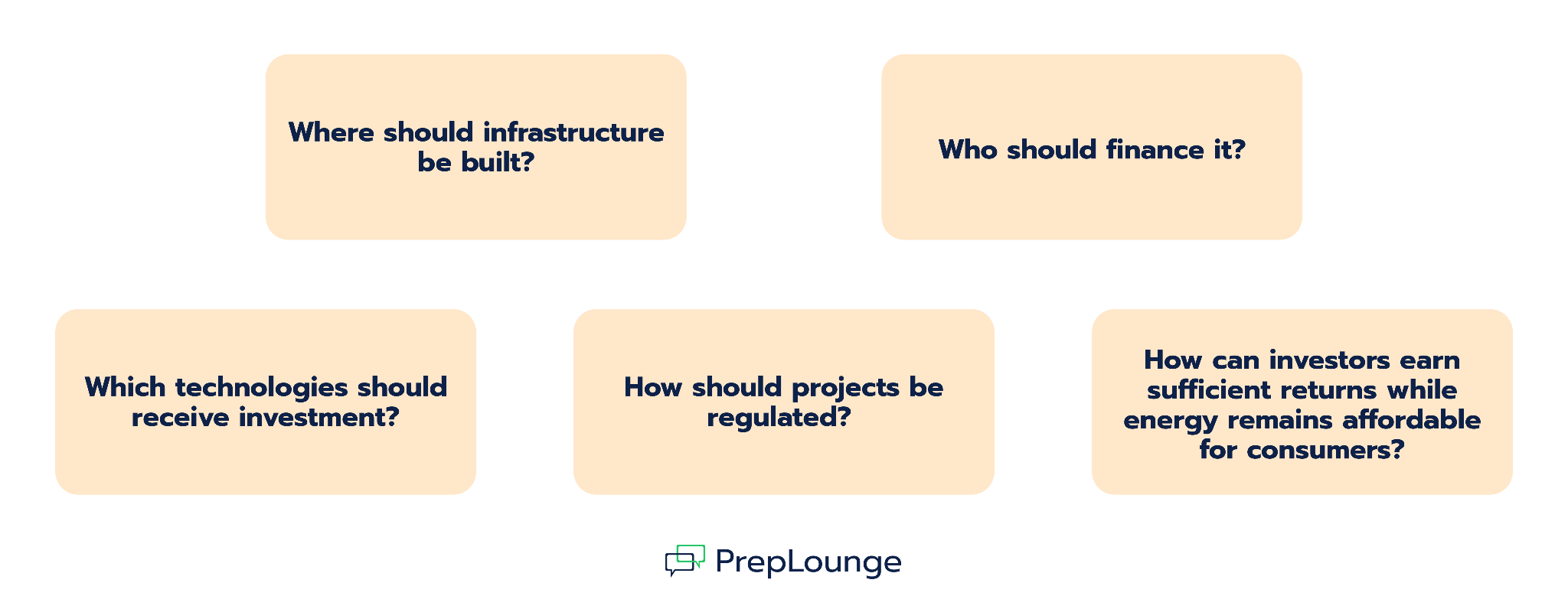
Energy consulting has also become particularly relevant due to the growing complexity of infrastructure development and regulatory requirements in the energy sector. Energy systems require substantial investments in modern infrastructure to ensure reliable and efficient energy supply. Transmission and distribution grids, charging infrastructure, energy storage facilities, and potentially hydrogen networks all need to be developed, expanded, or modernized. These projects involve significant financial commitments, long planning horizons, and complex regulatory requirements. These developments raise important strategic and economic questions that consultants help businesses and governments address:

Diagram showing five key questions about energy infrastructure, including location, financing, technology investments, regulation and affordable energy.

Regulation Makes Energy Different

Energy markets are particularly sensitive to regulation and government policy. Electricity prices, grid access, emissions requirements, renewable incentives, permitting processes, and infrastructure investments can all depend on the regulatory environment. Energy consultants therefore need to understand how regulatory changes affect business models. A strategy that looks attractive from a purely commercial perspective may become less viable if the regulatory framework changes. Conversely, new legislation or subsidies can create new market opportunities. 

For consultants, this implies understanding not only the commercial case for a project but also how regulation can affect its economics and feasibility.

Skills Needed for Energy Consulting

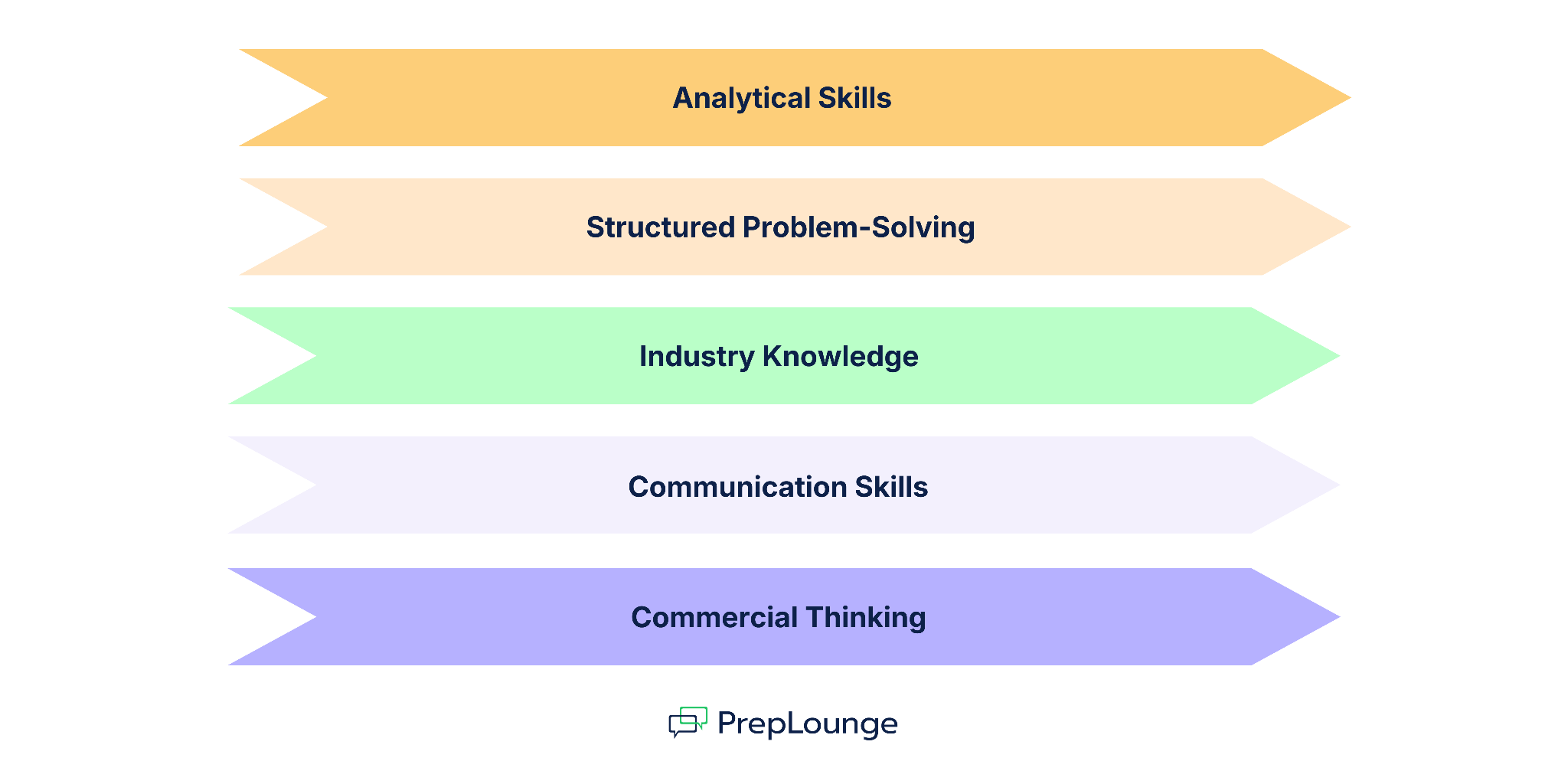
Energy consulting requires many of the same fundamental skills as other consulting roles, but sector knowledge becomes especially important.

Diagram showing five essential energy consulting skills: Analytical Skills, Structured Problem-Solving, Industry Knowledge, Communication Skills and Commercial Thinking.

Analytical Skills

Energy projects involve large amounts of data. Consultants may analyze electricity demand, energy prices, customer behavior, production costs, infrastructure utilization, or financial projections. Strong quantitative skills and confidence working with data are therefore important.

Structured Problem-Solving

Energy questions are rarely simple. A consultant evaluating a new battery storage business, for example, might need to consider:

  • technology costs
  • electricity prices
  • regulation
  • competitor activity
  • grid constraints
  • potential revenue streams 

Breaking complex problems into manageable components is essential.

Industry Knowledge

You do not necessarily need to be an energy engineer to work in energy consulting. However, understanding the basic economics and structure of the industry can give candidates an advantage. Useful topics include:

  • power markets
  • renewable energy
  • utilities
  • energy trading
  • grid infrastructure
  • battery storage
  • hydrogen
  • carbon markets
  • energy regulation

Communication Skills

Technical insights only create value if clients understand them. Energy consultants therefore need to translate complex analytical, technical, or regulatory information into clear recommendations for decision-makers. This includes presenting results, writing concise reports, and defending recommendations when clients challenge the underlying assumptions.

Commercial Thinking

Candidates should avoid viewing energy consulting purely as a sustainability discipline. Energy projects also need to make economic sense. Consultants must understand questions around profitability, investment, pricing, competition, and customer demand. The challenge is often finding solutions that balance commercial viability, sustainability, regulation, and security of supply.

Energy Consulting vs. Strategy Consulting

Energy consulting often overlaps with strategy consulting, but typically involves deeper sector specialization. A generalist strategy consultant might move between industries and work on a healthcare project one month and a consumer goods strategy the next. An energy consultant typically develops deeper sector expertise. Both may work on topics such as:

  • corporate strategy
  • market entry
  • growth strategy
  • M&A
  • commercial due diligence
  • transformation
  • pricing
  • operating models

The main difference is in the depth of sector specialization and the industry-specific factors that shape the analysis. Energy projects require an understanding of factors such as regulation, power markets, infrastructure economics, commodity prices, and energy technologies. For example, evaluating a new market opportunity for a consumer product might mainly involve customer demand, competition, pricing, and distribution. Evaluating a renewable energy project might additionally require assumptions about electricity prices, grid connections, permitting, government policy, capital expenditure, technology performance, and financing. Energy consulting can therefore be particularly attractive if you enjoy strategy consulting but want to build deeper expertise in a specific industry.

How to Prepare for Energy Consulting Interviews

The recruiting process for energy consulting roles usually combines traditional consulting preparation with industry knowledge.

Diagram showing five steps to prepare for energy consulting interviews, from case interviews and industry knowledge to personal motivation.

Master the Fundamentals of Case Interviews

Many consulting firms continue to use standard case interviews when recruiting for their energy practices. Candidates should therefore be comfortable with:

  • structuring ambiguous problems
  • market sizing
  • profitability analysis
  • interpreting charts and data
  • mental math
  • developing recommendations

Understand the Energy Value Chain

You should know how the industry broadly works. A useful starting point is understanding how energy is produced, transported or transmitted, distributed, traded, and ultimately consumed. From there, familiarize yourself with key players such as utilities, grid operators, renewable developers, energy traders, infrastructure investors, regulators, and industrial consumers.

Follow Current Energy Trends

Energy is a fast-moving industry. Before an interview, candidates should understand major developments such as:

  • renewable energy expansion
  • electricity grid modernization
  • battery storage
  • energy security
  • hydrogen
  • electrification
  • decarbonization
  • power-price volatility

Above all, it is important that you understand the economic impact these developments have on businesses and markets.

Practice Energy-Specific Cases

Once you are comfortable with traditional case interviews, add industry-specific scenarios. For example: A European utility is considering investing in a large battery storage facility. Should it proceed?

A strong analysis might explore market attractiveness, potential revenue streams, investment and operating costs, regulation, technical feasibility, competition, and key risks.

Another example could be: An industrial company wants to reduce its energy costs by 20%. What options should it consider? 

This could involve energy efficiency, procurement strategy, on-site renewable generation, electrification, operational improvements, or new technologies. The important part is not memorizing energy frameworks. It is applying structured consulting thinking to the characteristics of the industry.

Prepare Your Motivation for Energy Consulting

In addition to case preparation, be ready to explain why you are interested in the energy sector specifically. Typical fit questions may include:

  • Why energy?
  • Why this firm’s energy consulting team?
  • Which current energy topic interests you and why?

Strong answers connect your personal motivation with an understanding of the industry and the type of work the firm’s energy practice actually does.


Conclusion

Energy consulting can be a strong fit for candidates who enjoy traditional consulting work but want to build deeper expertise in energy markets, infrastructure, regulation, and technology.

It may be particularly attractive if you enjoy combining quantitative analysis with industry-specific questions and are comfortable working with regulatory, commercial, and technical topics at the same time. The work can range from high-level strategy to detailed market analysis, infrastructure investment, pricing, sustainability, and operational transformation. Because the energy transition affects many parts of the economy, the expertise developed in this field can also be relevant beyond utilities themselves. 

Candidates who prefer rotating frequently across unrelated industries may find a more generalist consulting path more suitable.

Frequently Asked Questions About Energy Consulting

Energy consulting is a specialized area of consulting that supports companies, investors, governments, and other organizations with strategic, commercial, operational, and regulatory questions related to energy.

Energy Consultants work on projects such as energy strategy, pricing, market analysis, commercial due diligence, infrastructure investment, operational improvement, and business transformation.

Not necessarily. While technical knowledge can be useful, many roles require strong analytical, problem-solving, commercial, and communication skills rather than an engineering degree.

Energy consulting uses many of the same problem-solving approaches as strategy consulting but requires deeper knowledge of energy-specific topics such as regulation, power markets, infrastructure economics, commodity prices, and energy technologies.

Prepare the fundamentals of consulting case interviews, understand the energy value chain, follow current industry developments, practice energy-specific cases, and be ready to explain why you are interested in the sector.

Continue to Learn

Motivational Fit Interview Questions
Motivational Fit Interview Questions – Impress Your Interviewer
Nov 16, 2026
7 min
Be perfectly prepared for the most common motivational fit interview questions with our tips!
View article
Case Interview Preparation Guide
Case Interview Prep – Useful Tips and Frameworks
Jan 13, 2026
11 min
Case interview prep is a must-do to pass the interview at management consulting firms. See our Tips!
View article
Everything You Need to Know About Strategy Consulting
May 27, 2025
9 min
Thinking about strategy consulting? Learn what it takes and how to land a job at top firms like McKinsey or BCG.
View article