

Consulting Consulting
Back to overview

Medicine to Management Consulting

Hello everyone,

I am a medical graduate from what I would consider a target university. I am thinking of transitioning into management consulting —  currently working in consulting, but on the medical side (not much ‘business’ exposure, but definitely client-facing and working on projects that rely on Microsoft Suite skills). I wonder if people had any advice on what sort of experience to focus on in my CV/application, and whether they know of any doctors that have made the move?


7
6
300+
Be the first to answer!
Nobody has responded to this question yet.
Top answer
Profile picture of Margot
Margot
Coach
on Sep 17, 2026
Senior Strategy Consultant & interviewer | Proprietary cases in EN, DE, FR, IT | ex Accenture, BCG, Deloitte

Hi there,

Yes, this move is made regularly, and I would not treat "not much business exposure" as the real obstacle. The obstacle I see far more often with medical candidates is that genuinely relevant work gets described in clinical language that a screener cannot price.

A few things I would do with your CV and application:

  • Rewrite every bullet around a decision and an outcome, not a task. A project that changed how a service was staffed, shortened a pathway, or reduced cost per patient is a consulting bullet. "Supported clinical projects" is not.
  • Quantify the scale you operated at, not just the result. Budget, headcount affected, sites involved, number of stakeholders you had to align. Screeners read your past work as a proxy for the size of the problem you can be trusted with.
  • Put the client work at the top. You are already client-facing and already delivering on projects, and that is the part of your profile closest to the job. I would place it above your clinical credentials rather than below them.
  • Check which entry route you fall into before you write anything. MBB and several others run a separate advanced degree pipeline for medical and doctoral candidates, with its own timing and its own preparation support, and it is a different application from the standard experienced hire route. This can vary by office and recruiting cycle, so I would confirm it with the recruiting team directly.

On the doctors who have made the move, there are many, and most of them sit in healthcare and life sciences practices. I would use that as reassurance rather than as positioning. Candidates who apply as "the medical one" tend to get a narrow read, and the ones who do best present as someone who happens to know healthcare deeply and wants general problem solving.

Profile picture of Bogdan
Bogdan
Coach
on Sep 18, 2026
PE | MBB & Tier-2 Consulting Interview Coach | Ex-McKinsey, Kearney & Alvarez & Marsal | Free 15-minute Intro

I have two friends who have done this. One joined McKinsey as a Junior Associate (and is now an Associate Partner) after a few years in the NHS (the UK's public health system). The other one also started as a doctor and research fellow before making a move into Tier 2 consulting and is now at Bain. 

In both cases, they spoke to their affinity for Health as a practice and ended up conducting the majority of their projects in that space, although they joined as generalist consultants. So - definitely possible, and the consulting industry very much values sector-specific experience. Best of luck!

Profile picture of Franco
Franco
Coach
on Sep 17, 2026
Ex BCG Principal & Global Interviewer (10+ Years) | 100+ MBB Offers | 90% Success Rate

Hi there,

It is possible to move from medicine into consulting, and most of the work sits in how you present what you already have rather than in adding anything new.

Your technical knowledge is taken for granted, so you do not need to convince anyone of it. A medical degree already tells a recruiter that you are smart and that you know your field. What it does not tell them is whether you can solve an unfamiliar problem, work with people and communicate clearly, and that is the part the application has to carry.

In practice that means keeping clinical terminology out of the CV. A recruiter with no medical background will not follow it, and trying to impress on technical depth works against you. Write instead about results you achieved, clients and senior stakeholders you managed, teams you worked in, and where you have it, the business impact of a decision you made. That last one does not have to come from work; something you built or ran outside the job counts as well.

Keep the emphasis on impact rather than on the task. Two lines on what changed because you were there are worth more than a paragraph on what you did.

Hope it helps, and good luck with the applications.

Best,

Franco

Profile picture of Ian
Ian
Coach
on Sep 18, 2026
Ex-BCG | NYU Stern | MBB, Tech, & Strategy Coach | 5,000+ Sessions | 500+ Offers | 1,000+ Candidates | 100+ Countries

Hi there,

Short answer: Yes, I know plenty of MDs who have gone into consulting.

You can apply to both generalist roles and healthcare specialist roles. Why not, right?

The process is the same if you're going in as a generalist. If you're going in as a specialist, there will typically be more brainstorming, unstructured discussion, and deeper testing of your medical knowledge and expertise.

In terms of your CV, firms want the same core things they want from everyone else: the ability to solve problems, manage teams and projects, work with people and clients, and deliver meaningful results.

Your current client facing project experience is absolutely relevant. However, don't just write that you used Microsoft Suite or worked on projects. Explain what you analyzed, led, improved, delivered, or changed. Show the impact.

Finally, network a lot! Not only will that help you get in the door, but it will help build clarity around the roles, firms, and route that make the most sense for you.

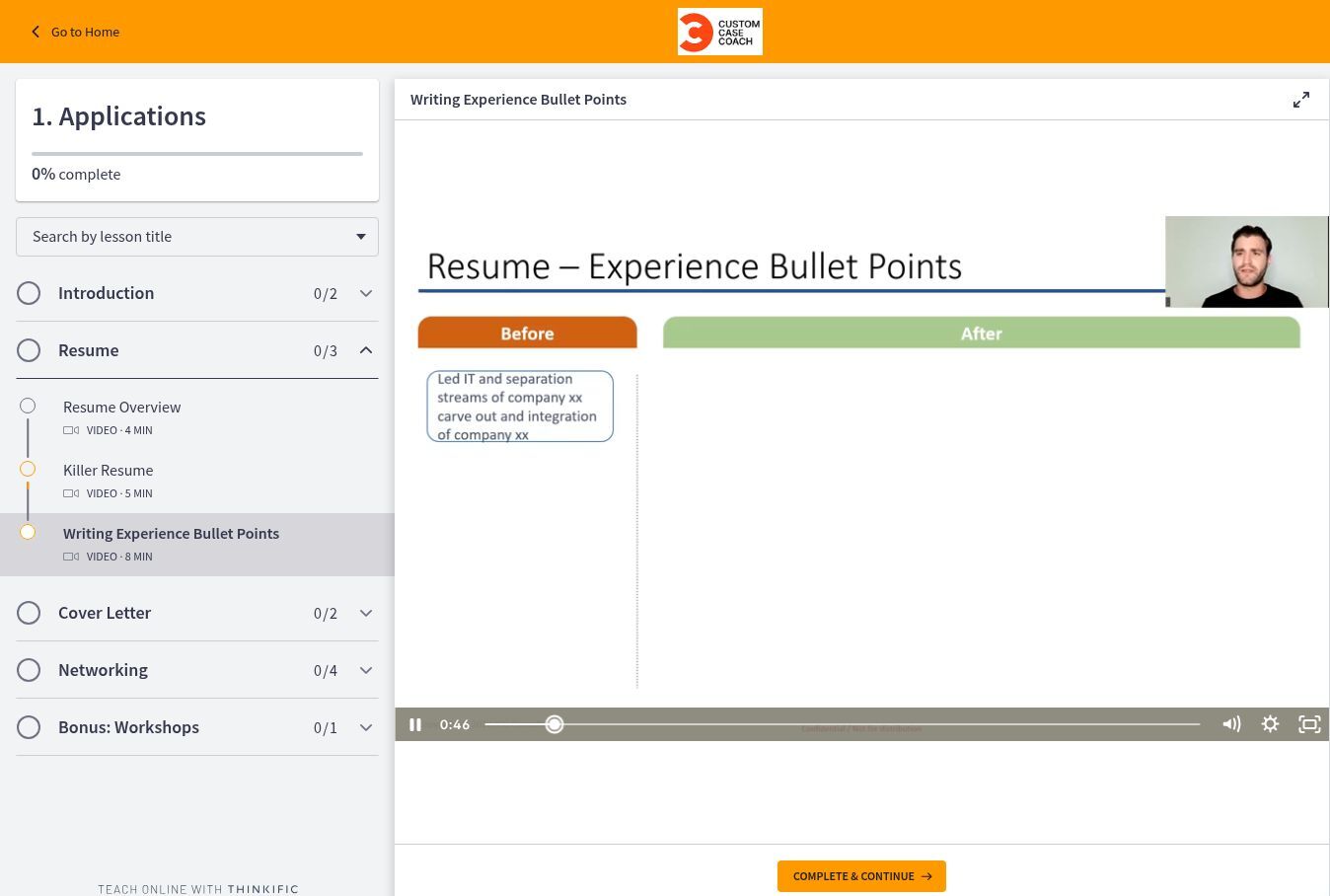
We're literally just covering the surface now. I highly recommend my Applications Course, which includes the full resume and cover letter templates and shows you how to position transferable experience for consulting applications.

Profile picture of Alessa
Alessa
Coach
on Sep 17, 2026
Ex-McKinsey | Ex-BCG | Ex-Roland Berger

Hey there :)

Yes, absolutely! I actually know quite a few people at McKinsey who made exactly this transition from medicine into consulting, so it is definitely possible. Your medical background can actually be a great differentiator, especially for healthcare projects. On your CV, I’d focus on the project ownership, problem solving, client interaction and any analytical or strategic work you have done rather than trying to make your experience sound more “business” than it is. Then make sure you can clearly explain why consulting and why the transition makes sense for you.

best, Alessa :)

Profile picture of Ashwin
Ashwin
Coach
on Sep 18, 2026
Ex-Bain | Help 500+ aspirants secure MBB offers

Medicine to consulting is a well worn path actually, healthcare and life sciences practices at MBB love this background, so you're not starting from scratch here.

Here's the thing, don't downplay the medical work, lean into it. Frame your projects around problem solving, stakeholder management, and data driven decisions, not the clinical details. Recruiters aren't looking for business jargon, they're looking for proof you can structure ambiguity, and clinical work does that constantly.

Target healthcare practice groups specifically first, your background is a direct advantage there, not something to explain away. Generalist tracks are the harder sell, healthcare is where doctors actually break in.