


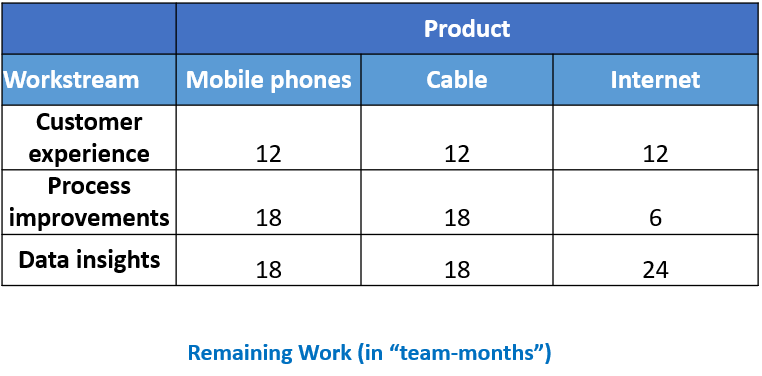
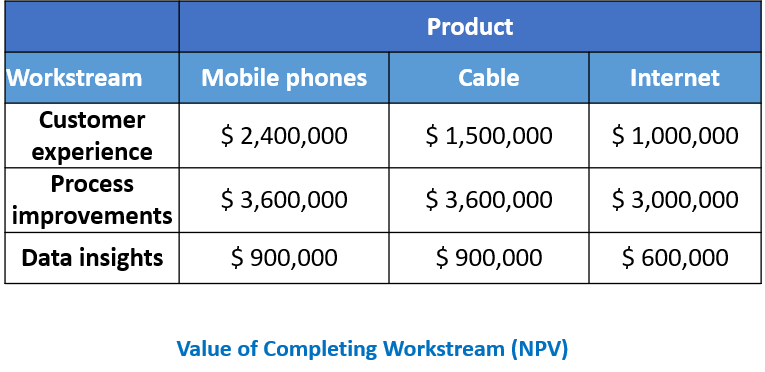

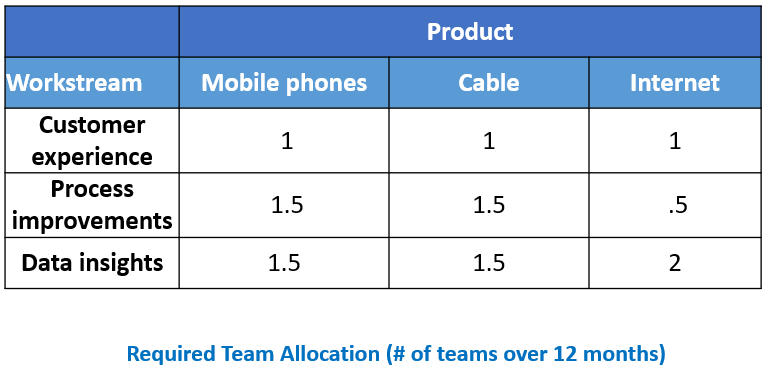
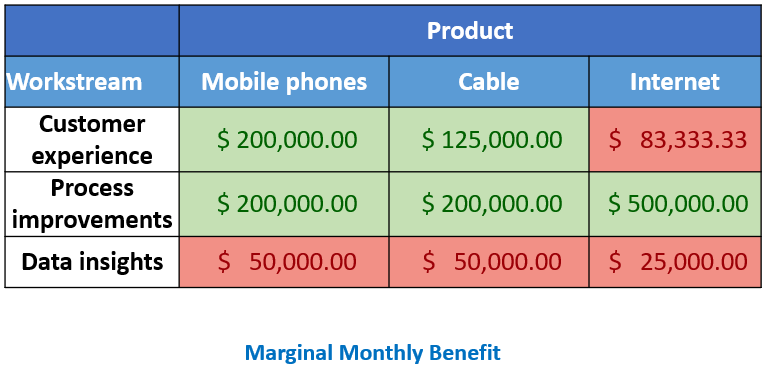

Back to overview
Expert case by
Ian

BCG - YodaPhone

Difficulty: Intermediate
Candidate-led
4.4
< 100 Ratings
Times solved: 13.7k

Case Prompt:

Our client is Yoda's Phones, a national telecommunications company. They have embarked on a three-year, multi-million dollar digitization program. Unfortunately, two years into the program, they realize they are significantly behind schedule and over budget.

You have been brought in to right the ship and ensure the digitization program is delivered as planned.

=====================================================

Framework can be found here: 

YodaPhone Optimal Framework Solutions 

Overview of All Exhibits
Practice makes the difference
Practicing alone helps – with a partner it’s even better. Solve this case in a realistic mock interview.
Schedule on Meeting Board

Sample Structure

Show sample structure Hide sample structure
Show additional information Hide additional information
Show solution Hide solution

II. Scope analysis

Show additional information Hide additional information
Show solution Hide solution

III: Team allocation and cost savings

Show additional information Hide additional information
Show solution Hide solution

Further Questions

What teams would you cut? (Candidate should explain their logic/structure)

Show solution Hide solution
Practice This Case With Peers Who Are Currently Looking for Interview Partners.
Do you have questions on this case?
Ask our community and receive answers and tips directly from our experts.
Ask a question Ask a question
Related Case Interview Basics Articles
The Role of the Hypothesis in Consulting
Common Terms of Business
In the field of consulting, the hypothesis plays a central role in the analysis of problems, the development of solutions and the derivation of strategic recommendations. A hypothesis is a preliminary assumption or conjecture made on the basis of existing information and data. It serves as a starting point for investigations to gain empirically verifiable knowledge. This article explores the meaning, purpose, and application of hypotheses in the consulting context.
To the article
The Kanban Framework
Common Terms of Business
In your journey to becoming an efficient consultant, understanding various work management systems is crucial. One such system that has made a profound impact, particularly in the world of technology and services, is Kanban. Before we dive into the current applications of Kanban, it's important to acknowledge its origins. Kanban was born in the late 1940s within the walls of Toyota's manufacturing plant in Japan. Taiichi Ohno, an industrial engineer at Toyota, introduced Kanban to improve manufacturing efficiency. The word 'Kanban' translates to 'billboard' or 'signboard' in English, emphasizing the visual nature of the system. Ohno was inspired by the supermarket model of product replenishment, where stock is replaced as soon as it depletes. He applied the same principle to Toyota's production lines, effectively aligning inventory levels with actual parts of consumption. The implementation of Kanban led to significant improvements in Toyota's productivity and efficiency, setting the foundation for what we now call 'Lean Manufacturing'. Fast-forward to the present, Kanban has evolved beyond manufacturing and found its way into the technology and services industries. The system, still true to its origins, is designed to maximize efficiency, limit work in progress, and, most importantly, visualize your work. Derived from the Japanese word for 'visual signal', Kanban is an effective tool for making intangible or invisible work more understandable. By understanding the roots and evolution of Kanban, you, as a consultant, can better appreciate its applicability across industries and harness its principles to improve operational efficiency on diverse projects. It is also important to realize that Kanban is a process management system that aids decision-making in a collaborative manner.
To the article
Design Thinking
Common Terms of Business
Design Thinking is more than just an approach or a method – it's a non-linear, iterative process that places creativity and problem-solving at its core. To understand this mindset, let's look at the three essential elements of Design Thinking: People, Process, and Place. These elements form the foundation for applying Design Thinking in business consulting.
To the article
Kotter Change Management Model
Useful Business Analysis Tools
As graduates venturing into the world of consulting, it is essential to equip ourselves with effective change management frameworks. One such model that holds significant importance is the 8-Step Kotter Change Model. Developed by renowned leadership expert John P. Kotter, it is a widely recognized framework that helps organizations navigate through periods of change. Originally introduced in 1995, this 8-Step Model has become one of the go-to methods for supporting employees and managers during times of transformation. In the world of consulting, where change is a constant, understanding and effectively utilizing this model is essential for success. Overview of the 8-Step Kotter Change Model Kotter's model is based on Kurt Lewin's field theory and draws insights from successful change projects in large organizations. It emphasizes the importance of people and effective communication in driving sustainable change within a company. By addressing resistance, creating a shared vision, and embedding new behaviors, the model aims to facilitate successful organizational transformations. The 8-Step Model serves as a roadmap to guide organizations through change initiatives. It comprises a sequence of steps that address various crucial elements of the change process. [Graphic of Kotter’s 8-step Change Management Model, shown as a staircase illustrating the steps for successful transformation.] Here is a brief overview of each step: - Create a sense of urgency: This step involves creating awareness and a compelling reason for change, emphasizing the need for immediate action. - Build a guiding coalition: Forming a dedicated team of influential individuals who share a common vision and have the capability to drive change is crucial for its successful implementation. - Form a strategic vision and initiatives: Developing a clear and compelling vision for the future state of the organization, along with actionable initiatives, provides a roadmap for change. - Enlist a volunteer army: Effective communication of the vision to all stakeholders helps foster understanding, alignment, and commitment towards the change effort. - Enable action by removing barriers: Empowering employees to take ownership and initiative in driving the change process helps to overcome resistance and promotes a culture of collaboration. - Generate short-term wins: Celebrating and showcasing early wins in the change journey boosts morale, builds momentum, and creates confidence in the change process. - Sustain acceleration: Building upon the initial successes, it is crucial to sustain the momentum of change and drive further improvements to solidify the new ways of working. - Institute change: To ensure the longevity of the change, embedding new behaviors and practices into the organizational culture is vital, fostering a sustainable transformation. Benefits of the 8-Step Kotter Change Model The Kotter Change Management Model offers several advantages for consultants: - Structured approach: The model provides a systematic and well-defined framework to guide consultants through the complex process of change management, ensuring a methodical approach achieving desired outcomes. - Stakeholder engagement: By involving key stakeholders at various stages, the model encourages collaboration, creates buy-in, and fosters a sense of ownership, which is essential for successful change implementation. - Agility and flexibility: The model recognizes the importance of adaptability, enabling consultants to navigate unexpected challenges and adjust strategies based on feedback and evolving circumstances. - Focus on short-term wins: The emphasis on generating early successes helps consultants gain credibility, build support, and maintain momentum throughout the change journey. Limitations and Considerations - Simplification: The model provides a simplified view of the change process, and real-world situations may involve additional complexities that need to be addressed. - Contextual factors: The model does not explicitly address industry-specific or organizational context factors, which may require customization and adaptation of the steps. Importance of the Model for Consultants - Client engagement: The model enables consultants to engage clients in a structured change management process, fostering trust and establishing their expertise in driving successful transformations. - Change leadership: By applying the model, consultants can effectively lead change initiatives, align stakeholders, and guide organizations towards desired outcomes, establishing themselves as trusted advisors. - Framework for analysis: The model provides a framework to analyze the current state of organizations, identify gaps and opportunities, and develop comprehensive change strategies, enhancing the value consultants bring to their clients. Conclusion As aspiring consultants, mastering the 8-Step Kotter Change Model can significantly enhance our ability to drive successful change initiatives. Its structured approach, stakeholder engagement, and focus on short-term wins make it a valuable tool for guiding organizations through complex transformations. By understanding and applying this model, we can contribute to the success of our clients' change journeys and establish ourselves as effective change agents in the consulting industry. Further Reading: - Download Kotter's 8-Steps Ebook here.
To the article
Interviewer- vs. Candidate-Led Cases
Basics of Case Interviews
Every case interview has a certain structure. An important factor on how your case interview is going to proceed is if the interview is interviewer-led or candidate-led. We’d like to explain the two interview formats – candidate-led cases and interviewer-led cases – highlight their differences, and provide you with tips on how to excel in each of them.
To the article
Practice makes the difference
Practicing alone helps – with a partner it’s even better. Solve this case in a realistic mock interview.
Add invitation
Do you have questions on this case?
Ask our community and receive answers and tips directly from our experts.
Ask a question Ask a question