






Back to overview
Expert case by
Agrim

BCG Final Round: Stadium Naming Rights

Case Prompt:

Our client is NeuBank, a neobank in the US. A soccer stadium in Ohio is offering exclusive naming rights, and NeuBank is considering bidding for them. The client wants to understand the following:

  1. If this is a good idea?
  2. How much they should bid?
  3. How to make the deal a win-win?

NOTE that this case is very long and is meant for learning casing skills. If you intend to use it for mock practice then focus on very specific segments to complete it in time.

Also check out the video solution at the bottom of this page for a step-by-step work-along and detailed explanantion

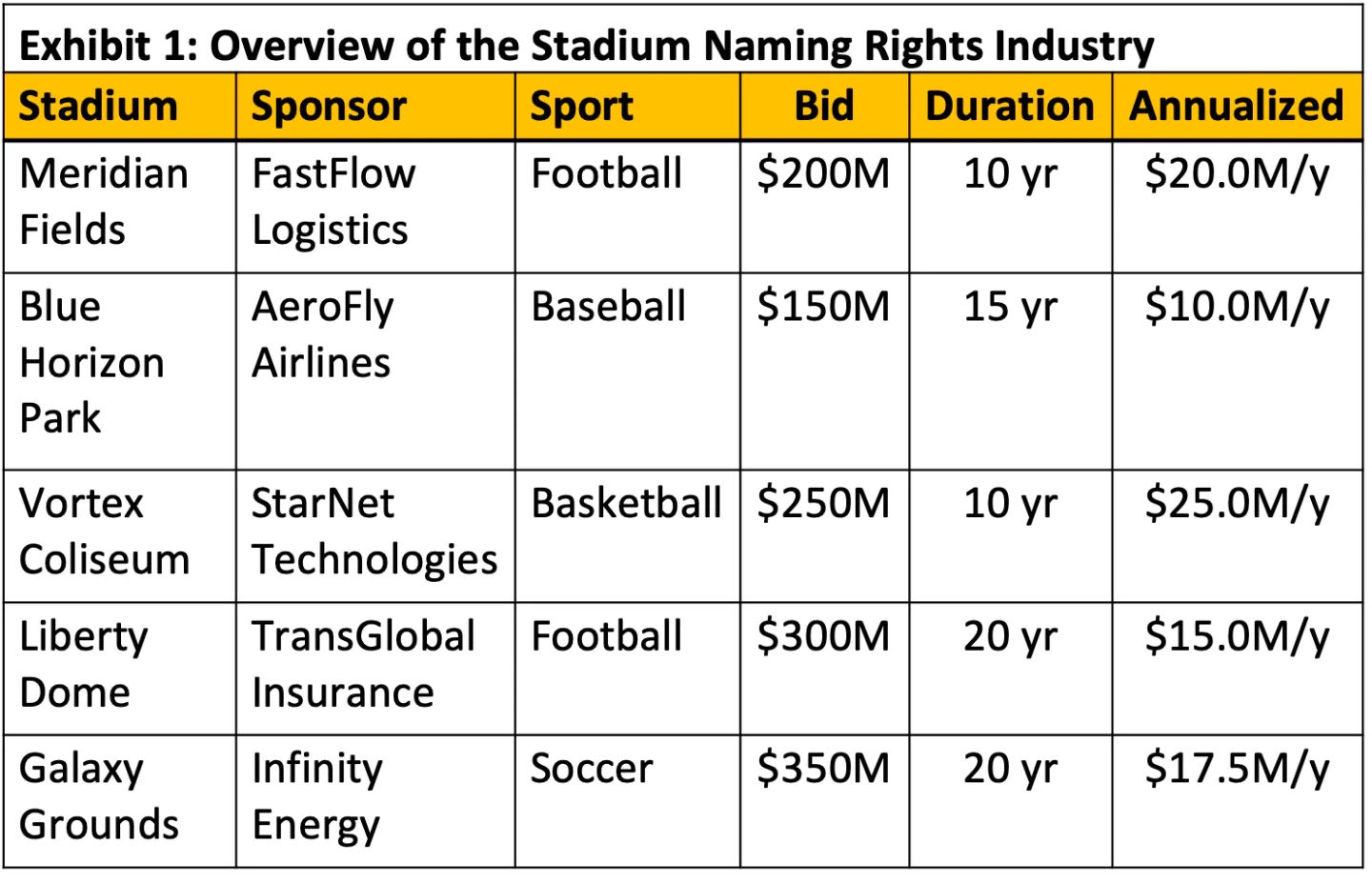
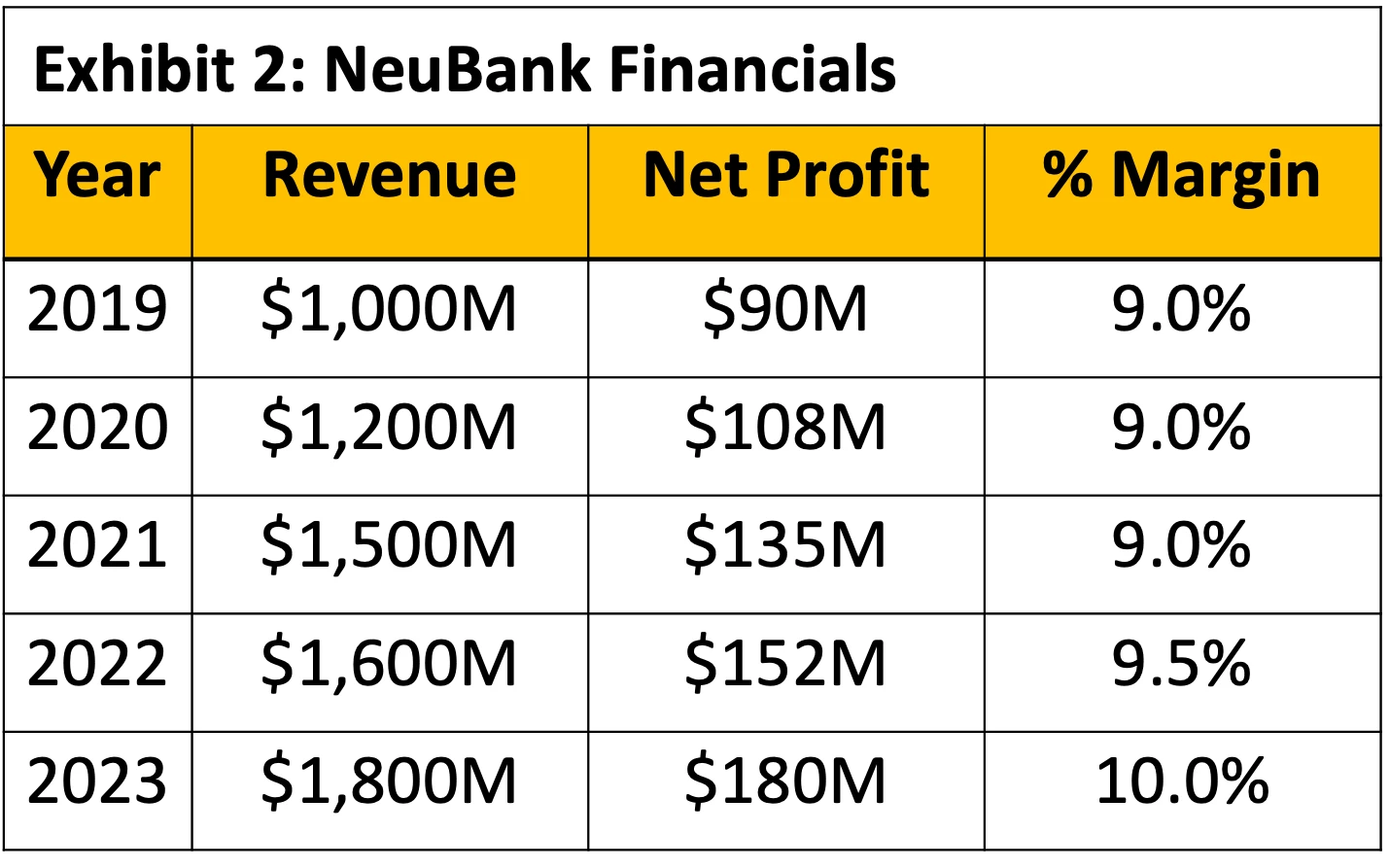
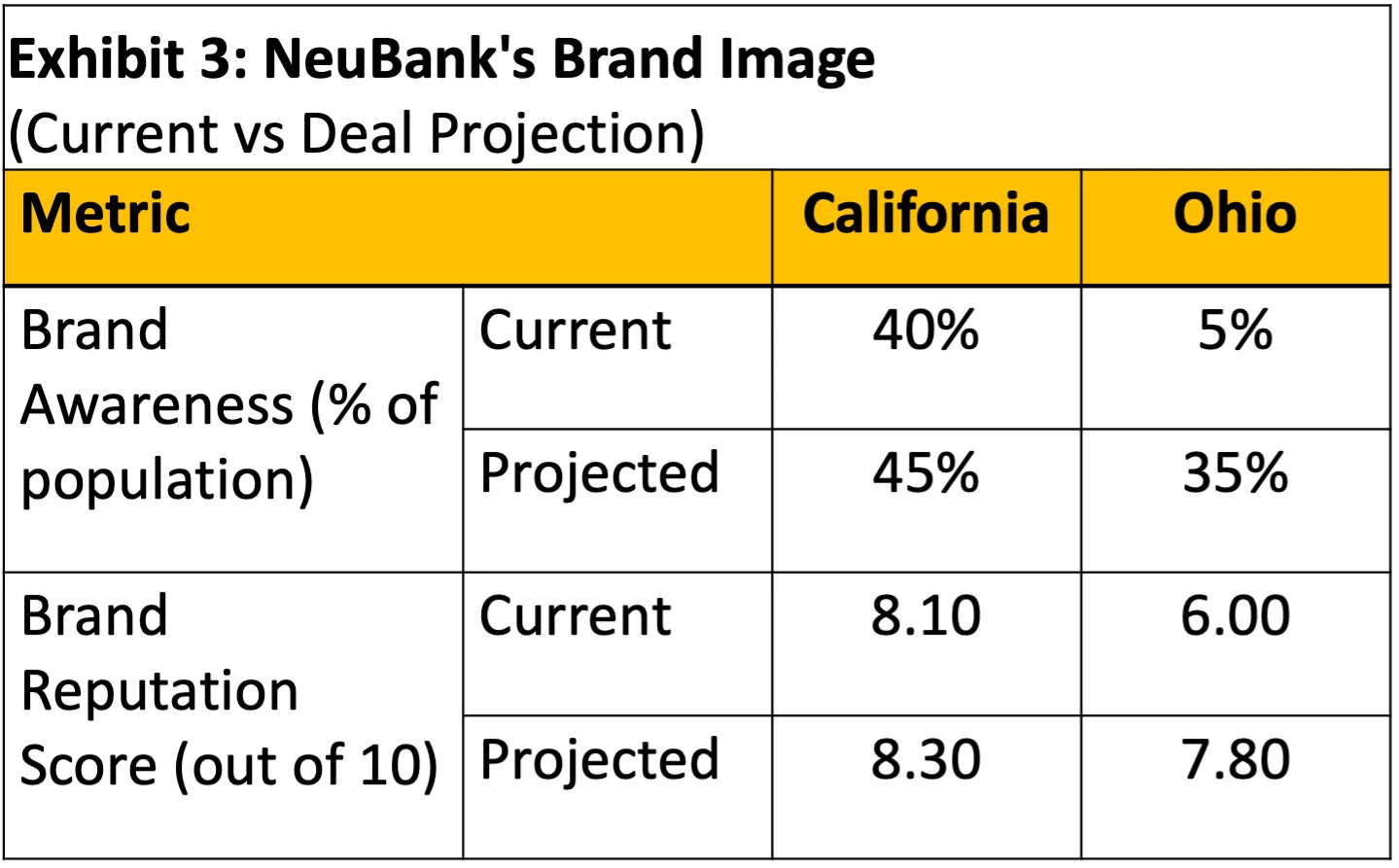
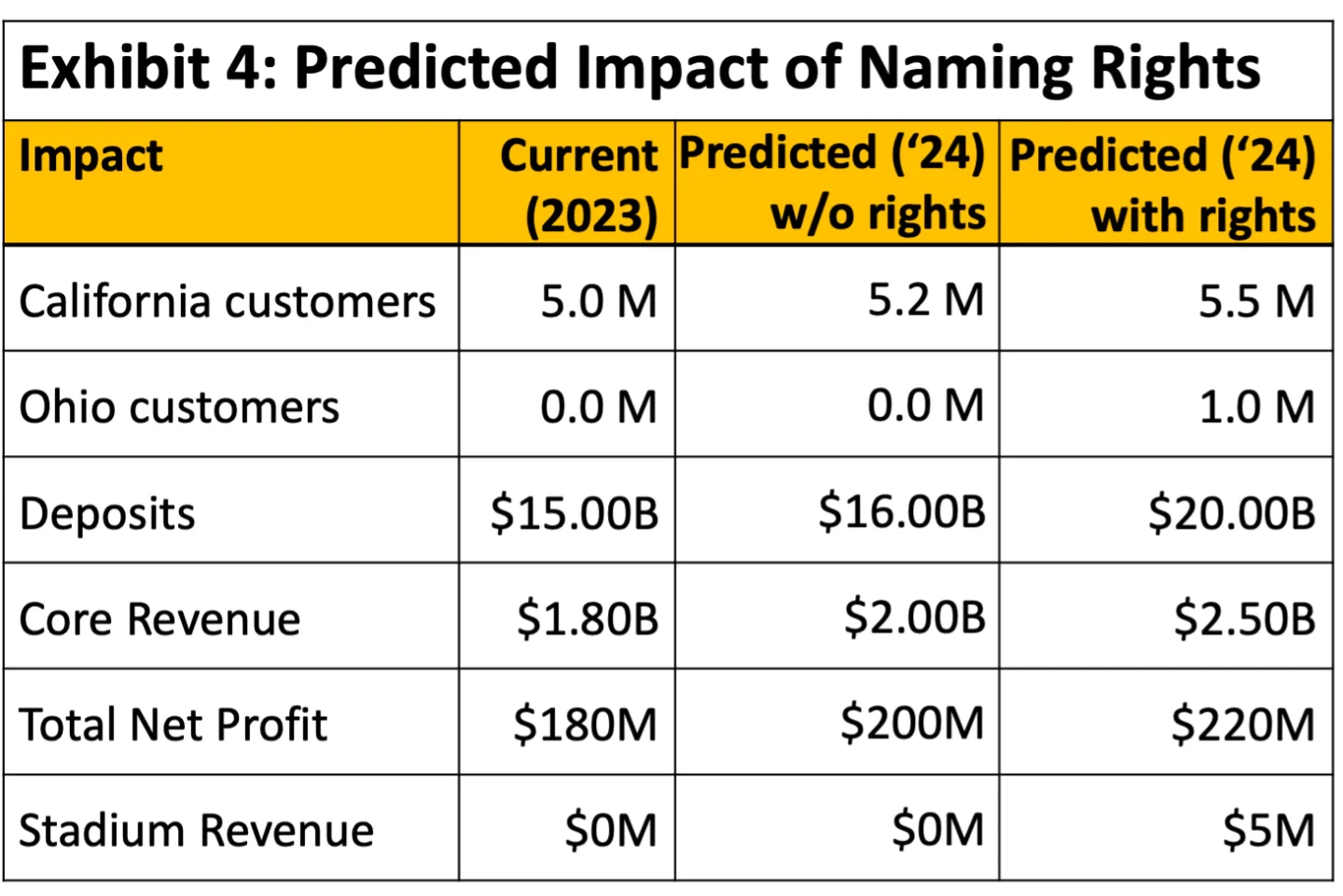
Overview of All Exhibits
Practice makes the difference
Practicing alone helps – with a partner it’s even better. Solve this case in a realistic mock interview.
Schedule on Meeting Board

Section 1: Clarifying Questions

  • The key situation in the case is that NeuBank is looking to acquire naming rights to a stadium, and we need to address several business decisions so naturally we need to establish a solid foundation for the case
  • The clarifying questions help set the foundation for the entire case. The candidate is being evaluated on their ability to clarify the situation and ask relevant questions. It's important for the candidate to understand the case at hand, the client's objectives, and the industry context. The recommended approach is to use a blend of commonly known basic frameworks (such as 4Ps and 3Cs) with customized questions specific to the case. These are well-structured frameworks that help ensure all critical aspects are covered and also shows the interviewer that you're taking a systematic approach.
  • Note that asking good questions can help in creating a more effective solution. Do not hesitate is asking very silly questions upfront - that is always ok. Do not assume any specific things without confirming with the interviewer

Pause yourself here, write down your own questions for 30-seconds and come back

Show solution Hide solution
Show additional information Hide additional information

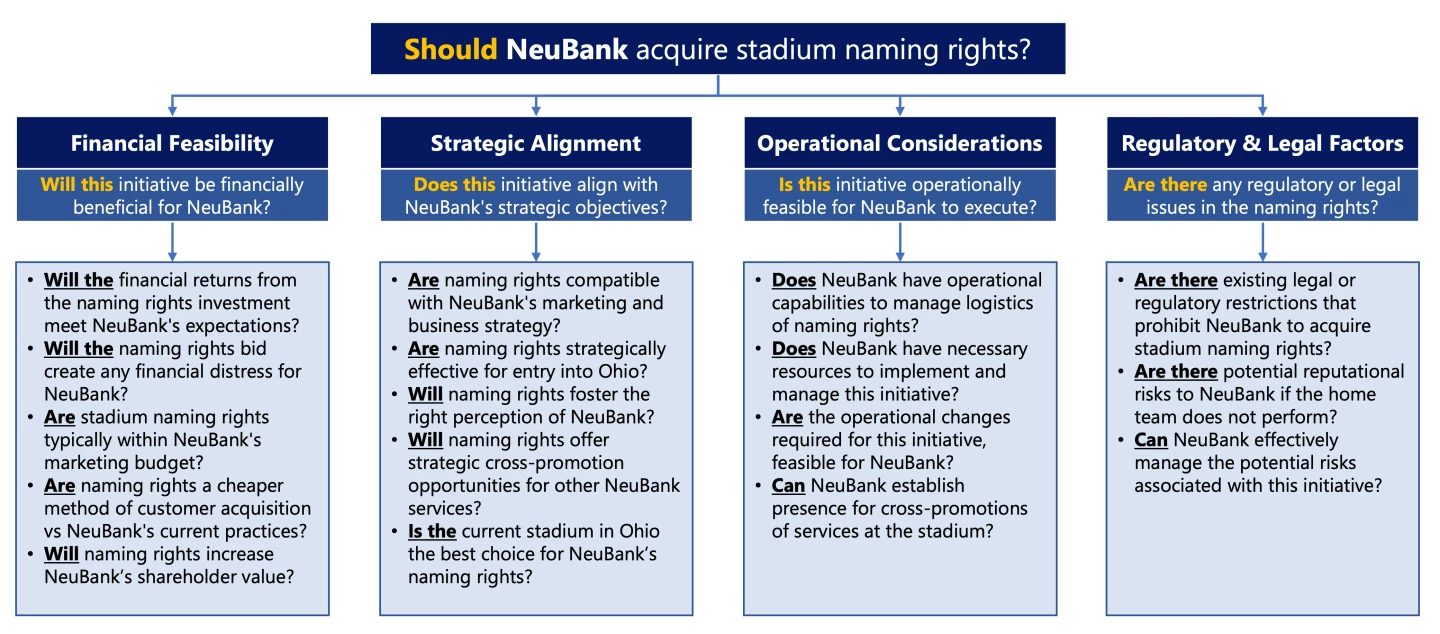
Sample Structure

Instructions: Please take a time of 2-3 minutes to draw out your structure/framework. Once you have completed, take another 2 minutes to say it out aloud as if you were explaining it to the interviewer. These time limits are aligned with the expectations during an actual interview. Once you complete this exercise, proceed forward to see a sample framework solution. Your solution does not need to 100% match the sample solution – there is no right/wrong answer. Study the sample and see how you can improve you own solution

Show solution Hide solution
Show sample structure Hide sample structure

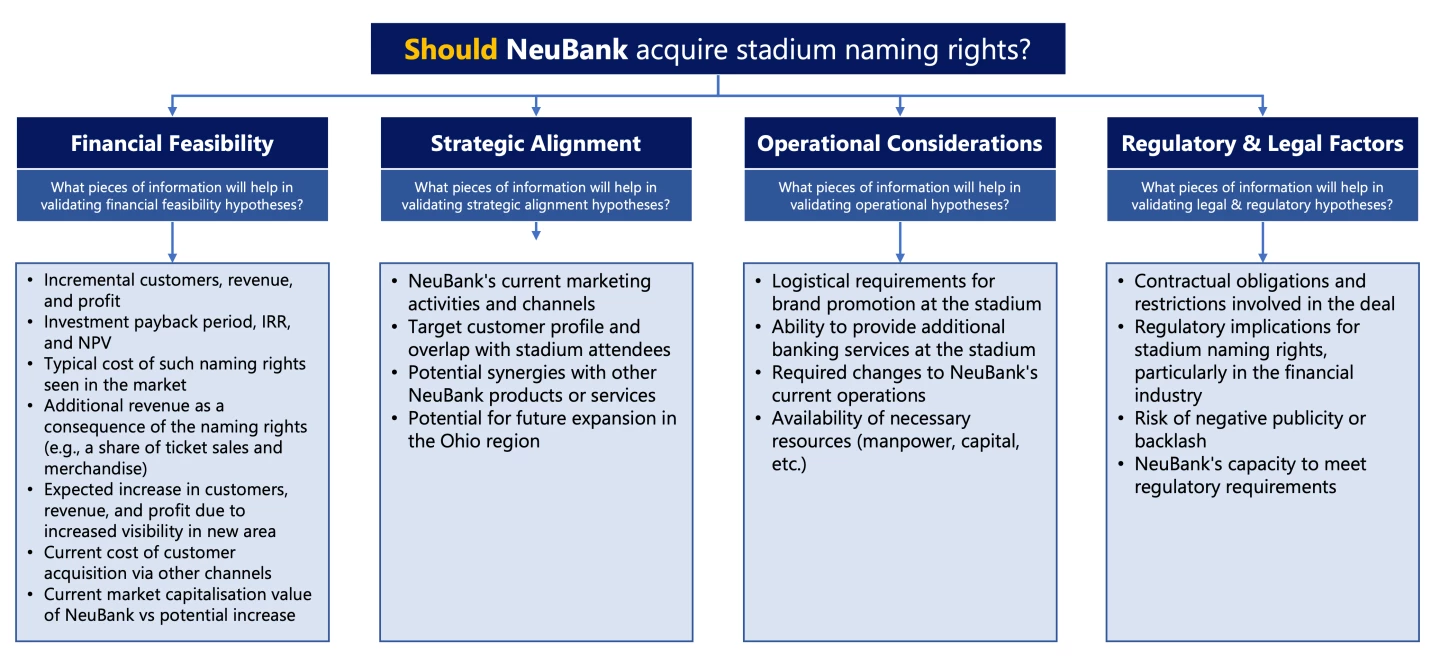
Section 3: Evaluation of the naming rights opportunity

Note: For a candidate-led experience, simply reveal only as many exhibits/information as specifically asked by the candidate and let the candidate explore the information and proceed forward

Show additional information Hide additional information
Show solution Hide solution

Section 4: Estimating the bid

Instructions: Take 1 minute to collect your thoughts and write down the approach for estimating the bid. Once you have a firm idea, come back to the case and resume.

Show solution Hide solution

Section 5: Brainstorming for a win-win deal

Instructions: Take 1-2 minutes to come up with ideas that will make this deal a win-win. Then come back and resume from here.

Show solution Hide solution

Wrapping-up

Instructions: Take 1-2 minutes to come up with your own conclusion

Show solution Hide solution

Further Questions

Question 1: How do you think the duration of the deal might affect its value for NeuBank?

Show solution Hide solution

Question 2: What are your thoughts on termination and renewal clauses?

Show solution Hide solution

Question 3: How should NeuBank approach branding guidelines within the deal?

Show solution Hide solution

Question 4: What are your thoughts on performance-based incentives?

Show solution Hide solution

Question 5: How would you consider the question of exclusivity in the deal?

Show solution Hide solution

Question 6: How might changes in the economic environment affect the deal?

Show solution Hide solution

Question 7: What are the potential implications of the sports team's performance on the deal?

Show solution Hide solution

Question 8: What should be some other non-financial considerations that NeuBank can discuss with the stadium and add into the deal?

Show solution Hide solution

Question 9: How can NeuBank convert this stadium naming rights initiative into a long-term strategic competitive advantage?

Show solution Hide solution

Question 10: What can be some cool first-time unique USPs of this naming rights deal?

Show solution Hide solution

Question 11: What are the various ways (besides increased customer base) through which NeuBank can monetize the initiative?

Show solution Hide solution

Question 12: What are some ways (negotiation points and key terms in the deal) through which NeuBank can lower the bid price?

Show solution Hide solution
Video Solution
Would you like to see the Video Gallery of this company?

Without your consent we cannot embed YouTube videos. Click the button below and accept the marketing cookies to allow YouTube videos to be embedded.

By allowing this service, you consent, in accordance with article 49 paragraph 1 sentence 1 lit. a GDPR, to your data being processed in the USA. The USA is not considered to have adequate data protection legislation. Your data could be accessed by law enforcement without prior public trial in court. You can change your settings regarding consent to external services at any time in our Cookie and Privacy Settings.

Practice This Case With Peers Who Are Currently Looking for Interview Partners.
Do you have questions on this case?
Ask our community and receive answers and tips directly from our experts.
Ask a question Ask a question
Related Case Interview Basics Articles
The Business Model Canvas
Useful Business Analysis Tools
Today, disruptive technologies and rapidly changing customer preferences have redefined the way we work. This is where the Business Model Canvas (BMC) comes into play. It is an effective method for analyzing and designing business models. Originally developed by Strategyzer, it has become an indispensable tool for consultants worldwide. ⚒️✨

To the article
Interpersonal Communication
Common Terms of Business
Interpersonal communication refers to the exchange of information, thoughts, feelings, and ideas between individuals. It includes both verbal and non-verbal communication and plays a crucial role in interpersonal relationships. This form of communication is fundamental for connection, understanding, and cooperation between people.The following example will show the importance of interpersonal communication: When two friends talk about how their day was, they share not only facts but also emotions and perspectives that can deepen their relationship. Importance in Interpersonal Relationships and RolesInterpersonal communication is essential to build, maintain, and improve relationships. In romantic relationships, it fosters trust and intimacy; in friendships, it enables mutual understanding; and in professional relationships, it improves teamwork and efficiency. In various roles such as parenting, partnership, friendship, and work environments, it enables conflict resolution, information sharing, and the expression of empathy.Specifically, successful interpersonal communication in a professional context can lead team members to work together more effectively by sharing clear expectations and providing constructive feedback. Factors for Successful CommunicationSuccessful interpersonal communication requires active listening to understand the speaker's message. In addition, understanding nonverbal signals such as body language and tone of voice is significant. Choosing the right words and considering the receiver's emotions are also critical. Openness, honesty, and empathy promote a good communication climate. Challenges and DifficultiesDifficulties in interpersonal communication can arise from misunderstandings, cultural differences, unclear messages, or lack of empathy. Communication barriers such as distractions, prejudice and lack of openness can hinder understanding. Checklist for Successful CommunicationListen actively: Show interest and focus on your communication partner.Clear messages: Use clear and precise language to minimize misunderstandings.Show empathy: Put yourself in the other person's shoes to promote understanding.Pay attention to non-verbal signals: Pay attention to body language, facial expressions, and tone of voice.Openness and honesty: Share relevant information and feelings openly.Ask questions: Clarify ambiguities to promote understanding.Give constructive criticism: Give feedback respectfully and constructively.Be patient: give the other person time to express himself. Interpersonal Communication in Management ConsultingIn management consulting, successful interpersonal communication is critical to success. Consultants need to gather clear information from clients in order to understand their needs. At the same time, they must communicate solutions and recommendations clearly and persuasively to gain the trust of clients. Teamwork and the ability to communicate effectively with all parties involved are essential to successfully complete projects and build long-term relationships.
To the article
Kotter Change Management Model
Useful Business Analysis Tools
As graduates venturing into the world of consulting, it is essential to equip ourselves with effective change management frameworks. One such model that holds significant importance is the 8-Step Kotter Change Model. Developed by renowned leadership expert John P. Kotter, it is a widely recognized framework that helps organizations navigate through periods of change. Originally introduced in 1995, this 8-Step Model has become one of the go-to methods for supporting employees and managers during times of transformation. In the world of consulting, where change is a constant, understanding and effectively utilizing this model is essential for success. Overview of the 8-Step Kotter Change ModelKotter's model is based on Kurt Lewin's field theory and draws insights from successful change projects in large organizations. It emphasizes the importance of people and effective communication in driving sustainable change within a company. By addressing resistance, creating a shared vision, and embedding new behaviors, the model aims to facilitate successful organizational transformations.The 8-Step Model serves as a roadmap to guide organizations through change initiatives. It comprises a sequence of steps that address various crucial elements of the change process.  Here is a brief overview of each step:Create a sense of urgency: This step involves creating awareness and a compelling reason for change, emphasizing the need for immediate action.Build a guiding coalition: Forming a dedicated team of influential individuals who share a common vision and have the capability to drive change is crucial for its successful implementation.Form a strategic vision and initiatives: Developing a clear and compelling vision for the future state of the organization, along with actionable initiatives, provides a roadmap for change.Enlist a volunteer army: Effective communication of the vision to all stakeholders helps foster understanding, alignment, and commitment towards the change effort.Enable action by removing barriers: Empowering employees to take ownership and initiative in driving the change process helps to overcome resistance and promotes a culture of collaboration.Generate short-term wins: Celebrating and showcasing early wins in the change journey boosts morale, builds momentum, and creates confidence in the change process.Sustain acceleration: Building upon the initial successes, it is crucial to sustain the momentum of change and drive further improvements to solidify the new ways of working.Institute change: To ensure the longevity of the change, embedding new behaviors and practices into the organizational culture is vital, fostering a sustainable transformation. Benefits of the 8-Step Kotter Change ModelThe Kotter Change Management Model offers several advantages for consultants:Structured approach: The model provides a systematic and well-defined framework to guide consultants through the complex process of change management, ensuring a methodical approach achieving desired outcomes.Stakeholder engagement: By involving key stakeholders at various stages, the model encourages collaboration, creates buy-in, and fosters a sense of ownership, which is essential for successful change implementation.Agility and flexibility: The model recognizes the importance of adaptability, enabling consultants to navigate unexpected challenges and adjust strategies based on feedback and evolving circumstances.Focus on short-term wins: The emphasis on generating early successes helps consultants gain credibility, build support, and maintain momentum throughout the change journey. Limitations and ConsiderationsSimplification: The model provides a simplified view of the change process, and real-world situations may involve additional complexities that need to be addressed.Contextual factors: The model does not explicitly address industry-specific or organizational context factors, which may require customization and adaptation of the steps. Importance of the Model for ConsultantsClient engagement: The model enables consultants to engage clients in a structured change management process, fostering trust and establishing their expertise in driving successful transformations.Change leadership: By applying the model, consultants can effectively lead change initiatives, align stakeholders, and guide organizations towards desired outcomes, establishing themselves as trusted advisors.Framework for analysis: The model provides a framework to analyze the current state of organizations, identify gaps and opportunities, and develop comprehensive change strategies, enhancing the value consultants bring to their clients. ConclusionAs aspiring consultants, mastering the 8-Step Kotter Change Model can significantly enhance our ability to drive successful change initiatives. Its structured approach, stakeholder engagement, and focus on short-term wins make it a valuable tool for guiding organizations through complex transformations. By understanding and applying this model, we can contribute to the success of our clients' change journeys and establish ourselves as effective change agents in the consulting industry.Further Reading:Download Kotter's 8-Steps Ebook here.
To the article
M&A Cases
Types of Cases
M&A cases are quite common in management consulting, especially for candidates applying to firms with a focus on strategy, corporate finance, or (of course) mergers and acquisitions. While they don’t make up the majority of cases, they are frequently used to assess your strategic thinking, ability to analyze financial data, and understanding of the impact of complex business decisions. 
To the article
GROW Model
Useful Business Analysis Tools
The GROW model, an acronym for Goal, Reality, Options, and Will, was developed in the late 1980s by Sir John Whitmore and his colleagues Graham Alexander and Alan Fine. It emerged from the realization that traditional training methods often failed to achieve sustainable performance improvements. Whitmore, a former racing driver and a pioneer in the field of executive coaching, played a significant role in popularizing the model and establishing it as a method for performance enhancement in the business world.
To the article
Practice makes the difference
Practicing alone helps – with a partner it’s even better. Solve this case in a realistic mock interview.
Add invitation
Do you have questions on this case?
Ask our community and receive answers and tips directly from our experts.
Ask a question Ask a question