BCG X Interview: How to Prepare and What to Expect
Key Takeaways
The BCG X interview combines technical and consulting skills. You must propose a credible technical solution, connect it to the client’s objective and explain it clearly to technical and nontechnical stakeholders.
The process varies a lot by role. Data scientists and AI engineers may face coding tests, live coding and technical cases, while some full-time candidates also complete a standard business case.
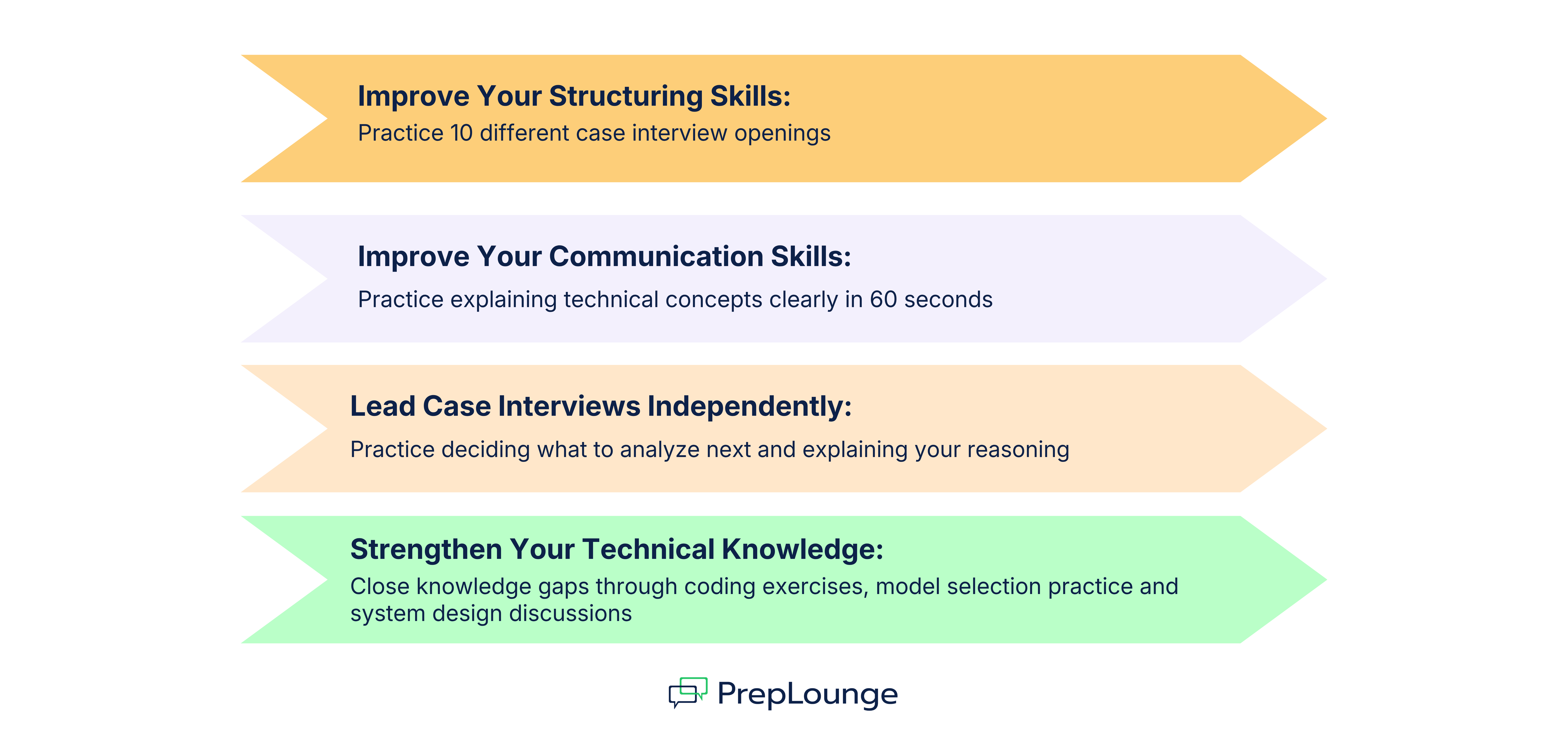
Preparation should cover 5 capabilities: technical depth, problem solving, business judgment, structured communication and case leadership. If you are starting from scratch, plan for at least 2 months.
In my 10 years at BCG, one of the clearest differences I observed between strong technical specialists and strong technical consultants was their ability to connect expertise to a client decision. This distinction sits at the center of the BCG X interview. Over the past months, I have helped several candidates land offers at BCG X, including for Forward Deployed AI roles. My perspective also draws on my ongoing work coaching BCG X new hires through BCG’s official onboarding program and my continued connections across the organization. This article explains what the interviews assess, where technically strong candidates often underperform and how to prepare effectively.
How the BCG X Interview Differs From a Core BCG Interviewv
BCG X is BCG’s technology build and design unit. Its teams include data scientists, AI engineers, software engineers, designers, product specialists and entrepreneurs working on AI solutions, technology platforms and digital products.
A core BCG case normally starts with a business problem and tests how you structure, analyze and solve it. A BCG X technical case adds another question: “Can you translate the business problem into a workable technical solution?”
Consider a utility company experiencing customer churn. A generalist candidate might analyze customer segments and pricing. A data scientist would also define the target variable, identify relevant data, select a modeling approach and determine how the company should use the predictions.
BCG X still evaluates logical thinking, business judgment and communication. Your solution must be technically credible, commercially useful and understandable to a client with limited technical knowledge. Choosing an algorithm is only one part of the answer.
What the BCG X Interview Process Looks Like
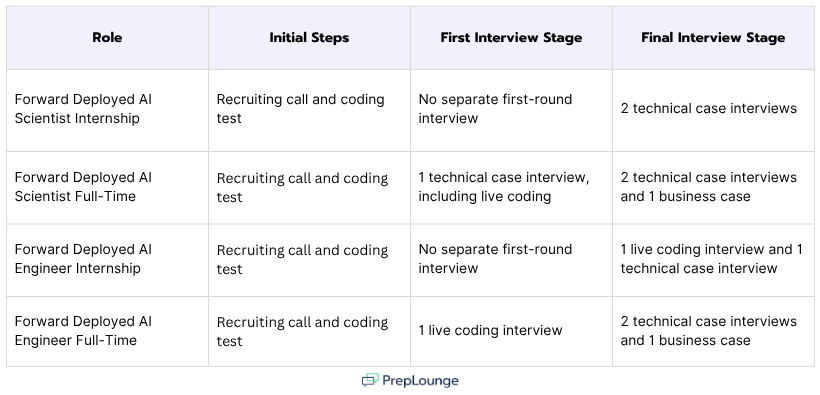
There is no single BCG X interview process. The format can change a lot by role, seniority, office and recruiting cycle. However, recent processes for Forward Deployed AI Scientists and Forward Deployed AI Engineers provide a useful reference.
For Forward Deployed AI Scientist roles, the first live interview may last approximately 60 minutes. It is usually split as follows: 5-10 minutes discussing your background, approximately 15 minutes of live coding, around 25-30 minutes for the technical case, a short synthesis and time for questions.
Final-round interviews commonly last 45-60 minutes each. Depending on the role and location, at least one interview may take place in person. Full-time processes may assess coding, technical problem solving, business judgment and client communication across separate interviews.
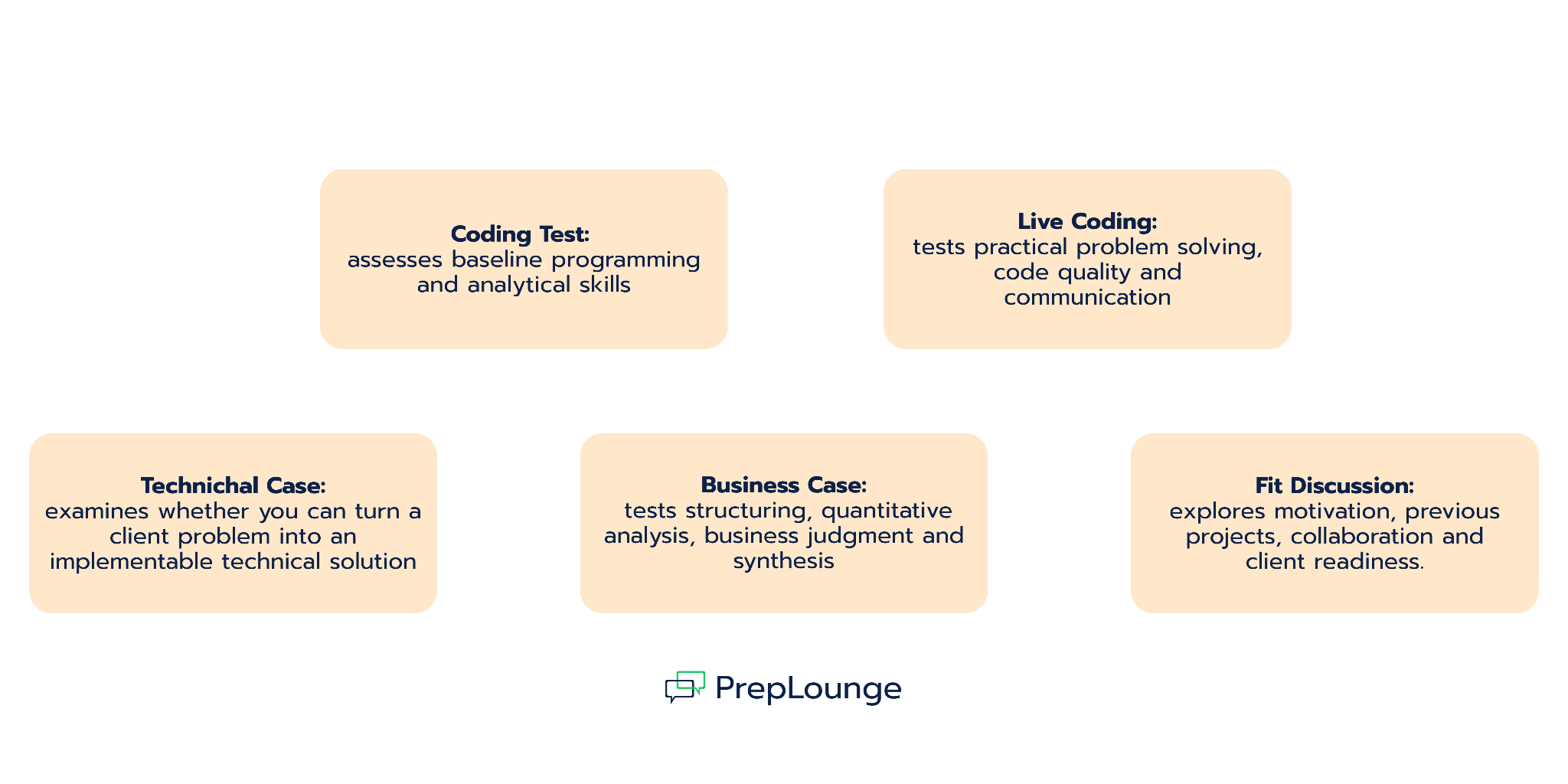
Each component has a specific purpose:
Ask recruiting how many interviews you will have, whether live coding is separate or integrated, whether there will be a business case and which technical skills will be tested. Treat this process as a realistic reference point, since BCG X can adjust the sequence to the position.
What to Expect From Live Coding
For AI and data science roles, live coding commonly focuses on practical Python and data manipulation. Relevant skills may include pandas, NumPy and scikit-learn, together with data cleaning, transformation and basic model-building tasks.
You might receive transaction data and be asked to remove duplicates, handle missing values and calculate monthly spending by customers. The interviewer will observe whether you clarify ambiguities and produce readable, functional code.
Explain your reasoning while you work. If you are deciding between 2 approaches, state the tradeoff. If an assumption is necessary, make it explicit. Silence makes your problem-solving process invisible.
Avoid spending excessive time searching for perfect syntax. Focus on clean and usable code, then test whether the output makes sense. Practical judgment and collaboration are important in a forward-deployed role.
Land your top job in consulting!
Join the world's leading case interview community today and get everything you need to prepare for your upcoming case interviews!
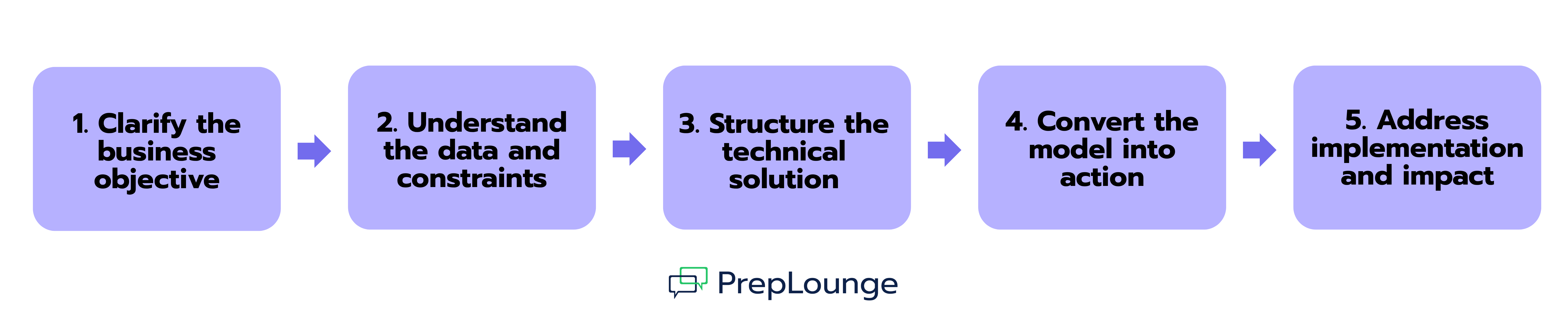
A technical case presents a client problem and asks you to design a solution using the available data and technology. The strongest answers connect business, modeling and implementation throughout the discussion.
Clarify the business objective
Restate the problem as a measurable objective. For a utility company losing customers, you might ask:
“How can we identify high-value customers at risk of leaving and intervene profitably?”
Define the business metric before discussing models. Reducing annual churn by 2 percentage points while protecting gross margin gives the analysis a clear direction.
Understand the data and constraints
Ask about available data, prediction frequency, implementation requirements and the cost of errors. Relevant churn data might include customer characteristics, billing history and service interactions.
Clarify whether the company should prioritize precision or recall. The correct metric depends on the business action. Expensive retention offers may make false positives particularly costly.
Structure the technical solution
Explain the major stages: data preparation, feature engineering, model selection, validation, deployment and monitoring.
If you recommend logistic regression, explain why interpretability matters. If you choose a random forest, discuss its advantages and limitations. Every technical choice needs a reason.
Convert the model into action
A prediction does not solve the problem by itself. Explain how the output changes a decision. The utility could target high-value, high-risk customers with targeted retention offers.
Estimate the economics. If the intervention retains 500 additional customers with an annual contribution of $400 each, the gross benefit is approximately $200,000 before campaign costs.
Address implementation and impact
Conclude with the implementation roadmap, risks and expected impact. You might recommend a pilot involving 10,000 customers, including treatment and control groups.
Explain how you would monitor model performance, data drift and financial results. Implementation is part of the case, especially in forward-deployed roles.
The Business Case and Fit Interview Still Matter
Some BCG X processes include a standard business case. Candidates should therefore be comfortable with consulting problem solving, including structuring, quantitative analysis, exhibit interpretation and synthesis.
You should be able to lead a profitability, growth or market-entry discussion without waiting for the interviewer to define every step. Identify the main question, prioritize the analysis and explain what you want to examine next.
Fit questions will likely cover your motivation for BCG X, technical projects, teamwork and client-facing experiences. Prepare 4-6 stories demonstrating leadership, collaboration and the ability to communicate technical work.
When I interviewed candidates at BCG, I paid close attention to the candidate’s personal contribution. Saying “we built a forecasting model” leaves the interviewer unsure what you did. Explain the decision you owned, the action you took and the measurable result.
Common BCG X Interview Mistakes
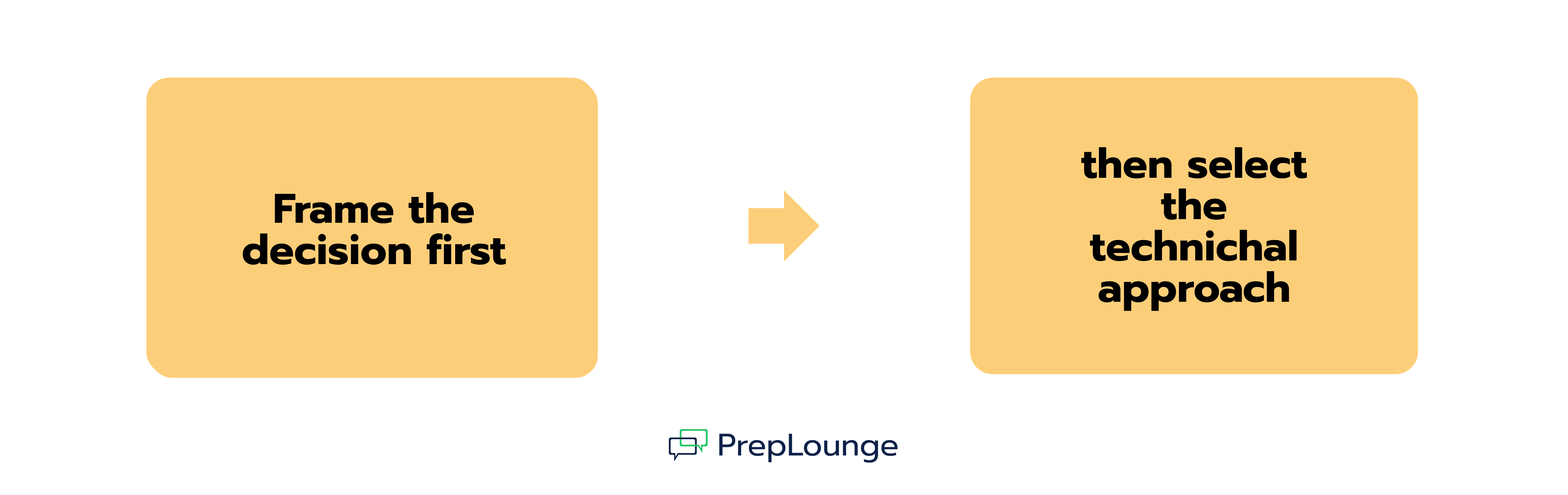
Starting with an algorithm
Some candidates hear “customer churn” and immediately recommend a model. This skips the business objective and operational constraints.
Overengineering the solution
A sophisticated solution may create limited value if it requires unavailable data or takes 12 months to implement. Apply an 80-20 technical mindset: explain what you would build first and which complexity you would add later.
Confusing model performance with business impact
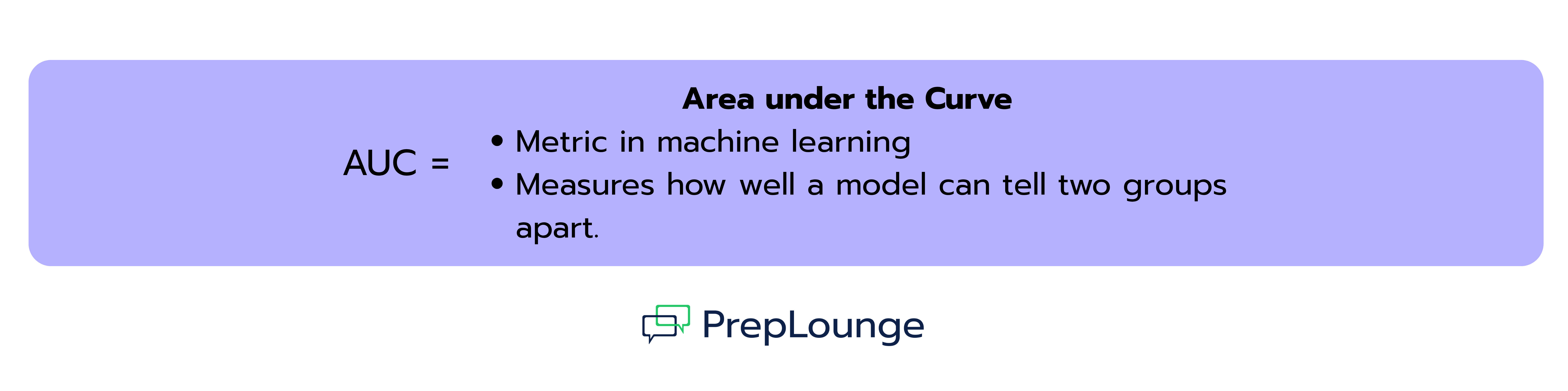
An improvement in AUC does not automatically generate revenue. Connect performance to customer targeting, cost reduction or retained margin. Interviewers want to understand how the client captures value.
Communicating at the wrong level
Technical interviewers may challenge your theoretical knowledge, but the recommendation must remain understandable to a senior client. State the answer first and add depth when requested.
In my coaching experience, candidates often know whether their model is valid but struggle to assess whether their explanation demonstrates structured communication and case leadership.
How to Prepare for the BCG X Interview
If you are starting from scratch, plan for at least 2 months of preparation. Anchor your plan on the recruiting calendar instead of waiting until you feel ready.
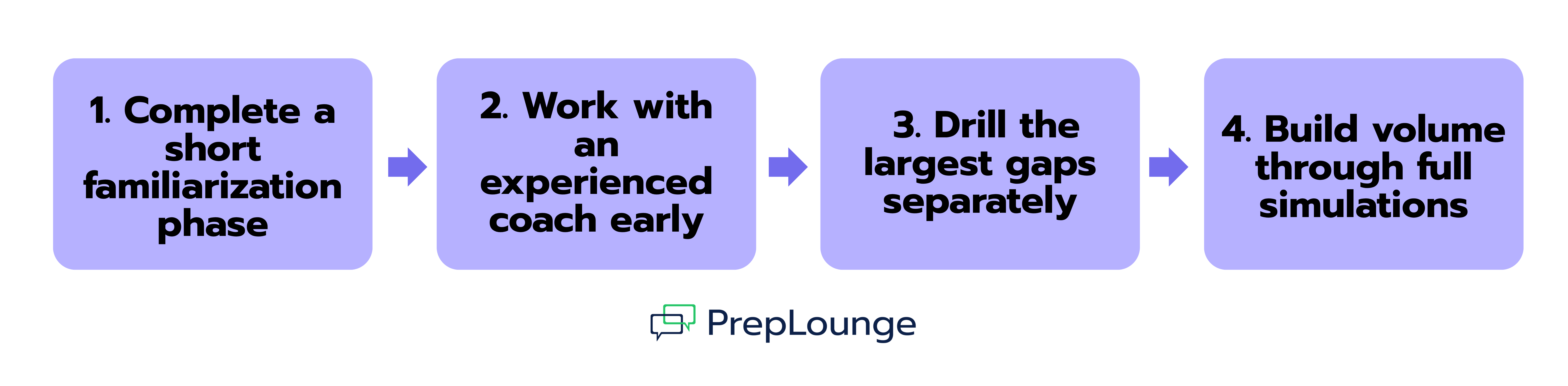
Complete a short familiarization phase
Spend a few days understanding BCG X, your role and the interview components. Map each job requirement to a likely assessment, then move quickly into practice.
Work with an experienced coach early
Complete one diagnostic session with an experienced coach near the beginning. Candidates can often identify technical gaps, but they are much less reliable at assessing their own problem solving, structured communication and case leadership.
A strong diagnostic session should determine whether you define the client problem clearly, build a prioritized structure, lead the case proactively, communicate conclusions first and connect technical choices to business value.
The coach should turn these observations into a preparation plan for the time remaining, with clear priorities and practical corrections you can use immediately. This prevents you from completing 15 cases while repeating the same mistakes.
Drill the largest gaps separately
Build volume through full simulations
Combine coding, technical cases, business cases and fit practice. Someone facing several technical interviews and 1 business case might complete 10-15 technical cases and 5-10 business cases, in addition to coding drills.
Track your performance across technical depth, structure, business judgment, communication and case leadership. Case quality matters more than the raw count. Around 7-10 days before the interview, complete a realistic mock to identify the final 2 or 3 priorities.
Conclusion
The BCG X interview tests whether you can combine technical credibility, structured problem solving and client-ready communication. Understand the process for your role, prepare for at least 2 months if starting from scratch and practice converting technical solutions into measurable business impact. An experienced coach can identify communication and case-leadership gaps that are difficult to recognize alone. If you want an objective assessment and a preparation plan tailored to your BCG X process, feel free to contact me through my coach profile.
Practice With a BCG X Case
To practice what this article covers, try my BCG X case on PrepLounge:
It follows the structure of a real BCG X technical case, so you can test how you connect the business objective, the technical solution and the business impact.
Ex BCG Principal & Global Interviewer (10+ Years) | 100+ MBB Offers | 90% Success Rate
Franco Borgonovo is a former BCG Principal who spent 10 years at Boston Consulting Group.
He served as recruiting lead for BCG Europe and interviewed candidates extensively in Round 1 and final rounds across Europe, Singapore and the United States.
Franco holds an MBA from INSEAD and has helped candidates secure more than 100 offers from McKinsey, BCG and Bain, with a 95% success rate. He continues to work as a coach for new BCG hires through BCG’s official onboarding program, including BCG X new hires across Europe and the Middle East.
This ongoing work gives him a current perspective on the problem-solving, structured communication and professional skills expected from BCG X consultants after they join the organization.
Frequently Asked Questions About The BCG X Interview
The questions depend on the role. Data science and AI candidates may face coding, machine learning, statistics and technical cases, together with fit and business problem solving. A typical technical case asks you to translate a client problem into a data or AI solution, justify your choices and explain how the solution creates measurable business value.
Many AI scientist and AI engineer processes include live coding, although the format varies by role and office. Candidates may need to solve practical Python, data-manipulation or code-comprehension tasks while explaining their reasoning. Confirm the programming language, platform and interview length with recruiting before deciding how to allocate your preparation time.
You should expect solid technical depth. Interviewers may challenge your model choice, assumptions, feature design, validation method and implementation plan. The problem still comes from a client context, so you must explain why the solution fits the business objective, available data and operational constraints.
Some BCG X processes include a standard business case, particularly for client-facing or forward-deployed roles. Other processes focus mainly on coding and technical cases. Even without a separate business case, technical interviews still assess structure, quantitative reasoning and commercial judgment. Ask recruiting whether your process includes a dedicated BCG business case.
If you are starting from scratch, plan for at least 2 months. You need time to develop technical fluency, business problem solving, structured communication and case leadership, then integrate them through realistic simulations. Candidates with strong technical skills may still require substantial work on consulting cases and client communication.