Hi everyone,
I am currently solving cases and the feedback that I receive is that I give good answers but they lack out-of-the-box thinking.
Could you please advise resources or techniques on how this area could be improved?
Thank you in advance!

Hi everyone,
I am currently solving cases and the feedback that I receive is that I give good answers but they lack out-of-the-box thinking.
Could you please advise resources or techniques on how this area could be improved?
Thank you in advance!


Hi there,
Who are you receiving this feedback from? Other peers you're coaching with who don't have offers / aren't consultants?
If so, just be careful.
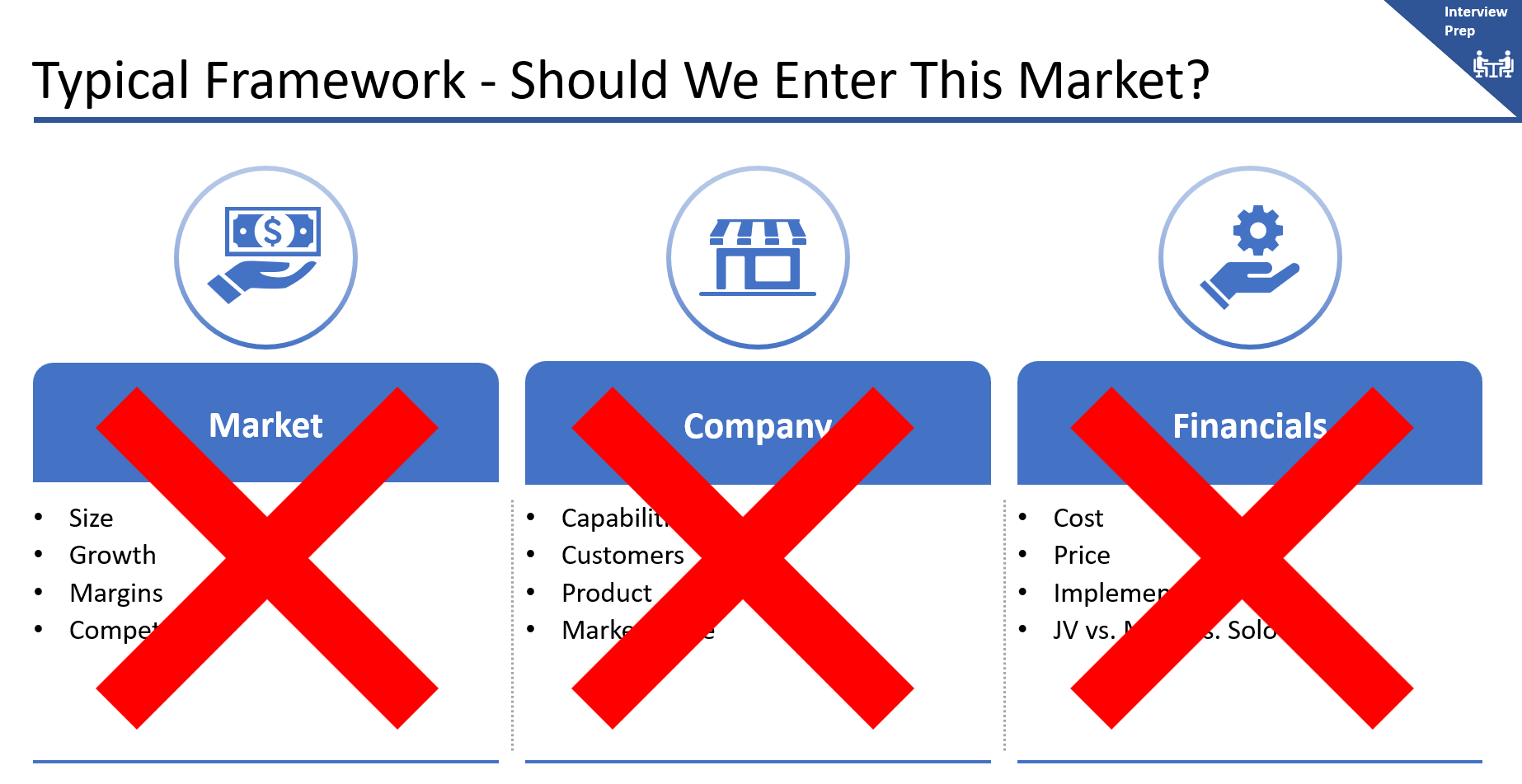
That said, you're probably memorizing frameworks / not tailoring.
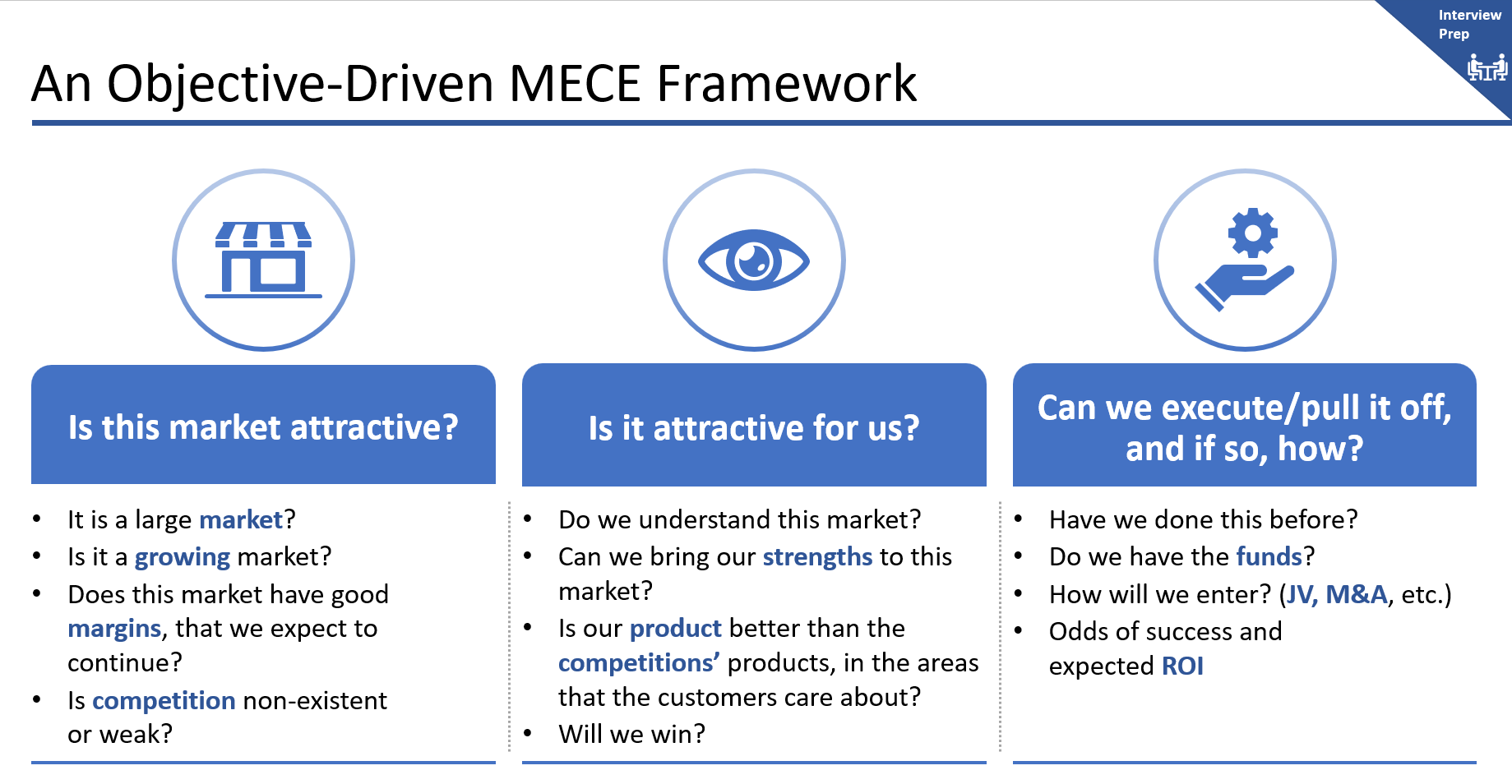
Coaching is the right call here... it's very hard to go from good to great on this without someone who can actually hear your thinking in real time.
That said, here are the key things to work on:
A coach who can actually hear you work through a case in real time will do more for this than any reading: Book a session here
And this article covers the mindset shift directly: How to Shift Your Mindset to Ace the Case
And check out the Consulting Offer Blueprint podcast - should help with this!

If I strip it down to what actually moves the needle, I’d focus on two things.
First, push yourself to generate one non-obvious angle every time you structure a problem. Not five, just one is enough. Most candidates stop at the standard buckets and never go a layer deeper. So before you move on, pause and ask yourself: what would someone who really knows this industry worry about? That’s where you start getting into second-order effects, behavioral shifts, or operational constraints. It might feel a bit slower at first, but it becomes natural pretty quickly.
Second, build some real-world business exposure alongside your case prep. Cases alone won’t get you there. Read a bit of industry news, skim earnings calls, or look at how companies actually make decisions. You’re not trying to memorize facts, you’re building pattern recognition. Then in a case, you can bring in ideas that feel a bit unexpected but still grounded. That’s usually what interviewers are looking for.
If you want to go deeper on this or have specific examples you’re working through, feel free to DM me.
Franco

Hi there,
I came across the same issue when I was practicing for the first interviews. Here is how I would approach and practice it (often its not much about reading additional resources, but just to bring yourself in the mindset to think differently, even if it feels unnatural or even wrong at first):
1. The What Else? Rule After you give your first few obvious ideas, force yourself to come up with three more that are totally different. If you suggested cutting costs, stop and ask e.g.: How could we change the product entirely? This pushes you past the standard textbook answers.
2. Think Like an Owner, Not a Student Picture the actual business in your head. Instead of just saying better marketing, think about the real customer experience. Is the store layout confusing? Is the app too slow? Adding these real world details makes your thinking feel much more creative and tailored.
3. Switch Your Perspective If your ideas feel too internal (e.g. fixing the product or costs), force yourself to look external. Ask: What are competitors doing that the client isn't? Is there a new technology making the business obsolete? This ensures you aren't ignoring half of the business world, no matter the industry.
The goal honestly isn't to be wild - it's just to be specific. If your answer could apply to any company in the world, it’s probably too generic.
I hope this helped! :)

"Out-of-the-box thinking" is vague feedback. Let me make it more concrete.
What interviewers usually mean is one of two things. Your ideas are too generic, anyone could have said that. Or your structure is too predictable, you are following a framework so closely that no original thinking is visible.
The fix is not more resources. It is changing how you practice:
Out-of-the-box thinking is not a technique. It is a habit of curiosity applied under pressure. Start noticing interesting business decisions around you in everyday life. That is where it actually starts.

That's a really common piece of feedback, and honestly, it's one of the trickiest to crack because "out-of-the-box" thinking doesn't mean being random or unrealistic. What firms are really looking for is your ability to push past the obvious, demonstrate second-order thinking, and connect seemingly disparate dots in a structured way. They want to see that you can move from simply solving the problem to generating new value for the client.
To improve this, try two things: First, after you've landed on a core recommendation, immediately ask yourself, "So what else could happen?" or "What are the implications beyond the immediate problem?" Think about competitor reactions, potential risks, synergistic opportunities, or how your solution impacts other parts of the client's business or their long-term strategy. Second, actively challenge the assumptions presented in the case. Sometimes, the most "out-of-the-box" insight comes from realizing the initial problem isn't the right problem to solve, or that a key assumption needs to be tested.
This isn't about abandoning frameworks, but using them as a launchpad to explore deeper strategic territory. Hope this helps you refine your approach!

I would need to see you in a case to provide genuinely useful feedback. So, if you're interested, drop me a line.
Otherwise, what I typically observe with candidates who receive this kind of feedback is that they are too eager to answer the structuring questions the interviewer might ask, WITHOUT challenging some of the assumptions of the client.
Specifically, in a case where the client has a set of assumptions about what they believe their problem to be and asks you to evaluate the solution they devised, most candidates proceed to assess that solution. Distinctive candidates, who approach the case from first principles, first try to verify whether the assumptions underlying the problem and the corresponding solution are correct.
Best,
Cristian

hey there :)
to get better at out-of-the-box thinking, it helps to consciously practice “what if” and lateral thinking in each case. after you structure a case normally, pause and ask yourself unusual angles, like new business models, unexpected customer segments, or alternative levers.
reading diverse casebooks, looking at strategy articles, and reviewing unusual industry examples also trains your brain to spot unconventional ideas. the key is to practice generating 2–3 creative options after every standard analysis, not just the obvious ones.
if you want, I can suggest a simple exercise to do this with every case you practice.
best,
Alessa :)